Character and Appearance in Planning: What It Really Means
Learn why character and appearance matter in planning decisions. Explore how local character, visual impact, and design quality shape development approvals and community outcomes.
PLANNING APPLICATIONS
Andrew Ransome
11/13/20256 min read
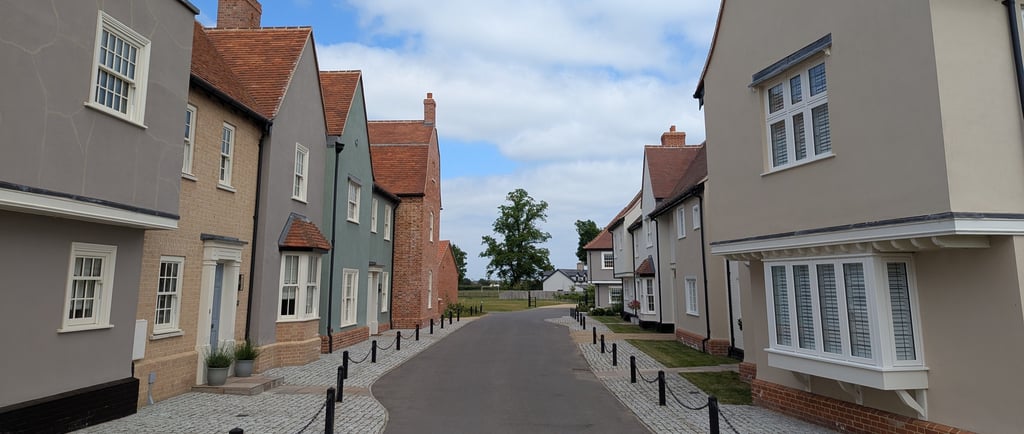
If you’ve ever had a planning application refused because it was said to “harm the character and appearance of the area,” you’re not alone. These words appear in countless planning reports, but they’re often misunderstood.
Character and appearance aren’t just about whether a building looks nice. They’re about how well new development fits its surroundings — how it relates to what’s already there, how it contributes to the sense of place, and how it makes people feel when they move through the space.
Planning officers and decision-makers use these concepts to judge design quality.
A scheme that responds sensitively to local context will usually be viewed positively, while one that feels out of place — even if it’s technically well-designed — can face resistance.
In short: getting character and appearance right can be the difference between an approval and a refusal.
Character vs Appearance: What’s the Difference?
Although they’re often used together, “character” and “appearance” mean different things.
Appearance is the easy one — it’s what you can see. The outward qualities: the materials, colours, shapes, roofs, and details that make up a building’s visual identity.
Character, on the other hand, goes deeper. It’s the combination of all the elements that give an area its distinctive feel. It’s about the street pattern, the scale and rhythm of buildings, the spaces between them, how people use the area, and even the landscape setting. Character is what makes a place recognisable.
For example, think about a Victorian high street lined with narrow plots, brick façades, and traditional shopfronts. That pattern gives the street its rhythm and human scale. Drop a large flat-roofed retail box into the middle of it, and you instantly disrupt that rhythm — even if the materials are high quality. The problem isn’t necessarily the appearance, but the fact that it fails to respect the character.
Good design takes both into account. It respects the DNA of a place while finding ways to express something new.
Assessing Design in Context
When planners assess the character and appearance of a proposal, they don’t look at the building in isolation. They look at how it relates to its surroundings — both physically and visually.
There’s a broad sequence to this kind of assessment:
Analyse the existing character and appearance – What defines the area right now?
Understand the proposal – What’s being built and why?
Assess the effects – How would it change the look and feel of the place?
Relate it to planning policy – Does it meet local and national design expectations?
A good planning statement or design and access statement will follow this same logic. It’s not just a box-ticking exercise — it’s about showing that you understand the site and that your proposal belongs there.
National planning policy encourages development that is “sympathetic to local character and history” but also recognises that innovation is important. The trick is finding that balance: respecting what’s there, without simply copying it.
What Makes a Place Distinctive
Every site has its own character, and understanding it properly is the foundation for good design.
Planners will look at a range of factors when analysing context. These might include:
Topography and landscape – Is the land flat or sloping? What views or natural features are important?
Building lines and scale – Are buildings set back or built right up to the street? How tall are they?
Patterns of buildings – Are plots regular or varied? Is there a rhythm to the frontages?
Materials and detailing – Brick, render, slate, timber – what’s typical locally?
Spaces between buildings – Are they tight and enclosed or open and spacious?
Boundaries and greenery – Do hedges, walls or trees define the street edge?
Each of these contributes to how an area feels. Understanding them helps ensure a proposal responds positively.
For example, a rural edge site might call for softer landscaping, generous planting and a looser building pattern to blend into the countryside. By contrast, a tight urban infill plot in a town centre might demand a more continuous frontage that maintains the street’s enclosure.
Getting this right is about reading the site as it is — not as you’d like it to be. The best design teams visit, sketch, photograph, and study the area’s patterns before putting pen to paper.
Relating Design to Its Setting
Once the context is understood, the next step is to show how the design responds to it.
Planners will consider questions such as:
How does the proposal relate to its surroundings?
Does it promote or reinforce local distinctiveness?
Is it well-articulated and legible (for instance, can you tell where the main entrance is)?
Would it sit comfortably within the street scene?
How would it affect key views?
Are the materials appropriate and of good quality?
This is where your design story matters. Decision-makers want to see that every choice — from building height to brick tone — is grounded in the site’s character.
Importantly, “fitting in” doesn’t mean “blending in.”
A modern building can still be entirely appropriate if it respects scale, rhythm, and proportion. Some of the most successful contemporary schemes create contrast while still feeling right for their setting because they understand what makes that setting special.
A practical example: A sleek, glass-fronted house might look jarring in a traditional village lane, but the same design principles could work beautifully on a more open suburban plot, provided it relates well to boundaries, trees, and neighbouring forms. Context is everything.
Practical Lessons from Real Planning Decisions
In everyday planning, character and appearance come up time and time again. Here are some lessons from the way planners and inspectors tend to think about design:
1. Understand the Drawings
It sounds obvious, but it’s crucial to make sure your plans, elevations and visuals clearly communicate the proposal. If a decision-maker can’t understand the scale or positioning, they’re less likely to support it.
2. Think About Views and Vistas
Consider how the development will be seen from nearby streets, footpaths, or open spaces. Even small changes to rooflines, ridge heights or boundary treatments can have a big impact on how a place feels.
3. Be Honest About Cumulative Effects
If you’re proposing something in an area that’s already changing, think about the bigger picture. A single new dwelling might not alter a street much on its own — but several similar schemes could fundamentally change its character over time.
4. Take a Robust Approach to Design Quality
It’s not enough for a scheme to be “inoffensive.” Planners increasingly expect development to actively improve the quality of an area. That might mean enhancing the streetscape, introducing better landscaping, or creating a more coherent layout.
5. Don’t Be Afraid of Innovation
Good design doesn’t have to imitate its neighbours. The best contemporary schemes succeed because they are thoughtful, not because they are traditional. What matters is that the design feels authentic to its place.
6. Secure Key Details
If materials, window proportions, or colour schemes are critical to the quality of the design, they can be secured by planning condition. That ensures the finished building matches the approved vision.
Common Pitfalls (and How to Avoid Them)
Many refusals stem from the same recurring issues. Here are some red flags to watch out for:
Ignoring context: Designing in isolation without studying neighbouring forms or materials.
Over-dominant scale: Buildings that overpower their surroundings or block key views.
Loss of space: Filling in gaps or gardens that contribute to local character.
Generic design: “Anywhere” architecture that could sit in any town, but belongs in none.
Poor transitions: Sharp contrasts where development meets open countryside or historic fabric.
The best way to avoid these is to invest time upfront in site analysis and design justification. A clear narrative about why your proposal looks and feels the way it does goes a long way in persuading decision-makers.
Final Thoughts: Getting Character and Appearance Right
Good design is about understanding, not imitation. A development that responds intelligently to its setting, uses appropriate materials, and contributes positively to its environment will almost always be supported.
Before submitting a planning application, take time to:
Walk the area and note what defines its character.
Look at local design guides, conservation area appraisals or neighbourhood plans.
Prepare a Design and Access Statement that tells your design story clearly.
Think about how your proposal could enhance — not just fit into — its surroundings.
Planning authorities aren’t looking for identical buildings. What they’re looking for is development that belongs — something that feels rooted in its place and contributes to a sense of identity.
Character and appearance are not barriers to creativity; they’re the foundation for it. When you get them right, your design will not only win over planners — it will stand the test of time.
Andrew Ransome MRTPI - Email: andrew@andrewransome.co.uk
About Me
Andrew Ransome is a Planning Director and a Chartered Member of the Royal Town Planning Institute (RTPI), with more than two decades of experience in town planning.
He specialises in delivering strategic planning solutions for complex developments across both rural and urban environments, helping clients navigate planning challenges and unlock development opportunities. Connect with Andrew on Linkedin.




Get in Touch
Email: andrew@andrewransome.co.uk
Tel: 020 7096 8045
London Office:
60 Tottenham Court Road
Fitzrovia
London
W1T 2EW
© 2026 Andrew Ransome Town Planning Ltd. All rights reserved.
Content on this website is provided for general information and educational purposes only and does not constitute formal planning, professional, or legal advice. Planning policies, legislation, and guidance are subject to change. Site-specific assessment by a qualified consultant is recommended before making development decisions.
Projects highlighted across this website represent professional work undertaken by Andrew Ransome throughout his career.