Class AB (Part 20): Adding New Homes Above Terraced and Semi-Detached Commercial Buildings
Class AB (Part 20) allows new flats above terraced and semi-detached commercial buildings without full planning permission. Learn what qualifies, key limitations, and how the prior approval process works in practice.
PRIOR APPROVAL
Andrew Ransome
4/30/20265 min read
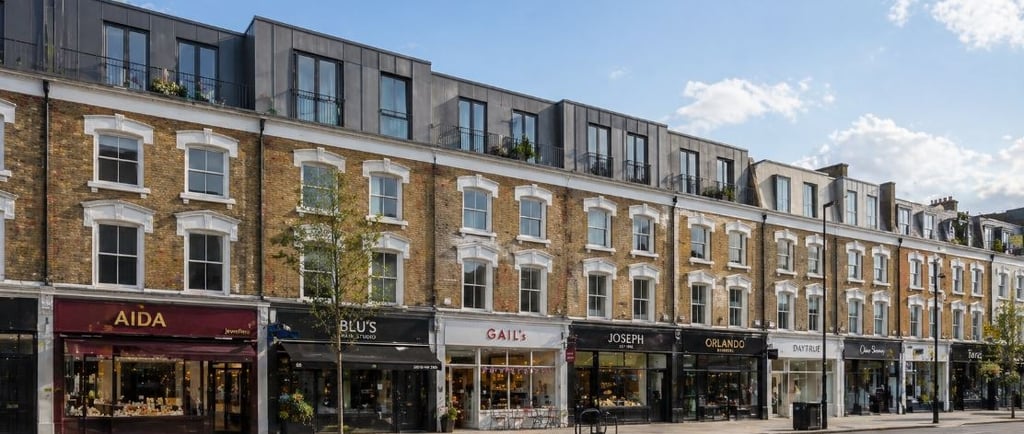
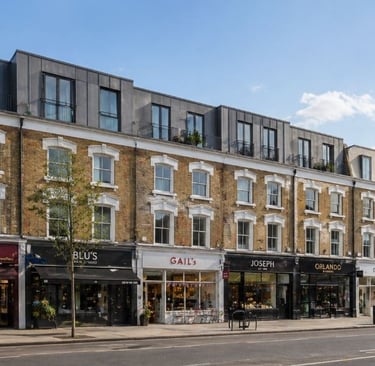
If you own a terraced or semi-detached commercial building, permitted development rights under Part 20, Class AB of the Town and Country Planning (General Permitted Development) (England) Order 2015 (GPDO 2015) may allow you to construct new storeys of flats above it without making a full planning application.
Class AB is the terraced-building equivalent of Class AA, and the two rights share much of their structure — but the differences between them matter significantly in practice.
This article explains what Class AB permits, where it differs from Class AA, the limitations that apply, and the prior approval process.
What Does Class AB Permit?
Class AB permits works for the construction of new dwellinghouses — specifically flats — immediately above the topmost storey of a qualifying terraced or semi-detached commercial or mixed-use building.
The number of additional storeys permitted depends on the existing height of the building:
Where the existing building consists of two or more storeys above ground level, up to two additional storeys are permitted
Where the existing building consists of one storey above ground level, one additional storey is permitted
As with Class AA, associated works are also permitted, including reasonable engineering operations, works for access and egress including fire escape, replacement or additional plant reasonably necessary to service the new flats, and storage and ancillary facilities for the new dwellinghouses.
Which Buildings Qualify?
The building must be a terrace building — which for these purposes means a building that shares a party wall with, or has a main wall adjoining the main wall of, an adjoining building.
Semi-detached buildings also fall within the definition.
This distinguishes Class AB from Class AA (detached buildings) and means that the typical high street terrace — rows of shops with or without accommodation above — is the natural target for this right.
The existing building must have been in use on 5 March 2018 for one or more of the following purposes (read by reference to the pre-2020 Use Classes Order):
Class A1 (shops)
Class A2 (financial and professional services)
Class A3 (restaurants and cafes)
Class B1(a) (offices)
Betting office, pay day loan shop, or launderette
A mixed use combining any two or more of the above
A mixed use combining any of the above with Class C3 (dwellinghouses)
As with Class AA, mixed-use buildings — including those already containing residential units — can qualify, making Class AB particularly relevant to the traditional pattern of high street and shopping parade development across England.
The building must have been constructed on or after 1 July 1948 and on or before 5 March 2018.
Key Class AB Requirements
Height of existing building
The height of the highest part of the roof of the extended building (not including plant) must not be greater than 18 metres.
The height of the highest part of the roof of the extended building would exceed by more than 3.5 metres the height of the highest part of the roof of every other building in the row of terrace buildings of which it forms part.
The height of the highest part of the roof of the extended building can not exceed the height of the highest part of the roof of the existing building (not including plant, in each case) by more than 3.5m (if the existing building consists of one storey) or 7m (if the existing building consists of more than one storey).
Existing Curtilage
Development must not extend beyond the curtilage of the existing building or be be situated on land forward of a wall forming the principal elevation of the existing building. It must also not be situated on land forward of a wall fronting a highway and forming a side elevation of the existing building.
The principal part
Additional storeys must be constructed on the principal part of the building — the main mass, excluding front, side or rear extensions of lower height. This is the same definition as Class AA.
No visible support structures
On completion, there must be no visible support structures on or attached to the exterior of the building — the same requirement as Class AA.
Engineering operations
Permitted engineering operations are limited to works within the existing curtilage: strengthening existing walls, strengthening existing foundations, and installing or replacing services. Operations extending beyond the curtilage are not permitted.
Plant
Replacement or additional plant is permitted where reasonably necessary to service the new flats. The height of replaced or additional plant (measured from the lowest surface of the new roof) must not exceed the height of any existing plant from the lowest surface of the existing roof. Class AB development is not permitted if there is no existing plant on the building.
Location restrictions
Development is not permitted on Article 2(3) land, SSSIs, listed buildings or their curtilage, scheduled monuments or their curtilage, safety hazard areas, military explosives storage areas, or within 3 kilometres of the perimeter of an aerodrome.
Prior Approval: What the LPA Will Assess
Class AB requires a mandatory prior approval application. Development must not begin until written notice of the grant of prior approval has been received.
There is no deemed grant mechanism for any Part 20 Class — if the LPA fails to determine the application within the 56-day statutory period, the only route is an appeal under section 78(1)(c) TCPA90.
The prior approval matters are:
Transport and highways impacts
Air traffic and defence asset impacts
Contamination risks
Flood risk
External appearance
Amenity of existing and neighbouring uses
Adequate natural light in all habitable rooms — a mandatory ground for refusal if not met
Noise
Impacts of the introduction of, or an increase in, a residential use of premises in the area on the carrying on of any trade, business or other use of land in the area
Protected views
All new dwellinghouses created under Class AB must meet the nationally described space standard and the 37m² minimum gross internal floorspace requirement under Article 3(9A) of the GPDO (in force from 6 April 2021).
The Terraced Context: Practical Considerations
Structural assessment — as with Class AA, the scope of permitted engineering operations is narrow. A structural survey confirming that the existing building can support additional storeys within the permitted operations is essential before making a prior approval application.
The existing use must continue — Class AB, like Class AA, is not a vehicle for converting the lower floors of a commercial building to residential use. The commercial use must remain, and the prior approval matters include an assessment of whether the development is consistent with that continued use.
Article 4 Directions — some LPAs have made Article 4 Directions removing Part 20 rights including Class AB. This should be confirmed before progressing any scheme. Where a direction exists, full planning permission will be required, and the LPA will be able to apply the full range of development plan policies.
Summary
Class AB offers owners of terraced and semi-detached commercial buildings a meaningful opportunity to create new residential units above existing commercial premises without a full planning application.
The prior approval matters are substantive, the 56-day determination period is non-extendable without written agreement, and there is no deemed grant safety net.
Getting the application right from the outset — with proper evidence — is essential.
If your application is refused, find out more about prior approval appeals here.
Get Prior Approval Planning Advice
If you are considering a project that may benefit from the prior approval route, get in touch for clear, practical advice on your options.
Andrew Ransome MRTPI - Email: andrew@andrewransome.co.uk
About me
Andrew Ransome is a Planning Director and a Chartered Member of the Royal Town Planning Institute (RTPI), with more than two decades of experience in town planning.
He specialises in delivering strategic planning solutions for complex developments across both rural and urban environments, helping clients navigate planning challenges and unlock development opportunities. Connect with Andrew on Linkedin.




Get in Touch
Email: andrew@andrewransome.co.uk
Tel: 020 7096 8045
London Office:
60 Tottenham Court Road
Fitzrovia
London
W1T 2EW
© 2026 Andrew Ransome Town Planning Ltd. All rights reserved.
Content on this website is provided for general information and educational purposes only and does not constitute formal planning, professional, or legal advice. Planning policies, legislation, and guidance are subject to change. Site-specific assessment by a qualified consultant is recommended before making development decisions.
Projects highlighted across this website represent professional work undertaken by Andrew Ransome throughout his career.