Classes AC and AD (Part 20): Adding New Homes Above Existing Houses
Explore Class AC and AD permitted development rights under the GPDO, allowing new flats above existing homes and buildings. Learn key criteria, limitations, and prior approval requirements to assess rooftop development potential and maximise site value.
PRIOR APPROVAL
Andrew Ransome
5/1/20266 min read
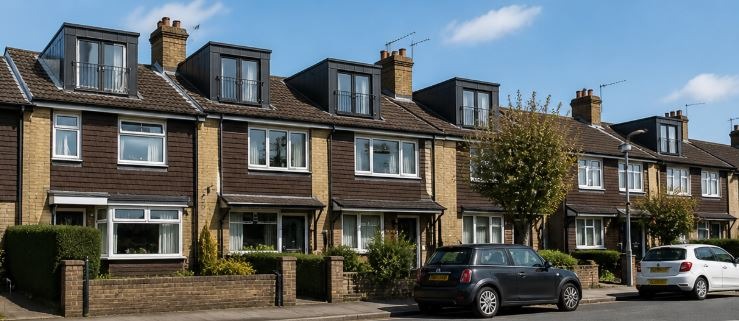
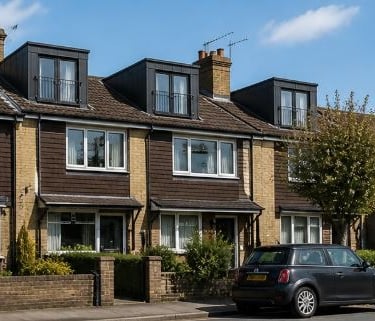
Part 20 of the GPDO 2015 introduced permitted development rights to construct new storeys of flats above existing dwellinghouses. Class AC and Class AD target terraced/semi-detached and detached houses respectively, offering landowners and investors the opportunity to create new residential units in the airspace above existing homes.
These rights are often confused with Part 1, Class AA — which covers upward extensions to a single dwellinghouse for the benefit of the existing occupier.
Classes AC and AD are different in purpose, scope and complexity. They are aimed at creating new, self-contained flats above an existing house, making them relevant to a different class of developer.
This article covers both Classes together, explaining what each permits, and what the prior approval process involves.
Class AC: Terraced and Semi-Detached Houses
What Does Class AC Permit?
Class AC permits works for the construction of new dwellinghouses — specifically flats — immediately above the topmost storey of a qualifying terraced or semi-detached dwellinghouse.
The number of additional storeys permitted depends on the height of the existing building:
Where the existing dwellinghouse consists of two or more storeys above ground level, up to two additional storeys are permitted
Where the existing dwellinghouse is a single-storey building, one additional storey is permitted
Associated works are also permitted, including engineering operations reasonably necessary to construct the additional storeys (strengthening walls and foundations, installing or replacing services), works for appropriate access and egress including fire escape, replacement or additional plant to service the new flats, and storage and ancillary facilities for the new dwellinghouses.
Which Buildings Qualify?
The building must be a terrace building — one that shares a party wall with, or has a main wall adjoining the main wall of, an adjoining building. Semi-detached houses are included.
The existing building must consist of a single dwellinghouse falling within use class C3.
Critically, the building must have been in use as a dwellinghouse on 5 March 2018, and must have been constructed on or after 1 July 1948 and on or before 5 March 2018.
The reference to a "single dwellinghouse" is important. A building that was in 2018 already divided into multiple flats does not qualify.
Class AC applies to the traditional terraced house provided the construction date falls within the permitted window.
Class AD: Detached Houses
What Does Class AD Permit?
Class AD is the detached-house equivalent of Class AC.
It permits works for the construction of new dwellinghouses — specifically flats — immediately above the topmost storey of a qualifying detached dwellinghouse.
The storey limits are the same as Class AC:
Two or more storey existing building: up to two additional storeys permitted
Single storey existing building: one additional storey permitted
Associated works — engineering operations, access and egress, plant, storage and ancillary facilities — are also permitted on the same basis as Classes AA, AB and AC.
Which Buildings Qualify?
The building must be detached — not sharing a party wall or main wall with any adjoining building.
The building must be in use as a single dwellinghouse within use class C3 on 5 March 2018, and must have been constructed between 1 July 1948 and 5 March 2018 inclusive.
Shared Limitations Across Classes AC and AD
Both Classes are subject to a common set of limitations.
Height of the extended building
The height of the highest part of the roof of the extended building would exceed the height of the highest part of the roof of the existing dwellinghouse by more than 3.5 metres, where the existing dwellinghouse consists of one storey; or 7 metres, where the existing dwellinghouse consists of more than one storey.
The existing dwelling must not have previously been extended upwards.
Curtilage
The development must not extend beyond the curtilage of the existing dwellinghouse or situated on land forward of a wall fronting a highway and forming a side elevation of the existing dwellinghouse.
Floor to ceiling height
The floor to ceiling height of any additional storey, measured internally, must not exceed the lower of 3 metres or the floor to ceiling height of any storey of the principal part of the existing building.
The principal part
Additional storeys must be constructed on the principal part of the building — the main mass of the house, excluding any lower-height front, side or rear extensions. This is the same definition as Parts 1, Class AA and Parts 20, Classes AA and AB.
No visible support structures
On completion, there must be no visible support structures on or attached to the exterior of the building.
Engineering operations
Permitted engineering operations are limited to works within the existing curtilage of the building: strengthening existing walls, strengthening existing foundations, and installing or replacing services.
Plant
Replacement or additional plant must not exceed in height the existing plant measured from the respective roof surfaces. There must be existing plant on the building for this element of the PD right to be used.
Location restrictions
Development is not permitted on Article 2(3) land, SSSIs, listed buildings or their curtilage, scheduled monuments or their curtilage, safety hazard areas, military explosives storage areas, or within 3 kilometres of the perimeter of an aerodrome.
Class AC only — consistency with the terrace
The height of the highest part of the roof of the extended building muct not exceed by more than 3.5 metres the height of the highest part of the roof of every other building in the row of terrace buildings of which it forms part.
How Classes AC and AD Differ from Part 1, Class AA
This is a distinction worth drawing clearly, because the two sets of rights are routinely confused.
Part 1, Class AA permits the construction of additional storeys on an existing dwellinghouse for the purposes of enlarging that dwellinghouse — in other words, extending the existing home upward for the benefit of the current occupier.
The new storeys form part of the existing dwelling. Part 1, Class AA does not permit the creation of separate new dwellinghouses.
Classes AC and AD permit the creation of entirely new self-contained flats above an existing house.
The existing house remains in its current use at ground and first floor level; the new units sit above it as separate dwellinghouses.
These are two fundamentally different propositions — one is a home extension, the other is a new residential development.
Prior Approval: What the LPA Will Assess
Both Classes AC and AD require a mandatory prior approval application. Development must not begin until written notice of the grant of prior approval has been received.
There is no deemed grant mechanism for any Part 20 Class.
The LPA must determine the application within 56 days of receiving a valid application. The prior approval matters for both Classes are:
Transport and highways impacts of the development
Air traffic and defence asset impacts of the development
Contamination risks in relation to the building
Flooding risks in relation to the building
The external appearance of the building
The provision of adequate natural light in all habitable rooms
Impact on the amenity of the neighbouring premises including overlooking, privacy and the loss of light
Impact on a protected view
Additional considerations include:
The roof pitch of the principal part of the building must be the same as the roof pitch of the principal part of the existing dwellinghouse
The materials used in any exterior work must be of a similar appearance to those used in the construction of the exterior of the existing dwellinghouse
The development must not include a window in any wall or roof slope forming a side elevation of the dwellinghouse
All new dwellinghouses must comply with the nationally described space standard and must have a gross internal floorspace of at least 37m² (Article 3(9A) GPDO, in force from 6 April 2021).
Practical Considerations
The existing house must remain a house — Classes AC and AD are not a route to converting a house into flats.
The existing dwelling at the lower storeys must remain in use as a C3 dwellinghouse, and the prior approval matters include an assessment of the impact on that continued use.
A scheme that effectively renders the lower floors unfit or unsuitable for continued residential use is unlikely to secure prior approval.
Access arrangements — creating new self-contained flats above an existing house requires appropriate shared access and means of escape.
The permitted works include external staircases and additional external doors, but the practical and design challenges of inserting shared access into what is typically a single-family home should not be underestimated.
Article 4 Directions — some LPAs have made Article 4 Directions removing Part 20 rights including Classes AC and AD. Confirm the position with the LPA before progressing a scheme.
April 2026 procedural appeal changes — from 1 April 2026, amended plans and revised schemes cannot be submitted once a prior approval appeal has been lodged. The application submitted to the LPA must be complete and fully evidenced from the outset. Read more about Prior Approval appeals here.
For investors and developers looking at terraced or detached houses in urban areas where planning permission for new residential development is difficult to obtain, these rights deserve consideration. But the complexity of delivery — structural, legal, access and prior approval — means that professional advice from the outset is essential.
Get Prior Approval Planning Advice
If you are considering a project that may benefit from the prior approval route, get in touch for clear, practical advice on your options.
Andrew Ransome MRTPI - Email: andrew@andrewransome.co.uk
About me
Andrew Ransome is a Planning Director and a Chartered Member of the Royal Town Planning Institute (RTPI), with more than two decades of experience in town planning.
He specialises in delivering strategic planning solutions for complex developments across both rural and urban environments, helping clients navigate planning challenges and unlock development opportunities. Connect with Andrew on Linkedin.




Get in Touch
Email: andrew@andrewransome.co.uk
Tel: 020 7096 8045
London Office:
60 Tottenham Court Road
Fitzrovia
London
W1T 2EW
© 2026 Andrew Ransome Town Planning Ltd. All rights reserved.
Content on this website is provided for general information and educational purposes only and does not constitute formal planning, professional, or legal advice. Planning policies, legislation, and guidance are subject to change. Site-specific assessment by a qualified consultant is recommended before making development decisions.
Projects highlighted across this website represent professional work undertaken by Andrew Ransome throughout his career.