Do I Need Planning Permission for Internal or External Building Works?
A guide on when internal or external building works need planning permission, how “development” is defined, and when Permitted Development applies.
PLANNING APPLICATIONSPERMITTED DEVELOPMENT
Andrew Ransome
12/6/20255 min read
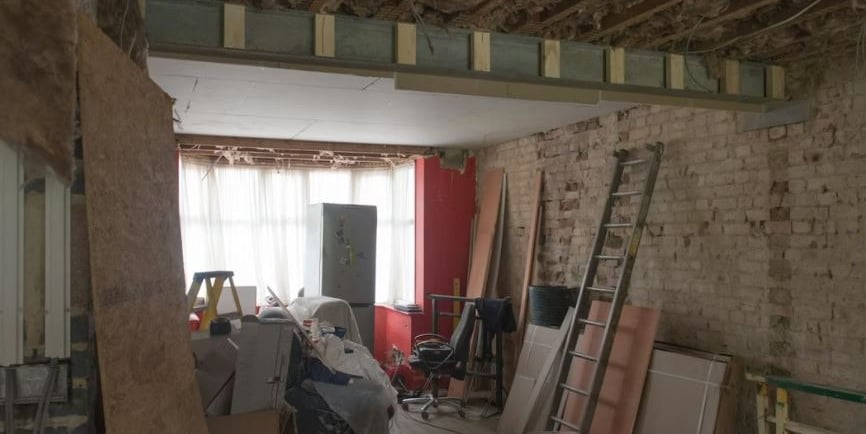
If you’re considering home improvements, one of the first questions that comes to mind is whether planning permission is needed. The answer depends on whether your project counts as “development” under planning law.
Some works that look minor can legally be development, while others that seem significant may be exempt. Understanding the distinction can save you time, money, and stress.
This guide explains when internal or external alterations require planning permission, when they do not, and the role that Permitted Development (PD) rights may play.
Planning law begins with the definition of “development” in Section 55 of the Town and Country Planning Act 1990. Development includes building operations and material changes of use.
However, Section 55(2)(a) contains key exceptions: internal works, and external works that do not materially affect the external appearance of the building. For homeowners, these exceptions are the key to knowing which projects can proceed without formal planning approval.
Internal Works: Usually Exempt from Planning Permission
Internal works usually do not count as development provided they affect only the inside of the building.
The law is clear that typical internal alterations—such as removing or adding partition walls, reconfiguring layouts, or installing new bathrooms and kitchens—do not require planning permission.
One key issue is identifying what “the building” actually is. Courts have confirmed that this may differ depending on the context. In the Haringey LBC v SSCLG & Muir [2019] case, the High Court held that each inividual house in a terrace should normally be treated as a separate building for the purpose of applying Section 55(2)(a), and that the whole terrace did not constitute the whole building.
In contrast, in another case, internal works within a single shop unit were considered internal to the entire shopping centre because the “building” was the whole structure, not the individual unit.
This illustrates that identifying the relevant building is a matter of fact and degree.
Internal works are also exempt even when they support a change of use. However, if the change of use itself is “material,” that change counts as development, and enforcement action may require internal changes to be reversed.
External Works: When They Count as Development
External works only count as development if they “materially affect” the external appearance of the building. Courts have repeatedly clarified what this means.
In Burroughs Day v Bristol CC [1996], the court held that external changes must be visible from multiple viewpoints and must make a noticeable difference to the building's overall appearance to be considered development.
The key test is whether the changes have a material effect in planning terms, not whether they improve or worsen the appearance.
The Haringey judgment also made clear that when assessing external appearance, only the appearance of the host building is relevant—not whether similar features exist elsewhere in the street or conservation area. That means, for example, that the presence of nearby uPVC windows does not make installing your own uPVC windows any less materially impactful.
Certain works are consistently found to materially affect appearance.
Replacing traditional wooden or metal windows with uPVC almost always counts as development because uPVC frames differ in colour, thickness, texture, and glazing patterns.
Painting can also count as development.
In Windsor and Maidenhead RBC v SSE [1988], exterior painting materially affected the character of a listed building. Similarly, in R (Lisle-Mainwaring) v Isleworth Crown Court [2017], painting a house in red and white stripes was considered development—though allowed under Permitted Development rights.
By contrast, the installation of floodlights was found not to materially affect appearance of a hotel when the lights were off (Hammersmith & Fulham LBC v SSE & Davison [1994]) but did so when switched on.
Permitted Development: When Development Is Still Allowed
Even when works amount to development, many are still permitted under the General Permitted Development Order (GPDO).
For example, the painting of the exterior of a building is specifically allowed under Part 2, Class C of the GPDO. The Lisle-Mainwaring case confirmed that even dramatic painting schemes can fall within this PD right.
Similarly, many window replacements on houses fall under PD, provided that materials are of “similar appearance.” The decision in City of Bradford MBC v SSE [1977] confirmed that cladding could be PD where materials were appropriately matched.
External additions such as railings, staircases, or roof features can sometimes fall under PD, as shown in Hammersmith LBC v SSE & Davison (1994), where railings and a terrace staircase were treated as permitted.
However, PD rights do not apply everywhere. They are limited in Conservation Areas, may be removed by Article 4 Directions, and do not apply to listed buildings.
Listed Buildings: Why Listed Building Consent Is Still Required
It is also important to remember that the Section 55(2)(a) exceptions do not apply to listed buildings.
Even though internal works are normally not development, and external works may only require planning permission if they “materially affect” appearance, listed buildings are subject to a completely separate consent regime. Under the Planning (Listed Buildings and Conservation Areas) Act 1990, any works that affect the special architectural or historic interest of a listed building—internally or externally—require Listed Building Consent (LBC).
This includes works that planning law might otherwise treat as minor, invisible, or purely internal.
The courts have consistently taken a stricter approach to listed buildings, as illustrated in Shimizu (UK) Ltd v Westminster CC [1997] where even seemingly minor internal demolitions were treated as alterations requiring consent.
For owners of listed buildings, this means that replacing windows, altering internal layouts, removing features, or even painting the exterior can all require LBC, regardless of whether the same works would be exempt or permitted on an unlisted property. Obtaining consent before starting work is essential, as unauthorised alterations to a listed building are a criminal offence.
When Alterations Become Rebuilding
There is a point where extensive works are no longer “maintenance or improvement” but instead amount to rebuilding, which always constitutes development.
Courts have consistently supported this view. In the Hibbitt v SSCLG [2016] and Oates line of cases, the High Court confirmed that a building can be treated as “new” even when parts of the original structure remain.
This matters because rebuilding falls outside Section 55(2)(a) and cannot be carried out under PD unless expressly permitted.
Why Getting It Right Matters
Understanding whether your project is development matters greatly.
It affects whether you need planning permission, whether PD rights apply, and whether there is a risk of enforcement action.
Getting the classification wrong can lead to delays, unexpected costs, or being required to undo completed work.
For example, replacing windows with uPVC may be development but often falls under PD; painting a house in an unusual pattern might be technically development but still permitted; internal reconfiguration is generally safe; and some roof or balcony works may be allowed under PD but still require careful interpretation.
Because planning law is highly nuanced, obtaining early advice is often worthwhile, particularly if your property is in a Conservation Area, has heritage value, or sits within an Article 4 zone.


Get in touch


Get in Touch
Email: andrew@andrewransome.co.uk
Tel: 020 7096 8045
London Office:
60 Tottenham Court Road
Fitzrovia
London
W1T 2EW
© 2026 Andrew Ransome Town Planning Ltd. All rights reserved.
Content on this website is provided for general information and educational purposes only and does not constitute formal planning, professional, or legal advice. Planning policies, legislation, and guidance are subject to change. Site-specific assessment by a qualified consultant is recommended before making development decisions.
Projects highlighted across this website represent professional work undertaken by Andrew Ransome throughout his career.