How Long Does a Planning Permission Last?
Discover how long planning permission lasts for full and outline applications, what reserved matters deadlines mean, and whether time limits can be extended under s73 or s96A.
PLANNING CONDITIONSPLANNING APPLICATIONS
Andrew Ransome
11/15/20257 min read
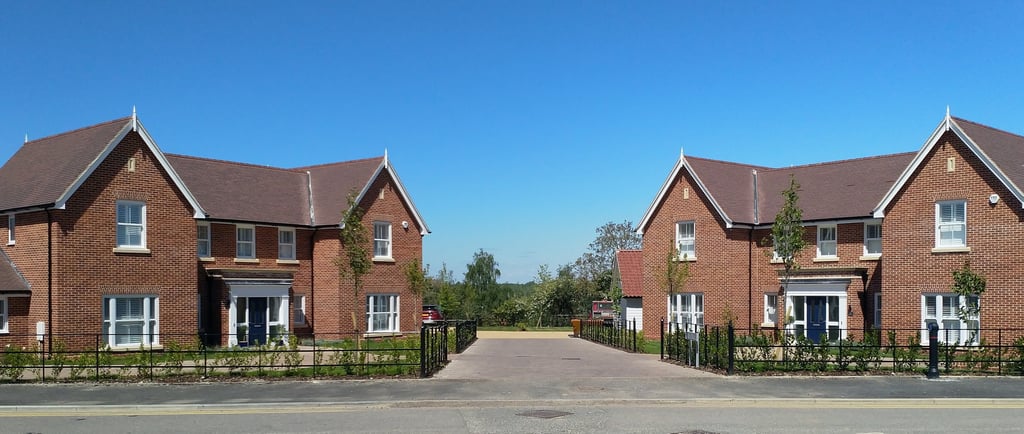
One of the most common questions we get asked as planning consultants is surprisingly simple on the face of it: “How long does planning permission last?”
You might assume there’s a straightforward, one-size-fits-all answer… but this is planning, so naturally the reality is a little more complicated.
The rules vary depending on whether you have a full planning permission, an outline planning permission, or you’re dealing with reserved matters. On top of that, there are multiple legal mechanisms for trying to extend or change time limits — some of which are allowed, some of which are absolutely not, and some that live in a rather grey middle area.
So in this article, I’ll walk you through:
How long planning permission normally lasts
The differences between full and outline permissions
What “reserved matters” really mean for your timeline
Whether time limits can be extended (and when they definitely cannot)
What your options are if you’re approaching a deadline
We’ll keep it conversational and practical — no legal jargon unless it’s essential, and where it’s essential, I’ll unpack it.
Let’s dive in.
1. First Things First: “Three-Year Time Limit”
Most people have heard that planning permission lasts for three years. And yes — that’s broadly correct, but only for full planning permissions.
Under section 91 of the Town and Country Planning Act 1990, every full planning permission must include a condition that says you have to start the development within three years of the permission being granted.
If this condition is missing from the decision notice, don’t panic — the law actually says the condition is “deemed” to apply anyway. But for completeness and good practice, almost all LPAs explicitly write it into the permission.
What does “begin the development” mean?
Good question — because it’s not as simple as digging a small hole.
You need to carry out a “material operation” which is consistent with the actual permission. For example:
digging foundations
constructing any part of a building
laying underground pipes
making a new access
or carrying out any other operation that forms part of the permitted scheme
Merely clearing vegetation or putting up fencing normally doesn’t count.
Once you’ve lawfully begun the development in this way, the permission stays alive indefinitely — even if the project then pauses or stalls.
Can the three-year period be changed?
Surprisingly, yes. The legislation allows an LPA to set either:
a shorter period, or
a longer period
…where it considers that reasonable.
A shorter timeframe might be appropriate where:
The site has suffered from lack of implementation before
Non-commencement is causing local issues
Rapid delivery (especially of housing) is needed
A longer timeframe might be justified for:
Very complex or strategic schemes
Projects with long lead-in periods (infrastructure dependencies, multi-phase build-outs, abnormal site conditions, etc.)
In practice, longer periods are more common on large or complicated sites (think urban extensions, big regeneration schemes or major infrastructure).
2. Outline Permissions: A Different Clock Entirely
Outline permissions are where things get much more nuanced.
They’re often used by developers who want to establish the principle of development — say, new homes or a mixed-use scheme — but don’t yet have the detailed design finalised.
Outline permissions come with two separate clocks:
Clock 1: Deadline for submitting Reserved Matters
By default, you must submit all your reserved matters applications within three years of the outline permission being granted.
But — and this is where flexibility comes in — section 92 of the Act allows the LPA to set a different period. And for large, phased developments, this can be significantly longer.
For example, it’s common to see outline conditions like:
“Reserved matters for Phase 1 must be submitted within 2 years.”
“Reserved matters for subsequent phases must be submitted within 8, 10 or 12 years.”
A major outline scheme might even give a decade-long runway for submitting final reserved matters. That’s perfectly legitimate where the LPA has used its power under s92(4) to set bespoke time limits.
Clock 2: Deadline for beginning development after RM approval
The second time limit applies once the final reserved matter has been approved. Then you must:
start the development within 2 years of that final approval.
Again, this can be varied at the outset — and often is for multi-phase developments.
So how long does an outline last altogether?
Potentially a very long time.
Here's a possible example:
Outline permission granted in 2020
First Reserved Matters must be submitted within 3 years
Final Reserved Matters must be submitted within 12 years
Development must then begin by 2034
That’s a 14-year lifespan, entirely legitimately.
3. What Are Reserved Matters?
Reserved matters are the detailed elements of a scheme that weren’t fixed at the outline stage. These typically include:
layout
scale
appearance
access
landscaping
You can submit reserved matters in phases — and most large developments do.
4. What If You Need More Time? The Three Key Mechanisms Explained
This is the part most people get confused about.
There are three potential legal routes for altering time limits:
A. Section 73 – Varying or Removing Conditions
🚫 Cannot be used to extend ANY time limits
This is perhaps the most misunderstood point in planning law.
Section 73 cannot be used to:
extend the time for commencement, or
extend the time for submitting reserved matters
This isn’t just case law — although the courts have hammered the point home — it’s now written directly into the legislation.
Under section 73, any successful application actually results in a new, standalone planning permission, while the original permission remains in place. In other words, the developer ends up with two live permissions and can choose which one to implement.
But there’s an important limitation: when deciding a section 73 application, the LPA can only look at the conditions attached to the original permission. They cannot use s73 to change the operative or fundamental part of the permission — essentially, the description of what has been approved.
This principle was firmly established in Finney v Welsh Ministers and recently reinforced in Test Valley BC v Fiske, where the Court of Appeal confirmed that a s73 permission cannot introduce conditions that conflict with the core scope of the original development.
On top of that, this legislation itself makes clear that s73 cannot be used to extend the time limit for starting development, cannot be used to extend the deadline for reserved matters submissions, and cannot be used to remove or disapply the mandatory biodiversity net gain condition.
Bottom line:
A s73 application to extend time will always be invalid.
B. Section 96A – Non-Material Amendments
⭐ Sometimes CAN extend time limits (but only in narrow circumstances)
This is where things get more flexible.
Unlike s73, s96A does not include any legal prohibition on extending time limits. Parliament could have added one, but didn’t. And that absence is significant.
So, can you extend a reserved matters submission period via s96A?
Yes — if the change is “non-material”.
To be clear, that doesn’t mean “tiny”. It means the change must not create material planning impacts.
For example:
If the LPA has already approved a phasing strategy showing construction running until, say, 2030, and you apply to extend a reserved matters deadline from 2026 to 2028, that may be non-material, because the impacts and build-out period remain unchanged.
When might extending time via s96A not be allowed?
If it would extend the construction period
If it would prolong impacts on neighbours
If the LPA never anticipated a long build-out in the first place
If environmental, traffic, or amenity effects would increase
In these situations, the change becomes material, and s96A is off the table.
C. A fresh planning application
This is sometimes unavoidable.
You need a new full or outline application when:
the permission has expired
the extension sought is material
you missed the reserved matters deadline
the LPA refuses s96A or deems the change material
This is fairly common on long-running projects and can result in overlapping permissions.
5. What Happens When a Permission Expires?
When the deadline is missed:
The permission lapses
No implementation is possible
Any operations on site are unauthorised unless a new permission is granted
s73 cannot revive it
s96A cannot revive it
Sometimes applicants hope that “substantial work” carried out late might save them — but unfortunately the law is crystal clear on this.
Once the permission expires, it’s gone.
6. Practical Tips for Staying on Top of Deadlines
Here are some simple pointers that can save you a lot of stress:
✔ Keep a centralised ‘permissions tracker’
Include:
grant dates
reserved matters deadlines
commencement deadlines
phasing obligations
s106 and pre-commencement conditions
✔ Front-load your reserved matters work
Don’t leave it to year 2.75 of a three-year deadline.
✔ If you're dealing with a multi-phase scheme, negotiate generous s92 periods upfront
This saves huge headaches later.
✔ Don’t rely on s73 for time extensions
It doesn’t work. It never works. And it will waste everyone’s time.
✔ Use s96A intelligently
If the change truly doesn’t alter the nature, scale, or impacts of the scheme, it may well be lawful.
7. So… How Long Does Planning Permission Actually Last?
Here’s the honest answer:
Full permissions:
Normally: 3 years to start
Can be shorter or longer at the LPA’s discretion
Cannot be extended via s73
Occasionally can be tweaked via s96A
Outline permissions:
Usually: 3 years to submit reserved matters
But LPAs can (and often do) set much longer periods for big schemes
Then: normally 2 years to begin development after final RM approval
Again varies depending on conditions
Extensions possible only via s96A (if non-material)
Expired permissions:
Cannot be revived via s73
Cannot be revived via s96A
Require a new application
8. Final Thoughts
Time limits in planning can feel like a maze. There’s the default rule, the exception to the default rule, the exception to the exception, and then the obscure legal mechanism that everyone forgets exists but sometimes turns out to be a lifesaver.
But once you understand the underlying principles, the picture becomes much clearer:
Full permissions? Think “three years”.
Outline permissions? Think “two clocks”.
Extensions? Almost never s73. Sometimes s96A.
Expiry? Usually terminal.
If you’re approaching a deadline, or you’re worried you might run out of time, the most important thing you can do is act early and get proper advice. The sooner you look at your options, the more likely it is that one of the lawful mechanisms will still be available to you.
Andrew Ransome MRTPI - Email: andrew@andrewransome.co.uk
About me
Andrew Ransome is a Planning Director and a Chartered Member of the Royal Town Planning Institute (RTPI), with more than two decades of experience in town planning.
He specialises in delivering strategic planning solutions for complex developments across both rural and urban environments, helping clients navigate planning challenges and unlock development opportunities. Connect with Andrew on Linkedin.




Get in Touch
Email: andrew@andrewransome.co.uk
Tel: 020 7096 8045
London Office:
60 Tottenham Court Road
Fitzrovia
London
W1T 2EW
© 2026 Andrew Ransome Town Planning Ltd. All rights reserved.
Content on this website is provided for general information and educational purposes only and does not constitute formal planning, professional, or legal advice. Planning policies, legislation, and guidance are subject to change. Site-specific assessment by a qualified consultant is recommended before making development decisions.
Projects highlighted across this website represent professional work undertaken by Andrew Ransome throughout his career.