Lawful Development Certificates in Tower Hamlets
A practical guide to applying for a Lawful Development Certificate in the London Borough of Tower Hamlets — including when you need one, the evidence required, and what to do if your application is refused.
LOCATIONS
Andrew Ransome
4/23/20264 min read
Lawful Development Certificates
The London Borough of Tower Hamlets is an active planning enforcement authorities in England.
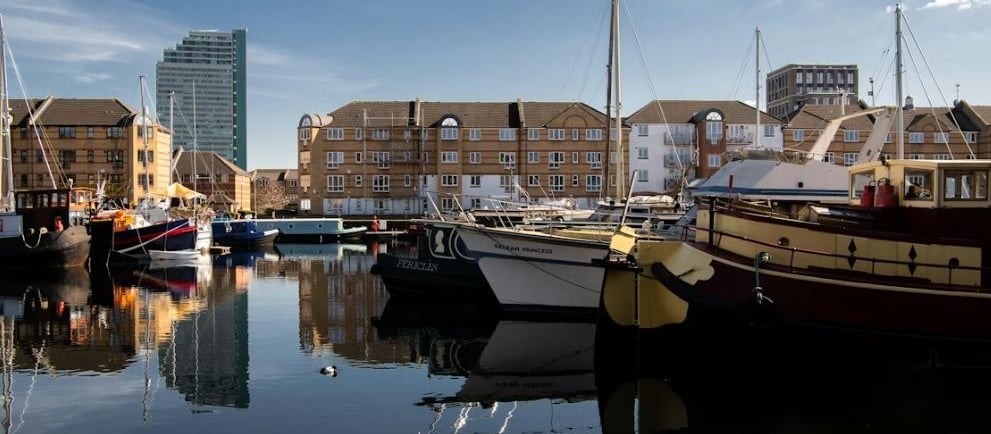
Covering key parts of East London — including Canary Wharf, Whitechapel, Bethnal Green, Stepney, Bow, Poplar and the Isle of Dogs — the Tower Hamlets sits at the centre of intense development pressure and is subject to an extensive network of Article 4 Directions, Conservation Areas and Listed Buildings.
In this context, having formal confirmation that a development or use is lawful can be essential — whether you are defending against enforcement action, selling a property, or seeking certainty before carrying out works.
For commentary and technical guidance on the planning process, visit my Planning Enforcement and Permitted Development sections.
What is a Lawful Development Certificate?
A Lawful Development Certificate (LDC) is a formal decision from the local planning authority confirming that a specific use, operation or activity is lawful under planning legislation.
It is not a grant of planning permission — it is a legal determination that permission is not needed, or that the time limit for enforcement action has passed.
An LDC provides important legal certainty. It is registered on the planning register and runs with the land, meaning it can be relied upon by future owners and lenders.
The Two Types of Lawful Development Certificate
Proposed Lawful Development Certificate (Section 192)
A proposed LDC confirms that a development you intend to carry out would be lawful if implemented as described.
This is most commonly used to confirm that:
A proposed extension, outbuilding or other works to a dwellinghouse falls within the limits of permitted development under the General Permitted Development Order (GPDO).
A proposed change of use does not require planning permission — for example, a change between uses within the same Use Class, or a change that falls within a permitted development right.
A proposed operation or activity is otherwise not development, or is exempt from the requirement for permission.
Tower Hamlets has applied Article 4 Directions across significant parts of the borough, removing certain permitted development rights that would otherwise apply.
A proposed LDC application must be assessed against the specific rights available at the application address — something that requires careful checking before submission.
Existing Lawful Development Certificate (Section 191)
An existing LDC confirms that a use, operation or breach of planning control that has already been carried out is lawful.
Lawfulness can arise in two key ways:
Through the passage of time — where the relevant time limit for enforcement action has expired. Under changes introduced by the Levelling-Up and Regeneration Act 2024, the limitation period is now ten years for all operational development and changes of use (previously four years for operational development and change of use to a single dwellinghouse). Enforcement action cannot be taken once the time limit has passed.
Through an existing permission or legal right — where the development or use was always lawful and the LDC simply records that fact.
Existing LDC applications require clear and cogent evidence. The burden of proof rests with the applicant, and Tower Hamlets will scrutinise the evidence carefully before granting a certificate.
Why a Lawful Development Certificate Matters in Tower Hamlets
Tower Hamlets regularly investigates alleged breaches of planning control, and enforcement notices are not uncommon — particularly in relation to changes of use, householder works in Conservation Areas, and the subdivision of residential properties.
A Lawful Development Certificate is valuable in a number of common situations, for example:
Selling a property — where works have been carried out without planning permission and a buyer or their solicitor requires confirmation of lawfulness before exchange.
Securing mortgage finance — where a lender requires formal confirmation that no enforcement liability attaches to a property.
Defending against enforcement action — where Tower Hamlets has issued a planning contravention notice or enforcement notice and you wish to demonstrate that the development or use is lawful.
Before carrying out permitted development works — where there is any uncertainty about whether a proposal falls within the GPDO limits, particularly in Conservation Areas or where an Article 4 Direction applies.
The LDC Application Process
LDC applications are submitted to Tower Hamlets. The council has eight weeks to determine the application (or such longer period as is agreed in writing).
Evidence for a Proposed LDC
For a proposed LDC, the application must accurately describe the proposed development and demonstrate that it complies with the relevant permitted development class or is otherwise not development.
Plans, elevations and a detailed description are normally required. Where the position is borderline — for example, where a proposed extension approaches the maximum permitted depth or height — a clear analysis of the GPDO limits is required.
Evidence for an Existing LDC
For an existing LDC, the applicant must provide clear evidence of the development or use and its continuity over the relevant period.
A weak or incomplete evidence base is the most common reason for refusal. Preparing a comprehensive evidence package before submission significantly reduces the risk.
What Happens if Tower Hamlets Refuses? Lawful Development Certificate Appeals
Where Tower Hamlets refuses an LDC application, or fails to determine it within eight weeks, an appeal can be made to the Planning Inspectorate under Section 195 of the Town and Country Planning Act 1990
Most LDC appeals are determined by written representations. The Inspector will assess the evidence independently and is not bound by the council's reasoning. Where the evidence is strong, appeals against Tower Hamlets LDC refusals can and do succeed.
Get LDC Advice in Tower Hamlets
Get in touch to discuss your situation. I can advise on whether an LDC is the right route, help assemble the evidence, and prepare the application — or, if Tower Hamlets has already refused, advise on the prospects of an appeal.
Andrew Ransome MRTPI - Email: andrew@andrewransome.co.uk
About me
Andrew Ransome is a Planning Director and a Chartered Member of the Royal Town Planning Institute (RTPI), with more than two decades of experience in town planning.
He specialises in delivering strategic planning solutions for complex developments across both rural and urban environments, helping clients navigate planning challenges and unlock development opportunities. Connect with Andrew on Linkedin.


Certificate of Lawfulness Successes
Permitted Development Information


Get in Touch
Email: andrew@andrewransome.co.uk
Tel: 020 7096 8045
London Office:
60 Tottenham Court Road
Fitzrovia
London
W1T 2EW
© 2026 Andrew Ransome Town Planning Ltd. All rights reserved.
Content on this website is provided for general information and educational purposes only and does not constitute formal planning, professional, or legal advice. Planning policies, legislation, and guidance are subject to change. Site-specific assessment by a qualified consultant is recommended before making development decisions.
Projects highlighted across this website represent professional work undertaken by Andrew Ransome throughout his career.