New Homes on the Edge of Bexhill, Rother – Appeal Allowed
Secured planning appeal permission for four new homes on a garden plot outside Bexhill, East Sussex. The Inspector set aside strict settlement boundary policies, finding no countryside harm and recognising the need for additional housing in the district.
PLANNING APPEAL SUCCESSROTHEREAST SUSSEX
Andrew Ransome
5/14/20262 min read
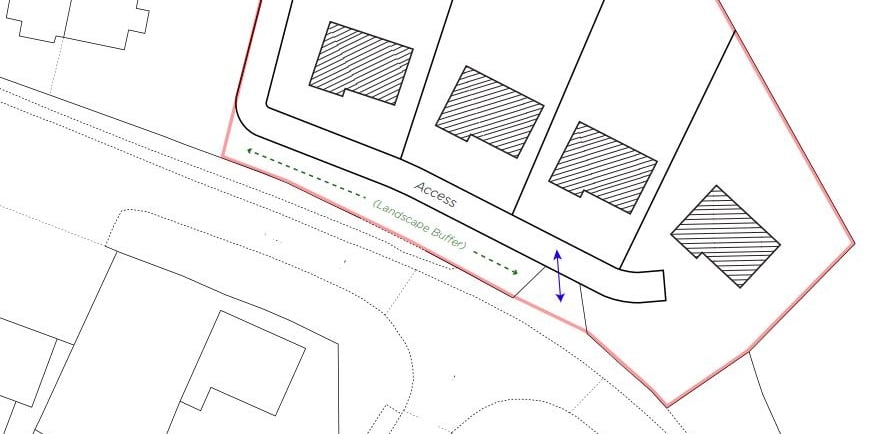
In 2014, I had planning appeal success against Rother District Council, East Sussex for four new homes on a garden plot just outside Bexhill in East Sussex.
Securing planning permission for small residential schemes on the edge of settlements can be particularly challenging, especially where councils rely heavily on rigid settlement boundaries and broad “countryside character” arguments.
A planning appeal success near Bexhill in East Sussex shows how those policies must still be balanced against real‑world site context and an authority’s housing land supply position.
The Planning Issue
Rother District Council argued that developing the site would undermine their countryside protection policies and harm the intrinsic character of the surrounding area. They also relied heavily on the fact that the land fell outside the settlement boundary, treating that as almost decisive in itself.
In preparing the appeal, I focused on two key points: the council’s housing land supply position and the actual, on‑the‑ground context of the site.
Although the plot was technically about 700 metres from the settlement boundary, it sat alongside existing ribbon development rather than in open, isolated countryside.
The Planning Inspector accepted that the council did not have a deliverable 5‑year housing land supply and that its historic under‑delivery needed to be addressed in the early years of the plan period. As a result, the settlement boundary policies were treated as out of date and given reduced weight.
Crucially, the Inspector also found that the garden itself made no meaningful contribution to the intrinsic character and beauty of the countryside, despite the council’s claim to the contrary.
The site was not considered isolated, given its relationship to adjoining development and its modest scale.
In the end, the benefits of providing much‑needed housing in Bexhill outweighed the limited and largely theoretical harms suggested by the council.
The appeal was allowed, granting permission for four new homes and unlocking the development potential of what had been dismissed as a “countryside” garden plot.
This case underlines three recurring themes in rural‑edge appeals:
Housing land supply shortfalls can reduce the weight given to strict settlement boundary policies.
“Countryside character” objections need to be tested against the actual context of the site, especially where it adjoins existing development.
Small‑scale housing schemes rarely generate the level of traffic that justifies refusal on transport grounds alone.
Planning Appeal Advice
If you have a development project and you have received a planning refusal, contact me for practical advice on whether an appeal is the right option and how to proceed.
Andrew Ransome MRTPI - Email: andrew@andrewransome.co.uk
About me
Andrew Ransome is a Planning Director and a Chartered Member of the Royal Town Planning Institute (RTPI), with more than two decades of experience in town planning.
He specialises in delivering strategic planning solutions for complex developments across both rural and urban environments, helping clients navigate planning challenges and unlock development opportunities. Connect with Andrew on Linkedin.


Planning Appeal Successes
Planning Appeal Information


Get in Touch
Email: andrew@andrewransome.co.uk
Tel: 020 7096 8045
London Office:
60 Tottenham Court Road
Fitzrovia
London
W1T 2EW
© 2026 Andrew Ransome Town Planning Ltd. All rights reserved.
Content on this website is provided for general information and educational purposes only and does not constitute formal planning, professional, or legal advice. Planning policies, legislation, and guidance are subject to change. Site-specific assessment by a qualified consultant is recommended before making development decisions.
Projects highlighted across this website represent professional work undertaken by Andrew Ransome throughout his career.