Operational Development in Planning
Operational development in UK planning explained, including substantial completion, the 10-year rule, key case law, enforcement risks and permitted development limits.
PLANNING ENFORCEMENT
Andrew Ransome
2/21/20267 min read
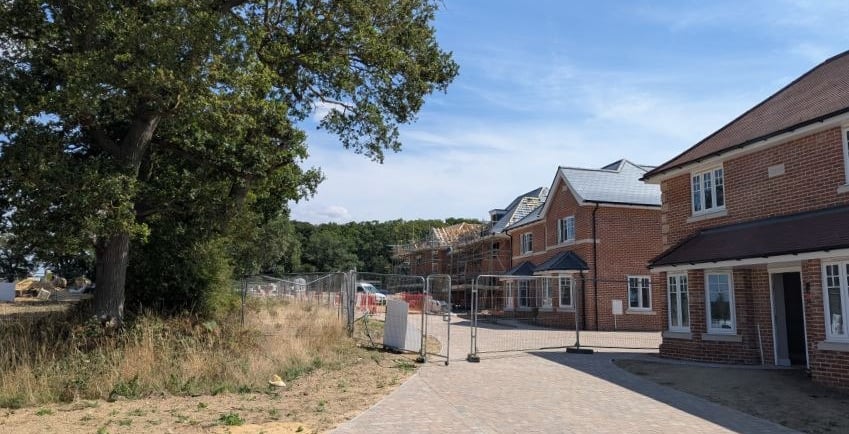
Operational development is one of the central concepts in UK town planning. It sits at the heart of the statutory definition of “development” and frequently becomes critical in enforcement cases, appeals, and applications for Lawful Development Certificates.
While the phrase may sound technical, understanding operational development is essential for landowners, developers, and property professionals. It determines:
Whether planning permission is required
When permitted development rights apply
When enforcement action can be taken
When immunity from enforcement may arise
In this article, we examine operational development in detail — including the definition under statute, key legal principles from the courts, and the important 10-year enforcement rule under section 171B(1) of the Town and Country Planning Act 1990.
The Definition of Operational Development
Section 55(1) of the Town and Country Planning Act 1990 defines development as:
“the carrying out of building, engineering, mining or other operations in, on, over or under land, or the making of any material change in the use of any buildings or other land.”
Operational development therefore concerns the physical works carried out to land or buildings. It is distinct from a material change of use, which concerns how land or buildings are used rather than the works themselves.
In simple terms, operational development includes:
Constructing new buildings
Demolishing structures
Structural alterations
Ground works and regrading
Engineering infrastructure
Mineral extraction
Importantly, operations can occur above ground, at ground level, or below ground.
The definition is intentionally wide.
Building Operations
Building operations are the most common form of operational development.
Building operations refer to any activity that involves the construction, demolition, alteration, or addition of a building. It can also include other structures such as walls, hoarding, fences and masts.
Examples of building operations can include erecting a new building, demolishing an existing building, or making structural alterations to a building.
It's important to note that even minor building operations, such as putting up a fence or installing a new window, may require planning permission in some cases.
A “building” in planning law is therefore not limited to traditional brick-and-mortar houses. The courts have identified three principal characteristics:
Size
Permanence
Physical attachment to the ground
These principles were famously articulated in Cardiff Rating Authority v Guest Keen Baldwin’s Iron & Steel Co Ltd [1949].
The question of permanence has also been central in later cases. In Skerritts of Nottingham Ltd v SSETR and Harrow LBC [2000], a marquee erected for eight months of each year was held to have sufficient permanence to constitute operational development.
Similarly, in R v Swansea CC ex parte Elitestone Ltd [1993], wooden chalets resting on pillars but intended as permanent holiday homes were found to be buildings.
These cases demonstrate that physical attachment alone is not decisive — intended permanence and physical reality are key.
Engineering Operations
Engineering operations typically involve works with an element of design or pre-planning, often supervised by someone with engineering knowledge.
Engineering operations can be defined as any activities involving the construction, alteration, or maintenance of engineering works. This includes the construction of bridges, tunnels, dams, and other civil engineering structures, as well as the installation and maintenance of pipelines, cables, and other infrastructure.
In Ewen Developments Ltd v SSE & North Norfolk DC [1980], the court confirmed that engineering operations involve works with some degree of planning and design. Earth embankments were not permitted development and could be enforced against in their entirety.
Engineering operations can include:
Regrading land
Constructing embankments
Forming access roads
Installing substantial drainage infrastructure
Creating hardstandings
Importantly, if a development as a whole is unlawful, there may be no saving for parts completed outside a limitation period.
Mining and Other Operations
Mining operations, as defined by the Town and Country Planning Act 1990, refer to activities that involve the extraction of minerals or other substances from the ground.
These operations can take place in, on, over, or under land, and include activities such as quarrying, open-cast mining, and underground mining.
Other operations can include:
Waste disposal
Telecommunications infrastructure
Pipelines and service installations
Access construction
The category of “other operations” ensures the definition captures works that may not neatly fall within building or engineering classifications.
What Is Not Operational Development?
Not all works constitute operational development under town planning law.
Section 55(2)(a) of the 1990 Act excludes works for:
Maintenance
Improvement
Other alteration
However, this exclusion applies only to completed buildings. It does not apply to works involved in completing an unfinished structure. This distinction became critically important in later case law, particularly in relation to enforcement and immunity.
Additionally, certain works benefit from deemed planning permission under the Town and Country Planning (General Permitted Development) (England) Order 2015 (GPDO). However, permitted development rights are subject to strict conditions and limitations.
Crucially, permitted development rights do not apply to unlawful buildings, by virtue of Article 3(5)(a) of the GPDO.
It's important to note, however, that even if a certain type of work is not considered operational development and does not require planning permission, it may still be subject to other regulations and requirements, such as building regulations.
Enforcement and the 10-Year Rule: Section 171B(1)
One of the most important aspects of operational development arises in enforcement.
Section 171B(1) of the Town and Country Planning Act 1990 provides that:
No enforcement action may be taken in respect of any operational development after the end of the period of 10 years beginning with the date on which the operations were substantially completed.
This is often referred to as the “10-year rule”.
However, the key phrase is “substantially completed” — and this has been the subject of significant judicial scrutiny.
What Does “Substantially Completed” Mean?
The leading authority is Sage v Secretary of State for the Environment, Transport and the Regions & Maidstone BC [2003] UKHL 22.
In Sage, the House of Lords held that for building operations to be substantially completed, what is required is:
“a fully detailed building of a certain character.”
In that case, the structure lacked glazing, guttering, a ground floor, internal finishes, service fittings, and access to the first floor. The appellant argued that remaining works were exempt as “maintenance or improvement” under section 55(2)(a).
The House of Lords rejected that argument.
It held:
Section 55(2)(a) applies only to a completed building.
Works involved in completing a structure remain operational development.
Even if outstanding works affect only the interior, the building is not substantially completed.
, when planning permission is granted for a building operation, it is granted for the whole of the operation. If the works are not carried out internally and externally in accordance with the permission, the entire operation remains unlawful.
Therefore, time does not begin to run for enforcement purposes until the building is genuinely complete in planning terms.
The Holistic Approach to Completion
The courts have confirmed that development must be considered holistically.
In Singh v SSCLG & Sandwell MBC [2010] EWHC 1621 (Admin), it was held that a development must be regarded as a whole. If some parts are incapable of lawful completion, the entire development may be unlawful.
For an enforcement appeal to succeed on ground (d) (the immunity ground), the whole of the alleged development must be substantially completed. An enforcement notice may require removal of all works if immunity cannot be demonstrated.
This holistic principle prevents developers from attempting to isolate incomplete or unlawful components to secure partial immunity.
Can There Be More Than One Operation?
There are circumstances where works may constitute more than one distinct operation.
In Worthy Fuel Injection Ltd v SSE & Southampton CC [1983], walls were first constructed around a yard and later roofed over. The court accepted that if two distinct operations could be identified, the first might fall outside the relevant immunity period even if the second did not.
In such cases, partial success on ground (d) may be possible. The enforcement notice may be corrected rather than quashed.
However, whether works constitute one operation or multiple operations is highly fact-sensitive.
The Relationship Between Completion and Permitted Development Rights
Substantial completion is also critical in the context of permitted development rights.
In R (oao Townsley) v SSCLG [2009] EWHC 3522 (Admin), the High Court held that:
A dwellinghouse must be in existence before permitted development rights can be exercised.
A building under construction is not a dwellinghouse for PD purposes.
The test for existence is substantial completion as described in Sage.
In other words, PD rights cannot be exercised on an incomplete building.
Similarly, in Arnold v SSCLG [2015] EWHC 1197 (Admin), later upheld in the Court of Appeal, works resulting in almost complete demolition of a dwelling were held to go beyond the scope of permitted development rights.
The Inspector concluded that it was not possible to sever the building into acceptable and unacceptable parts. The development had to be assessed as a whole.
This reinforces two key principles:
Permitted development rights depend upon a lawfully existing building.
Near-total demolition followed by rebuilding is likely to constitute operational development requiring planning permission.
Practical Consequences for Developers and Landowners
The legal principles emerging from these cases have significant real-world implications.
1. Incomplete Buildings Do Not Gain Immunity
If a structure is left unfinished, time may not begin to run under section 171B(1). A developer cannot rely on partial completion to trigger immunity.
2. Interior Works Matter
Even if only internal works remain outstanding, the building may not be substantially completed.
3. Development Is Assessed as a Whole
Attempts to segment development into lawful and unlawful parts may fail if the project is properly characterised as one holistic operation.
4. PD Rights Cannot Be “Banked”
It is not permissible to construct part of a building under express permission while intending to rely on PD rights for the remainder before the building is substantially complete.
5. Unlawful Buildings Have No PD Rights
Article 3(5)(a) of the GPDO prevents reliance on PD rights for unlawful buildings.
Common Grey Areas
Operational development frequently arises in the following scenarios:
Extensive “renovations” that verge on rebuilding
Ground level changes and retaining structures
Large outbuildings constructed in stages
Structures deliberately left incomplete
Attempts to secure immunity through delay
These matters are fact-sensitive and require careful analysis of both physical evidence and legal principle.
Conclusion: Why Operational Development Matters
Operational development is far more than a technical definition in statute. It governs:
Whether planning permission is required
Whether permitted development rights apply
When enforcement can occur
When immunity may arise
The case law demonstrates that the courts adopt a structured and often strict approach. Buildings must be genuinely complete. Development must be considered holistically. Permitted development rights cannot be manipulated to legitimise unlawful works.
Given the financial and legal risks involved — particularly where enforcement action is threatened — careful professional advice is essential.
Andrew Ransome MRTPI - Email: andrew@andrewransome.co.uk
About me
Andrew Ransome is a Planning Director and a Chartered Member of the Royal Town Planning Institute (RTPI), with more than two decades of experience in town planning.
He specialises in delivering strategic planning solutions for complex developments across both rural and urban environments, helping clients navigate planning challenges and unlock development opportunities. Connect with Andrew on Linkedin.




Get in Touch
Email: andrew@andrewransome.co.uk
Tel: 020 7096 8045
London Office:
60 Tottenham Court Road
Fitzrovia
London
W1T 2EW
© 2026 Andrew Ransome Town Planning Ltd. All rights reserved.
Content on this website is provided for general information and educational purposes only and does not constitute formal planning, professional, or legal advice. Planning policies, legislation, and guidance are subject to change. Site-specific assessment by a qualified consultant is recommended before making development decisions.
Projects highlighted across this website represent professional work undertaken by Andrew Ransome throughout his career.