Part 1, Class A of the GPDO: Large Rear Extensions
Learn how Part 1, Class A of the GPDO allows large rear house extensions under permitted development rights. Guidance on prior approval, size limits, neighbour consultation, and lawful residential extensions in England.
PRIOR APPROVALPERMITTED DEVELOPMENT
Andrew Ransome
5/26/20266 min read
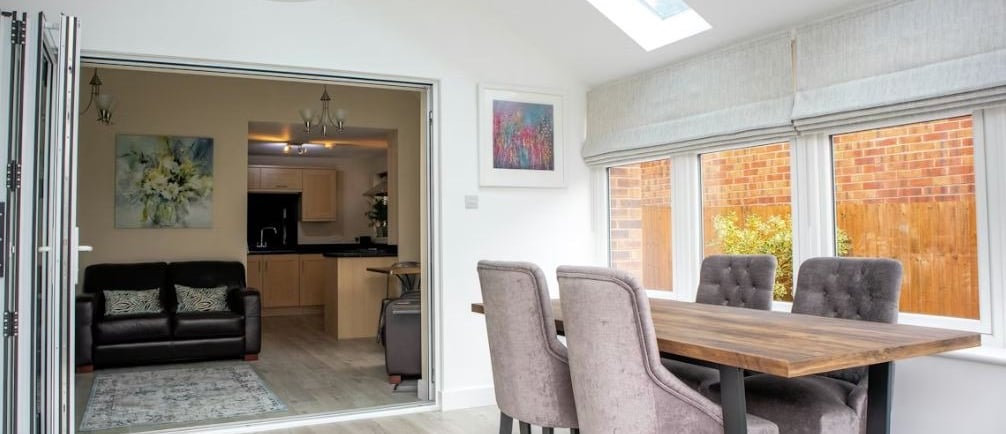
Planning permission is not normally required for a rear extension to a house — provided it stays within the standard permitted development limits.
But where a proposed extension is larger than those limits allow, there is a second route available to homeowners: the neighbour consultation scheme, sometimes called the larger home extension process.
This article explains how the scheme works, what can be built under it, and what the LPA can and cannot refuse.
The Standard Permitted Development Limits
Under Part 1, Class A of the GPDO 2015, the enlargement, improvement or alteration of a dwellinghouse is permitted development provided it complies with all the limitations in paragraph A.1.
For rear extensions, the relevant limits on the depth of a single-storey rear extension beyond the rear wall of the original dwellinghouse are:
4 metres for a detached house
3 metres for any other house (terraced or semi-detached)
A two-storey rear extension is limited to 3 metres beyond the rear wall of the original dwellinghouse, regardless of whether the house is detached or not, and must be at least 7 metres from the opposite boundary of the curtilage.
These are the limits that apply automatically, without any application to the LPA, although it is own advisable to confrm the permitted development nature of a development through a Certificate of Lawfulness.
Within these limits, no notification of neighbours is required and no prior approval is needed.
The Larger Home Extension: What is Permitted Under the Consultation Scheme?
Paragraph A.1(g) of the GPDO 2015 allows a single-storey rear extension to exceed the standard limits — up to a maximum of:
8 metres beyond the rear wall of the original dwellinghouse, for a detached house
6 metres beyond the rear wall of the original dwellinghouse, for any other house
This doubled allowance is available only for single-storey extensions and only where the neighbour consultation procedure is followed.
There is no equivalent extended allowance for two-storey rear extensions.
The extension must still comply with all other Class A limitations — for example, it must not exceed 4 metres in height (or 3 metres if within 2 metres of a boundary), must not extend beyond the side wall of the original house, and must not result in more than half the area of land around the original house being covered by buildings.
It is also important to note that the total enlargement — being the proposed extended part together with any existing enlargement of the original dwellinghouse to which it will be joined — must not exceed the depth limits.
Previous extensions already in place are counted.
How the Neighbour Consultation Procedure Works
The developer must apply to the LPA for a determination as to whether prior approval is required. The application must include:
A written description of the proposed development
A plan indicating the site and the proposed development
The developer's contact details
The fee required
On receipt of a valid application, the LPA must notify each "owner or occupier of any premises adjoining the land to which the application relates" — and those neighbours then have 21 days to make representations.
If no representations are received from neighbours within that period, the LPA must notify the developer that prior approval is not required, and the development may proceed.
If a relevant representation is received, the LPA must then make a determination as to whether prior approval is required and, if so, whether to grant or refuse it.
The overall statutory period for the LPA to determine the application is 42 days from receipt of the valid application.
If the LPA fails to notify the developer of its decision within the 42-day period, prior approval is deemed to be granted — the developer may proceed without waiting for a formal decision.
What the LPA Can and Cannot Assess
This is where the prior approval scheme for large extensions is fundamentally different from a conventional planning application.
Where a representation has been received, paragraph A.4(7) of the GPDO 2015 limits the LPA's assessment strictly to the impact of the proposed development on the amenity of all adjoining premises.
The LPA cannot refuse on grounds that fall outside this single matter.
It cannot apply development plan policies.
It cannot take into account the general character of the area, the appearance of the extension in the street,
Or any other consideration that does not go to the amenity of adjoining premises.
Furthermore — and this is a point that is frequently misunderstood — an Inspector cannot raise their own concerns or have regard to amenity unless there has been a representation from a neighbour which triggers the need for the prior approval.
If the LPA notified neighbouring properties and no objections were received, the appeal should be allowed on the basis that prior approval is not required, and no conditions can be imposed.
This is a tightly constrained jurisdiction, deliberately designed to reflect the fact that the principle of the development — that a homeowner may build a larger extension — is already established by the GPDO.
"Adjoining Premises": Who Counts?
The LPA must notify the "owner or occupier of any premises adjoining the land to which the application relates."
The meaning of "adjoining" in this context is Article 2(1) of the GPDO: "any owner or occupier of any premises or land adjoining the site."
When assessing amenity impact, the Inspector must consider the impact on the amenity of all adjoining premises — including those whose occupiers did not make representations. If a neighbour's amenity is affected, that is a relevant consideration regardless of whether that neighbour chose to object.
Premises that do not adjoin the site — even if nearby — are not within scope.
The scheme is deliberately narrower than a conventional planning application in this respect.
The Amenity Assessment: An Objective Test
The assessment of impact on amenity must be objective — it considers the amenities that should reasonably be enjoyed by occupiers of neighbouring properties generally, rather than the subjective preferences of particular neighbours.
A neighbour who finds the proposed extension aesthetically displeasing, or who is concerned about a loss of view, does not have a strong basis for objection. As Ouseley J observed in R (oao Cummins & others) v Camden LBC & SSETR [2001] EWHC Admin 1116:
"The private view from a window is not of itself regarded as a planning matter... normally a change of view... is not regarded as a planning consideration even though it may have a financial impact on the value of the houses which lose the view."
Loss of light, overlooking and loss of privacy are the core amenity concerns that the prior approval assessment is designed to address.
These are the matters most likely to lead to refusal — and even here, the test is whether the impact on the reasonable amenity of neighbouring occupiers is significant, not whether it exists at all.
Common objections that carry little weight in this process include:
Loss of value to the neighbouring property
General dislike of the design or appearance of the extension
Impact on the character or appearance of the street
Concerns about the builder's conduct or programme
The Fallback Position
The Larger Extension creates an interesting dynamic in relation to the "fallback position" — the ability of a developer to argue in support of a planning application that they could alternatively build something as of right.
Conditions on Prior Approval
Where prior approval is required and granted, conditions can only be imposed to the extent that the relevant Class provides for them.
For Part 1, Class A, paragraph A.4(8) allows the LPA to require the developer to provide additional information. But beyond this, the conditions that can be imposed are narrow.
Key Practical Points
The scheme applies only to single-storey rear extensions. There is no extended depth allowance for two-storey extensions.
The 8m/6m limit is from the rear wall of the original dwellinghouse — not from any existing extension.
Previous extensions already joined to the house are counted as part of the total enlargement under paragraph A.1(ja).
If no neighbour objects within 21 days, prior approval is not required and development can proceed. There is no need to wait for the full 42-day period.
If the LPA fails to determine within 42 days, prior approval is deemed granted — the deemed grant mechanism does apply to Part 1, Class A (unlike Part 20 Classes).
The neighbour consultation scheme is a practical and well-used route for homeowners who want to build a rear extension larger than the standard limits allow.
The prior approval process is relatively light — if neighbours do not object, it concludes quickly and without further cost.
Where a neighbour does object, the assessment is narrow and strictly limited to the impact on the amenity of adjoining premises.
The scheme is not, however, without risk. A well-evidenced objection from a neighbour — particularly where loss of light or overlooking is demonstrably significant — can result in refusal.
The Larger Extension can also provide a useful fallback position for an alternative development. This often works well in locations such as the Green Belt.
Get Prior Approval Planning Advice
If you are considering a project that may benefit from the prior approval route, get in touch for clear, practical advice on your options.
Andrew Ransome MRTPI - Email: andrew@andrewransome.co.uk
About me
Andrew Ransome is a Planning Director and a Chartered Member of the Royal Town Planning Institute (RTPI), with more than two decades of experience in town planning.
He specialises in delivering strategic planning solutions for complex developments across both rural and urban environments, helping clients navigate planning challenges and unlock development opportunities. Connect with Andrew on Linkedin.


Prior Approval Information


Get in Touch
Email: andrew@andrewransome.co.uk
Tel: 020 7096 8045
London Office:
60 Tottenham Court Road
Fitzrovia
London
W1T 2EW
© 2026 Andrew Ransome Town Planning Ltd. All rights reserved.
Content on this website is provided for general information and educational purposes only and does not constitute formal planning, professional, or legal advice. Planning policies, legislation, and guidance are subject to change. Site-specific assessment by a qualified consultant is recommended before making development decisions.
Projects highlighted across this website represent professional work undertaken by Andrew Ransome throughout his career.