Phasing Conditions in Planning: What They Are and Why They Matter
Phasing conditions explain the order in which a development must be built. Learn how they work in outline and reserved matters applications, why timing matters, and how good wording avoids delays.
PLANNING CONDITIONSPLANNING APPLICATIONS
Andrew Ransome
11/20/20254 min read
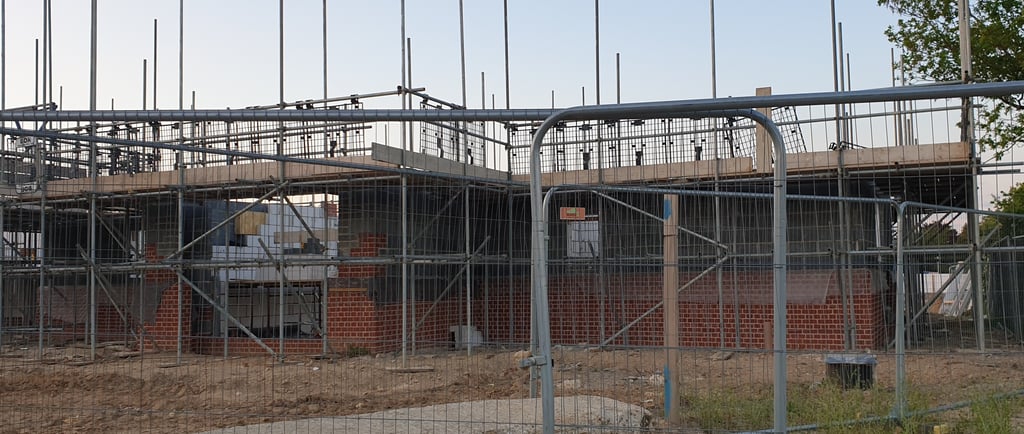
When a planning permission is granted—whether it’s a full application or an outline consent—the permission often comes with a list of conditions. Some are routine, some deal with technical matters… and then there are phasing conditions.
These are conditions that control when different parts of a development can be built or brought into use.
It can be confusing to understand why the council cares about the sequence of a project. But for bigger schemes, or even modest ones with sensitive impacts, phasing conditions are incredibly important.
This article breaks down what they are, when they’re used, and how they fit into outline and reserved matters applications.
So, what exactly is a phasing condition?
A phasing condition is a rule attached to a planning permission that sets out the order in which the development must be carried out, or when certain elements must be provided.
In plain terms, it tells the developer:
“Before you do X, you must have already done Y.”
Examples of everyday phasing requirements include:
Access before construction – A new access or visibility splay might need to be formed before building work starts, to ensure construction vehicles can enter safely.
Parking before occupation – Parking spaces may need to be installed before new homes or commercial units are occupied.
Drainage before completion – Surface-water systems may need to be in place at a certain stage to prevent onsite flooding while works are underway.
They exist to make sure the development doesn’t create problems during the build, not just after completion.
Why do planning authorities use phasing conditions?
Phasing conditions are used when timing matters.
Councils typically consider them when:
Part of the site must function safely while another part is under construction
Key infrastructure (access, drainage, fire safety measures) must be in place early
There’s a risk that the “important bits” might be left until too late or possibly not at all
A particular stage of development has environmental or amenity implications
The scheme is large enough that different parcels will inevitably come forward in stages
The key word here is necessity. Phasing shouldn’t be used to micro-manage a development—it should only be used where the timing genuinely affects safety, amenity, or proper planning.
How phasing conditions relate to the famous ‘six tests’
Any planning condition must meet the six legal tests—necessary, relevant, precise, reasonable, enforceable, and related to planning.
Phasing conditions in particular are scrutinised closely because:
If the timing is too restrictive, it can harm viability.
If the sequence doesn’t align with a developer’s build programme, it can be unworkable.
If the wording is vague (“early in the development”, “prior to major works”), it can cause disputes later.
That’s why councils and applicants are encouraged to discuss the wording during the application process, so that both sides understand what is achievable and what genuinely needs to be controlled.
Phasing in Outline Permissions and Reserved Matters
Phasing becomes especially significant in outline applications, which give “in principle” approval without agreeing all details upfront.
1. Outline Permission
With an outline consent, the applicant may seek approval for the overall concept (use, scale, access etc.) but leave details to Reserved Matters later. Phasing conditions are often used in outline permissions when:
The site will be built out over several years
Infrastructure (roads, drainage, open space) must align with occupation levels
The council needs reassurance that certain parts won’t be delayed indefinitely
A typical outline phasing condition might require:
Submission of a phasing plan before any development starts
Delivery of spine roads or strategic landscaping in a particular order
Limiting occupation until certain services are provided
2. Reserved Matters Stage
Reserved Matters (RM) approvals deal with the detail. But the outline permission still governs the structure of the project—including any phasing requirements.
This means:
RM submissions must fit within any phasing plan or sequencing condition already approved.
A condition might require the final RM application to be submitted within a specific timeframe.
A phased outline permission may allow RM to be submitted and approved for individual phases, rather than the entire site at once.
A common issue arises when a condition says something like:
“The last reserved matters application must be submitted by ___.”
If that date is too soon, the developer risks running out of time; if it’s too far away, the condition may fail the test of reasonableness. This is why clear, practical wording is essential.
Wording to be especially careful with
Because timing conditions can be sensitive, it’s important to avoid phrases that are too vague or create traps for the applicant. Examples to avoid or refine include:
“Development shall not commence until…”
— Reasonable for access or contamination, but problematic if applied to too many things at once.“Before occupation of any dwelling…”
— Can halt delivery if not balanced (e.g., requiring full landscaping before first occupation, even in winter).“The last RM shall be submitted within X years…”
— Needs to reflect real-world build-out programmes, not arbitrary dates.“Phases shall be carried out strictly in accordance with…”
— Can cause issues if flexibility is needed to adjust phasing later. A mechanism for variation is often useful.
Good phasing conditions are:
Clear
Achievable
Necessary
Tied to real risks, not convenience
Why early discussion is key
Phasing conditions can have big implications:
They affect cash flow
They influence the build programme
They determine when revenue can be generated
They can even impact project viability
This is why planning guidance encourages councils and applicants to talk about phasing requirements before permission is granted. It’s better to resolve timing issues upfront rather than fight about them during construction.
Final Thoughts
Phasing conditions are one of the most practical tools in the planning system. They don’t exist to slow development down—they exist to make sure things happen in a sensible, safe order.
For developers, the best approach is to:
engage early with the planning officer,
understand why a particular sequence is needed, and
ensure the conditions reflect a realistic build programme.
When done well, phasing conditions support both good planning and smooth project delivery.
Andrew Ransome MRTPI - Email: andrew@andrewransome.co.uk
About Me
Andrew Ransome is a Planning Director and a Chartered Member of the Royal Town Planning Institute (RTPI), with more than two decades of experience in town planning.
He specialises in delivering strategic planning solutions for complex developments across both rural and urban environments, helping clients navigate planning challenges and unlock development opportunities. Connect with Andrew on Linkedin.




Get in Touch
Email: andrew@andrewransome.co.uk
Tel: 020 7096 8045
London Office:
60 Tottenham Court Road
Fitzrovia
London
W1T 2EW
© 2026 Andrew Ransome Town Planning Ltd. All rights reserved.
Content on this website is provided for general information and educational purposes only and does not constitute formal planning, professional, or legal advice. Planning policies, legislation, and guidance are subject to change. Site-specific assessment by a qualified consultant is recommended before making development decisions.
Projects highlighted across this website represent professional work undertaken by Andrew Ransome throughout his career.