Primary, Mixed, Incidental and Ancillary Uses in Planning
A guide to understanding primary, mixed, incidental and ancillary uses in planning. Learn how each use is defined, and why the distinctions matter.
PLANNING APPLICATIONSPERMITTED DEVELOPMENT
Andrew Ransome
12/9/20255 min read
When dealing with planning rules, one of the most confusing topics is how different uses of land are categorised. Terms like primary, mixed, incidental, and ancillary uses appear frequently in planning applications, enforcement cases, and appeal decisions — but they are often misunderstood.
This guide explains the differences, with key case law references where they inform the principles.
What Is a Primary Use?
The primary use of land or a building is simply its main purpose — the dominant activity carried out on the site.
In many cases, identifying the primary use is straightforward.
Very often you can stop at the broad category: a shop is a shop, an office is an office, a house is a house. Section 55(2)(f) of the Town and Country Planning Act 1990 and the Use Classes Order help simplify this.
However, sometimes a more precise description is needed.
A key example is London Residuary Body v Secretary of State [1988], where the courts agreed that “London governmental use” of County Hall was materially different from ordinary “office” use. This meant converting the building to office use would amount to a material change of use (MCU).
This case highlights that identifying the primary use can depend on the character of the activities, not just a broad label.
What Is a Mixed Use?
A mixed use occurs when there are two or more primary uses operating side-by-side within the same planning unit, with neither being subsidiary to the other.
Examples might include:
A café combined with a retail shop
A scrapyard operating alongside a skip-hire business
A farm that also runs a commercial campsite
These are distinct uses co-existing, not one supporting the other. In a mixed-use situation, incidental activities may still occur, but each primary use needs to be identified correctly.
The courts have emphasised that a use does not become incidental just because it is small. For example, Main v SSETR & South Oxfordshire DC [1999] held that minor activities should not automatically be treated as incidental to a dominant use if they are actually independent in character.
What Is an Incidental Use?
An incidental use is a use that is:
Functionally related to the primary use
Subordinate to it
Ordinarily associated with that kind of primary use
It is not part of the primary use itself, but exists to support the enjoyment of it.
A classic example is a dwellinghouse:
Parking cars
Storing garden tools
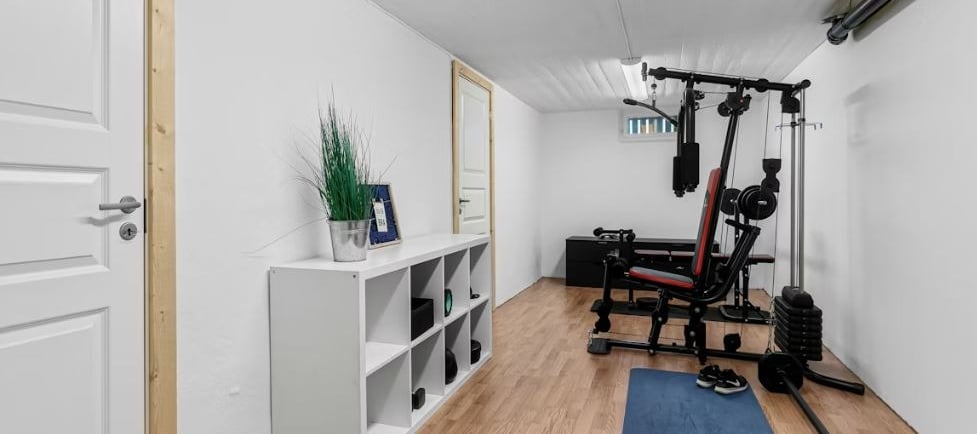
Home gym
Using a shed as a hobby workshop
These are all commonly found on residential land and are functionally linked to living in a house. They are therefore incidental residential uses.
However, an incidental use must be something normally associated with that kind of primary use.
In Harrods Ltd v SSETR [2002], the Court of Appeal held that landing a helicopter on the department store roof was not incidental — because although subordinate, it was extraordinary for a retail use. Extraordinary activities can amount to a material change of use.
Incidental use is not the same as an extension of the primary use
If an outbuilding is used as extra living accommodation, this is not incidental. It is part of the same residential use as the main house.
Incidental uses must be separate in character, not just physically separate.
When Incidental Use Becomes a New Primary Use
Incidental uses can change, grow or shrink over time without triggering an MCU — as long as they remain incidental.
If they expand so much that they take on a life of their own, they may become:
A new primary use, or
One component of a new mixed use
When this happens, a material change of use is likely.
This principle appears in:
Wood v SSE [1973] 25 P&CR 303; and
Trio Thames Ltd v SSE [1984] JPL 183
In these cases, activities began as incidental but intensified to the point where they became independent primary uses.
Incidental Uses Only Exist Where the Primary Use Exists
A simple but important rule:
If the primary use stops, incidental use rights also stop. This was confirmed in Barling v SSE [1980].
Likewise, activities cannot be “incidental” to something happening outside the planning unit.
In Essex Water Co v SSE [1989], the courts agreed that incidental uses must relate to the main use within the same planning unit.
What Are Ancillary Uses, and Are They Different?
The terms incidental and ancillary are often used interchangeably — even by Inspectors, lawyers and councils — and the GPDO and UCO use both terms in different contexts.
Technically:
Incidental = functionally related but different in character
Ancillary = subordinate but can be part of the same overall primary activity
In practice:
Something described as “ancillary” may actually be either part of the primary use or an incidental use
What matters is the functional and planning relationship, not the terminology
A hotel bar is a well-known example. In Emma Hotels Ltd v SSE [1980] 41 P&CR 255, the hotel bar attracted 70–80% non-residents, yet it was still treated as ancillary to the hotel use because the overall character of the site remained that of a hotel.
Ancillary uses differ from incidental uses because an ancillary use is still subordinate to the main use but can be integral to the same overall activity, rather than being a separate activity that merely supports it.
This distinction matters because incidental uses are often allowed under permitted development rights, while ancillary uses may require planning permission, depending on their scale and nature.
In a household context, an ancillary use might involve an outbuilding containing living accommodation such as a bedroom, bathroom or kitchen—spaces that form part of the same residential use as the main house. By contrast, incidental uses typically involve activities that are different in character from day-to-day living, such as a workshop, home gym, studio or hobby room, which support the enjoyment of the dwellinghouse without functioning as extra living space.
Key Takeaways: Primary, Ancillary and Incidental
Primary use = the main purpose of the land/building.
Mixed use = more than one primary use operating together.
Incidental use = a separate activity supporting the primary use but different in character.
Ancillary use = a supportive use that may be part of the same overall activity.
Incidental/ancillary uses can change over time, but if they grow too large or independent, they may create a new primary use or a mixed use, triggering a need for planning permission.
Identifying use correctly relies on fact and degree, the functional relationship, and whether the activity is ordinarily associated with the main use.
Andrew Ransome MRTPI - Email: andrew@andrewransome.co.uk
About Me
Andrew Ransome is a Planning Director and a Chartered Member of the Royal Town Planning Institute (RTPI), with more than two decades of experience in town planning.
He specialises in delivering strategic planning solutions for complex developments across both rural and urban environments, helping clients navigate planning challenges and unlock development opportunities. Connect with Andrew on Linkedin.




Get in Touch
Email: andrew@andrewransome.co.uk
Tel: 020 7096 8045
London Office:
60 Tottenham Court Road
Fitzrovia
London
W1T 2EW
© 2026 Andrew Ransome Town Planning Ltd. All rights reserved.
Content on this website is provided for general information and educational purposes only and does not constitute formal planning, professional, or legal advice. Planning policies, legislation, and guidance are subject to change. Site-specific assessment by a qualified consultant is recommended before making development decisions.
Projects highlighted across this website represent professional work undertaken by Andrew Ransome throughout his career.