The Sequential Test and Exception Test in Planning
In this article, I provide an overview of the Sequential Test and Exception Test in town planning, explaining how flood risk planning policy and the implications of the 2026 Gladman v SSHCLG High Court judgment for planning decisions, appeals and development proposals.
PLANNING APPLICATIONS
Andrew Ransome
3/14/20268 min read
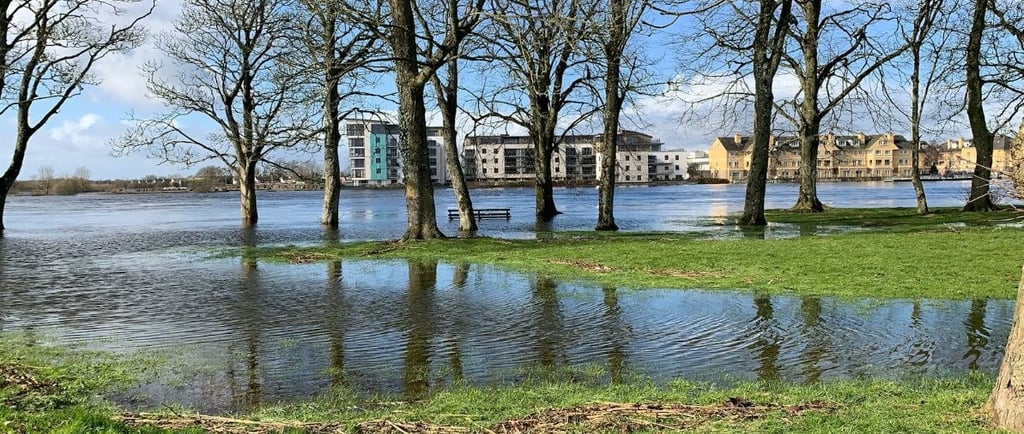
Flood risk is a prominent issue in planning decision-making. The planning system has adopted a strong policy framework designed to avoid inappropriate development in areas vulnerable to flooding.
Central to this framework are the Sequential Test and, where necessary, the Exception Test.
These tests operate as safeguards designed to steer development away from flood risk where possible and ensure that, where development must occur in areas at risk, it does so safely and responsibly.
Recent updates to national policy and guidance, together with the High Court’s decision in Gladman Developments Ltd v Secretary of State for Housing, Communities and Local Government and Lancaster City Council (2026), have brought renewed attention to how these tests should be applied in practice.
This article examines how the Sequential and Exception Tests operate within the planning system, how recent policy changes affect their application, and what the Gladman judgment means for practitioners.
The Purpose of the Sequential Approach
The starting point for flood risk policy is the principle that development should be directed to areas of lowest flood risk. This concept is expressed through the sequential approach embedded in national policy.
Under the National Planning Policy Framework (NPPF), both plan-making and decision-taking must apply a sequential, risk-based approach to development. The objective is straightforward: avoid placing people and property in areas vulnerable to flooding wherever reasonable alternatives exist.
The sequential approach operates at two levels.
At the strategic level, development plans should allocate sites having regard to flood risk and the impacts of climate change. This includes safeguarding land required for flood management and identifying opportunities to reduce flood risk through green infrastructure, natural flood management techniques and improved drainage systems.
At the application stage, the sequential test ensures that proposals are assessed against alternative locations that may present a lower flood risk. If suitable sites exist in safer areas, development should normally be directed there instead.
Instead of relying solely on engineering solutions to defend development in high-risk areas, the planning system prioritises location as the primary method of flood risk management.
How the Sequential Test Operates
The Sequential Test requires decision-makers to determine whether there are reasonably available alternative sites in areas of lower flood risk that could accommodate the proposed development.
Flood risk in England is commonly categorised through the Flood Zone system, which reflects the probability of flooding from rivers and the sea:
Flood Zone 1 – land with a low probability of flooding
Flood Zone 2 – land with a medium probability
Flood Zone 3 – land with a high probability
The sequential approach directs development first towards Flood Zone 1. Only where suitable sites cannot be identified in areas of lowest risk should locations in higher risk zones be considered.
However, policy recognises that flood risk extends beyond rivers and the sea. Decision-makers must also consider surface water flooding, groundwater flooding, sewer flooding and tidal influences, together with the future impacts of climate change.
Strategic Flood Risk Assessments prepared by local planning authorities provide the evidence base for this process. These assessments help identify where flooding may occur and inform decisions about whether development is appropriate.
Importantly, the Sequential Test is not limited to land within the control of the applicant. It normally requires consideration of wider geographic areas, which may include a town, a regeneration area, or in some circumstances the entire local authority area. Limiting the search only to land owned by the developer would undermine the purpose of the policy.
Determining the Appropriate Sequential Search Area
One of the most contested aspects of sequential testing is the definition of the search area.
National guidance does not prescribe a fixed boundary. Instead, the appropriate area depends on the type of development proposed and the relevant functional geography.
For example, the catchment area for a local school may be relatively small, whereas housing development may require consideration of a much broader housing market area. In practice, many sequential tests examine alternative sites across the administrative area of the local planning authority or within defined settlement boundaries.
A pragmatic approach is often required.
The key principle is that the scope of the test should be proportionate but meaningful. Artificially restricting the search area risks undermining the policy objective of directing development away from flood risk.
Situations Where the Sequential Test Is Not Required
National policy recognises that applying the Sequential Test in every circumstance would be unnecessary and disproportionate. As a result, several exceptions exist.
First, the test is generally not required where sites have already been allocated in a development plan and flood risk was considered during the plan-making process.
Second, proposals located entirely within Flood Zone 1 may not require the test unless local evidence indicates a specific flood risk concern.
Third, minor development and certain changes of use are typically exempt, although such proposals may still need to address flood risk through site-specific assessment.
The Sequential Test may not be required where a site-specific flood risk assessment demonstrates that no built development within the site boundary—including access routes or land raising—will be located in areas at risk of flooding now or in the future.
The Role of the Flood Risk Assessment
Even where the Sequential Test is not required, development proposals must still address flood risk through a site-specific Flood Risk Assessment (FRA) where appropriate.
An FRA examines all potential flood sources affecting a site and evaluates how development will respond to those risks. Typical issues addressed include:
flood levels and modelling
drainage design and surface water management
sustainable drainage systems (SuDS)
safe access and evacuation routes
flood resistance and resilience measures
Failure to provide an adequate FRA can be decisive.
In planning decisions, the absence of a credible assessment has frequently been sufficient reason for refusal.
When the Exception Test Applies
Where development is proposed in areas of higher flood risk and cannot reasonably be located elsewhere, national policy requires the Exception Test to be applied.
This test acts as a further safeguard and ensures that development in flood-risk areas occurs only where two strict criteria are met.
First, the proposal must provide wider sustainability benefits to the community that outweigh the flood risk.
Second, the development must be safe for its lifetime, taking account of climate change, without increasing flood risk elsewhere and, where possible, reducing flood risk overall.
Both elements must be satisfied. If either fails, the Exception Test is not passed and planning permission should normally be refused.
In practice, demonstrating wider sustainability benefits often involves consideration of issues such as housing delivery, regeneration objectives, infrastructure provision, and environmental improvements.
The safety element focuses on technical matters, including flood defence design, safe access and egress, flood warning systems and emergency planning.
Designing Development in Flood Risk Areas
Where development is permitted in flood-risk areas, the NPPF requires a series of safeguards to ensure that risk is appropriately managed.
Development should place the most vulnerable uses in areas of lowest flood risk within the site wherever possible. Buildings must be designed to withstand flooding and be capable of returning to operation quickly after flood events.
Proposals are also expected to incorporate sustainable drainage systems, unless clear evidence demonstrates this would be inappropriate. Such systems reduce runoff rates, store water temporarily and help mitigate downstream flooding.
Residual risk must be managed through emergency planning measures, including safe access and evacuation routes. In many cases these arrangements are secured through planning conditions or legal agreements.
The Gladman Judgment and Its Significance
The 2026 High Court decision in Gladman Developments Ltd v Secretary of State for Housing, Communities and Local Government has become an important reference point in discussions about the Sequential Test.
The case concerned a large residential scheme near Lancaster involving approximately 644 homes. The majority of the site was located within Flood Zone 1, with only a small area affected by higher flood risk.
The planning inspector accepted that the development would not create unacceptable flood risk and could deliver improvements to drainage and downstream flood management.
The inspector also recognised the substantial benefits associated with housing delivery in a local authority area experiencing a severe housing land supply shortfall.
Despite these findings, the appeal was dismissed because the applicant had not undertaken a Sequential Test. The inspector concluded that this failure constituted a “clear reason for refusing the development” under national policy.
The High Court disagreed.
The Court held that the inspector had taken an overly mechanistic approach by treating the absence of the Sequential Test as automatically fatal without carrying out a meaningful planning balance.
While the inspector was entitled to require the test, she still needed to explain why the policy conflict outweighed the development’s benefits.
The judgment emphasised that identifying a policy conflict is not the end of the decision-making process. Decision-makers must still exercise planning judgement and explain how competing considerations have been weighed.
What the Judgment Does – and Does Not – Change
The Gladman judgment has sometimes been interpreted as weakening flood risk policy. That interpretation would be incorrect.
The Court did not question the legitimacy of the Sequential Test or suggest that it could be ignored. Nor did it imply that development should be permitted in flood-risk areas where policy requirements have not been met.
Instead, the judgment reinforces a more fundamental principle of planning law: planning decisions must be reached through a lawful and reasoned balancing exercise.
Where a proposal fails to satisfy the Sequential Test, that failure may carry substantial weight and could justify refusal. However, decision-makers must still demonstrate why the conflict is determinative in the circumstances of the case.
In situations where development would be safe, where flood risk could be reduced overall, and where significant public benefits arise, the reasoning behind refusal must be clearly articulated.
Practical Implications for Planning Practice
For practitioners, the implications of the Gladman decision are largely procedural rather than substantive.
Applicants should continue to treat the Sequential Test as a critical component of flood risk policy compliance. Robust evidence addressing alternative sites and the availability of land remains essential.
Local planning authorities and inspectors, meanwhile, must ensure that decision letters demonstrate a clear and transparent planning balance. Simply stating that a policy conflict exists will rarely be sufficient.
Where flood risk policy conflicts arise, decision-makers should explain:
why the policy breach is significant in the circumstances of the case
how it interacts with the development plan
how it compares with the benefits of the proposed development
This approach ensures decisions remain legally robust while preserving the integrity of flood risk policy.
Final Thoughts on the Sequential and Exception Tests
The Sequential Test and Exception Test remain central pillars of the planning system’s approach to flood risk. Their purpose is to guide development away from hazardous locations and ensure that where development must occur in areas of risk, it does so safely and responsibly.
Recent updates to national policy and guidance have clarified aspects of their application, particularly in relation to surface water flooding and site-specific flood risk assessments. At the same time, the High Court’s decision in Gladman has highlighted the importance of careful and lawful planning judgement when applying these policies.
Flood risk policy is not designed to be applied as a rigid checklist. Instead, it forms part of the broader planning framework within which decision-makers must weigh evidence, assess risks and consider the wider public interest.
As climate change increases the frequency and severity of flooding events, the importance of these policies will only grow. Ensuring they are applied robustly, proportionately and with clear reasoning will remain a key challenge for planners, developers and decision-makers alike.
Given the technical complexity of flood risk policy and the significant consequences of getting it wrong, seeking experienced professional planning and flood risk advice at an early stage is often critical to ensuring proposals are robust, policy-compliant and capable of withstanding scrutiny at application or appeal.
Andrew Ransome MRTPI - Email: andrew@andrewransome.co.uk
About me
Andrew Ransome is a Planning Director and a Chartered Member of the Royal Town Planning Institute (RTPI), with more than two decades of experience in town planning.
He specialises in delivering strategic planning solutions for complex developments across both rural and urban environments, helping clients navigate planning challenges and unlock development opportunities. Connect with Andrew on Linkedin.




Get in Touch
Email: andrew@andrewransome.co.uk
Tel: 020 7096 8045
London Office:
60 Tottenham Court Road
Fitzrovia
London
W1T 2EW
© 2026 Andrew Ransome Town Planning Ltd. All rights reserved.
Content on this website is provided for general information and educational purposes only and does not constitute formal planning, professional, or legal advice. Planning policies, legislation, and guidance are subject to change. Site-specific assessment by a qualified consultant is recommended before making development decisions.
Projects highlighted across this website represent professional work undertaken by Andrew Ransome throughout his career.