What Actually Counts as a ‘Dwellinghouse’ in Planning Law?
What actually counts as a dwellinghouse in planning law? We explain the legal test, real cases, and why it’s not as simple as you think.
PLANNING APPLICATIONS
Andrew Ransome
1/11/20265 min read
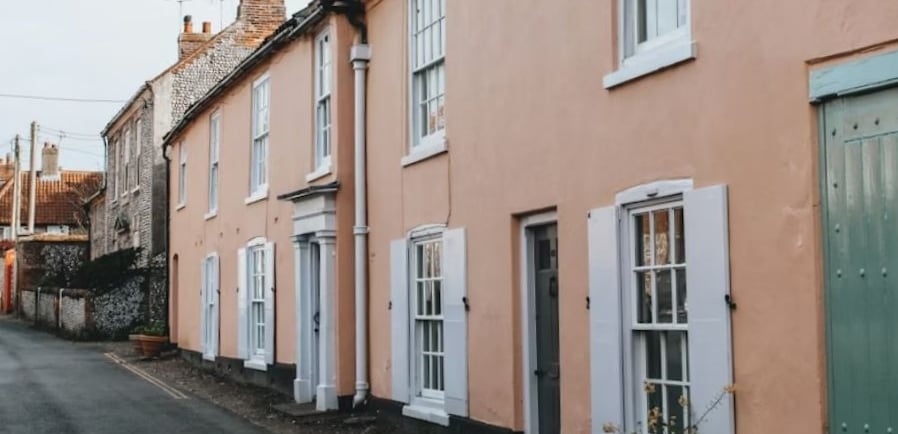
If you ask most people what a dwellinghouse is, you’ll probably get a confident answer: a house. Maybe a flat. Somewhere people live.
But in planning law, that simple question has generated decades of case law, appeals, enforcement action—and more than a few surprises. From holiday chalets and second homes to “hobbit houses” and short-term lets, what counts as a dwellinghouse is far from straightforward.
This article unpacks the legal meaning of a dwellinghouse in a conversational, practical way—drawing on the key cases that decision-makers still rely on today.
Why Isn’t “Dwellinghouse” Defined in the Planning Acts?
One of the first oddities is this: the Town and Country Planning Act 1990 doesn’t define “dwellinghouse” at all.
Instead, the meaning has been shaped almost entirely by the courts.
That matters because whether a building is (or isn’t) a dwellinghouse can determine:
Whether planning permission is needed
Whether permitted development rights apply
Whether a material change of use has occurred
Whether enforcement action is lawful
So rather than a neat statutory definition, we rely on principles developed through case law.
The Key Test: Day-to-Day Private Domestic Existence
The starting point—and still the most important case—is Gravesham BC v SSE & O’Brien.
In that case, the courts accepted that:
The distinctive characteristic of a dwellinghouse is its ability to afford to those who use it the facilities required for day-to-day private domestic existence.
This has become known as the “Gravesham test”, and it remains the cornerstone of decision-making.
Put simply, the question is:
Can people live there on a day-to-day basis as a private household?
That doesn’t mean the building has to look like a conventional house. Nor does it mean it has to be occupied full-time.
It’s About Capability, Not Labels or Appearance
One of the most persistent myths is that a building must meet some sort of checklist—bathroom, kitchen, internal WC, permanent occupation—to qualify as a dwellinghouse.
That’s not the law.
In Gravesham, the building in question was a holiday chalet:
Occupation was restricted to part of the year
It didn’t have an internal bathroom or WC
Facilities were basic
Yet the court still found it was a dwellinghouse.
Why? Because it was capable of providing the facilities needed for private domestic life. The fact that it was only occupied occasionally—or by different people at different times—didn’t strip it of that essential character.
This principle comes up again and again: Capability matters more than intensity or frequency of occupation.
The Famous “Hobbit House” Case
If you want a vivid illustration of how flexible (and sometimes unforgiving) planning law can be, look no further than Wealden DC v Mitchell (2017).
This case involved a hand-built, earth-sheltered structure—often described in the media as a “hobbit house”. The owner argued that it wasn’t really a house at all.
The High Court disagreed.
It was held that even though the structure lacked some amenities found in most houses, it was plainly capable of being used as a dwelling and crucially, it was being used as one
That was enough. The building was treated as a dwellinghouse, and enforcement action (including demolition) followed.
The lesson is clear: quirky design does not put you outside planning control if the use is residential in substance.
Use vs Occupation: A Critical Distinction
Another common source of confusion is the difference between use and occupation.
In planning terms:
Occupation alone is not development
What matters is the use of the land or building
This was important in Gravesham, where the chalet was only occupied for four months of the year. Despite that restriction, it didn’t stop being a dwellinghouse.
So:
A home doesn’t cease to be a dwellinghouse because it’s a second home
Or because it’s used only at weekends
Or because different people occupy it over time
Occupation patterns may become relevant later (for example, when considering material changes of use), but they don’t define whether something is a dwellinghouse in the first place.
Second Homes and Holiday Homes Can Still Be Dwellinghouses
This leads neatly to an important point:
A dwellinghouse does not have to be someone’s sole or main residence.
For the purposes of Use Class C3, second homes and holiday homes can still qualify as dwellinghouses.
This was reinforced in cases such as Blackpool BC v SSE, where a property was used:
By the owner
By friends and staff
By paying guests (each as single households)
On the facts, no material change of use had occurred. The building remained a dwellinghouse, despite its varied occupation.
Again, it all comes back to fact and degree.
Short-Term Lets: When Does a Dwellinghouse Stop Being One?
Short-term and holiday lettings are one of the most contentious areas of modern planning enforcement.
The key authority here is Moore v SSCLG (2012), where the Court of Appeal stressed that:
Whether a dwellinghouse has changed use to holiday accommodation
Is not automatic
It depends on the characteristics of the use
Relevant factors can include:
Who occupies the property
Whether occupiers form a single household
The frequency and pattern of lettings
Whether occupation is settled or transient
The same approach applies to:
Airbnb-style short-term lets
Holiday caravans used as permanent homes (as seen in Forest of Dean DC v Howells)
There is no bright-line rule. Each case turns on its own facts.
What About Use Class C3?
Planning law doesn’t just ask whether something is a dwellinghouse—it also asks what type.
Use Class C3 includes three broad categories:
C3(a): Single Household
This covers:
One person living alone, or
Any number of people living together as a single household
Importantly, there is no numerical limit where people genuinely form a single household (for example, a large extended family).
The meaning of “household” is drawn from the Housing Act 2004, not everyday language.
C3(b) and C3(c): Small Group Living
These categories allow for:
Up to six residents living together as a single household
With or without care being provided
This can include groups of unrelated people. As the Court of Appeal confirmed in Hossack v Kettering BC, decision-makers must look at the reality of the relationships, not impose rigid assumptions about how households must be formed.
The question is always: Do these people live together as a household in practice?
Flats, Dwellinghouses and Permitted Development
Here’s another trap for the unwary.
A self-contained flat is usually a dwellinghouse for the purposes of the Town and Country Planning Act 1990. But that doesn’t mean it’s treated the same way everywhere.
For permitted development rights under Part 1 of the GPDO, the position is stricter. To benefit from those rights, a building must:
Be a dwellinghouse in Gravesham terms
Be used as a dwellinghouse as a matter of fact and degree
Have a curtilage
Be substantially completed
Crucially:
Flats do not benefit from Part 1 PD rights, even though they are dwellinghouses in other contexts.
This distinction causes endless confusion—and frequent enforcement disputes.
The Big Takeaway: It’s Always About Fact and Degree
If there is one theme running through all of this case law, it’s this:
Planning law avoids rigid definitions and prefers real-world judgments.
Whether something is a dwellinghouse depends on:
Capability
Actual use
Context
Impact
Labels don’t decide cases. Intentions don’t decide cases. And unusual buildings don’t get a free pass just because they don’t look like conventional homes.
If a building can support day-to-day private domestic life, planning law is likely to treat it as a dwellinghouse—sometimes with significant consequences.
Andrew Ransome MRTPI - Email: andrew@andrewransome.co.uk
About me
Andrew Ransome is a Planning Director and a Chartered Member of the Royal Town Planning Institute (RTPI), with more than two decades of experience in town planning.
He specialises in delivering strategic planning solutions for complex developments across both rural and urban environments, helping clients navigate planning challenges and unlock development opportunities. Connect with Andrew on Linkedin.




Get in Touch
Email: andrew@andrewransome.co.uk
Tel: 020 7096 8045
London Office:
60 Tottenham Court Road
Fitzrovia
London
W1T 2EW
© 2026 Andrew Ransome Town Planning Ltd. All rights reserved.
Content on this website is provided for general information and educational purposes only and does not constitute formal planning, professional, or legal advice. Planning policies, legislation, and guidance are subject to change. Site-specific assessment by a qualified consultant is recommended before making development decisions.
Projects highlighted across this website represent professional work undertaken by Andrew Ransome throughout his career.