What Are “Buildings” and “Building Operations” in Town Planning?
Discover what counts as a building and building operations in UK planning, with explanations and key principles.
PLANNING APPLICATIONSPLANNING ENFORCEMENT
Andrew Ransome
12/3/20255 min read
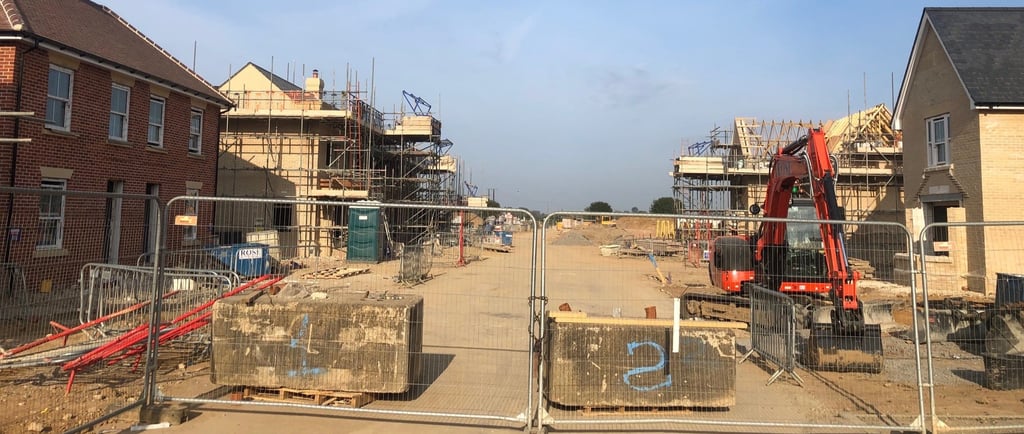
Understanding what counts as a building or building operation is central to the town planning system.
These terms determine what requires planning permission, what can be enforced against, and what is treated as development in law. Although they sound straightforward, the definitions can be more flexible – and sometimes more confusing – than most people expect.
This guide explains the concepts in a practical, accessible way for homeowners, landowners, and anyone interested in planning.
What Does the Law Mean by a “Building”?
In everyday language, a building is something with walls and a roof. In planning law, the term is much wider. Under section 336(1) of the Town and Country Planning Act 1990, a building includes:
Any structure or erection, and
Any part of a building,
But not machinery or plant equipment housed inside a building.
This means many things people might not instinctively call “buildings” might be one. A structure does not need to be large, or permanent in a traditional sense, to qualify.
Courts have repeatedly emphasised that deciding whether something is a building is a matter of fact and degree—in other words, a judgement based on the specifics of each case.
How Do Town Planners Decide What a Building Is?
A long-established test helps town planners decide whether a structure is a building. Originating in a 1949 case (Cardiff Rating Authority v Guest Keen Baldwin) and later confirmed in the Court of Appeal, it involves three key factors:
1. Size
Is the structure large enough that it needed to be assembled on site?
A very small structure might be delivered ready-made, but a large stable, chalet or marquee often requires construction or assembly on location. Larger size tends to increase the likelihood that it is a building.
2. Permanence
How long will the structure stay in one place?
A structure doesn’t need to be permanently fixed “forever” to be considered permanent in planning terms. Even something erected for eight months of each year has been judged sufficiently permanent. The question is whether it is staying long enough to have a meaningful physical impact on the land.
3. Physical Attachment
Is it fixed to the ground, attached to services, or resting on a hard base?
Fixings, foundations, service connections or a concrete slab may indicate a building. However, this factor on its own is not always decisive; it is one element in the broader assessment.
No single factor determines the outcome. Inspectors weigh all three together to judge whether, in practical terms, the structure functions like a building.
Examples of What Has Been Treated as a Building
Over time, courts have judged a wide variety of structures to be buildings. Examples include:
Marquees used for long periods each year
Wooden chalets used as long-term holiday homes
Stables, even when assembled from prefabricated sections
Portacabins, depending on size and permanence
Ex-railway box vans placed on land as static structures
The common theme is that these items had enough size, permanence or physical presence to alter the character of the land.
What Are “Building Operations”?
Section 55(1A) of the Town and Country Planning Act 1990 defines “building operations” broadly. It expressly includes:
Demolition
Rebuilding
Structural alterations
Additions to buildings
Other operations normally carried out by builders
This list is not exhaustive, meaning other works can also count as building operations when they result in development.
In simple terms, anything that physically builds, changes or enlarges a structure is usually treated as a building operation. This is important because most building operations constitute “development”, which normally requires planning permission unless an exemption applies.
How Building Operations and Buildings Relate
A key planning principle is this:
If your works create a building, they are almost always building operations.
When town planners and planning inspectors consider an enforcement case, they often begin by asking:
“Has what was done resulted in the erection of a building?”
If the answer is yes, the works are likely to be development, even if they involve altering or extending an existing structure.
A notable case (Oates v SSCLG & Canterbury CC, 2018) confirmed that creating a “new building” can include works that incorporate parts of an old building. What matters is whether, as a matter of fact and degree, the final result is essentially a new building.
Do Temporary or Moveable Structures Count?
Many disputes arise around “temporary” structures such as storage units, sheds, kiosks or portable buildings. People often assume these do not need permission because they can be moved.
However, moveability does not automatically prevent something being a building.
If a portable structure is:
large enough to need assembly,
kept in one place for a meaningful period, or
fixed to the ground or connected to services,
…then it may well be considered a building in planning terms.
There is one major exception: caravans, which are dealt with under separate legislation. But even here, if several caravans are set up in a way that changes the land’s character, issues of material change of use may arise.
When Portable Buildings Are Not Buildings
Sometimes the placing of portable units is not treated as creating a building but instead reflects a change in use of the land.
For example, using a site to store portable cabins or shipping containers may be judged as a land use activity rather than a building operation. The planning consequences depend on:
how long they stay,
how many there are, and
what the land is being used for overall.
Again, fact and degree will determine the outcome.
Unfinished or Part-Built Structures
A part-built structure can be a tricky area. If works were lawfully started under a valid planning permission but left incomplete, the local authority cannot usually enforce against them. Instead, they may need to use a completion notice or a discontinuance notice.
However, if the structure was started without planning permission, it can be enforced against even if unfinished. In that case, the local authority may issue an enforcement notice requiring removal, alteration or the submission of a retrospective application.
Why These Definitions Matter
Understanding these concepts helps homeowners and landowners avoid costly mistakes. The most common pitfalls include:
Assuming a structure is “temporary” and so exempt from permission
Believing something is not a building because it can be moved
Thinking only traditional buildings fall within planning control
Starting works under a permission and assuming they cannot later be challenged
Underestimating how broadly “operations” are interpreted by inspectors
If a structure or operation is judged to be development without permission, the consequences can be serious: enforcement action, removal costs, and potential fines.
Key Takeaways
Planning law uses broad definitions of “building” and “building operations”.
The courts rely on a three-part test: size, permanence and physical attachment.
Even moveable or seasonal structures can be treated as buildings.
Many activities you might not expect can count as building operations.
Unauthorised works can lead to enforcement action, even when incomplete.
Understanding these principles helps ensure projects are lawful, compliant and less vulnerable to dispute. If in doubt, seeking early planning advice can save significant time, stress and cost later on.
Andrew Ransome MRTPI - Email: andrew@andrewransome.co.uk
About me
Andrew Ransome is a Planning Director and a Chartered Member of the Royal Town Planning Institute (RTPI), with more than two decades of experience in town planning.
He specialises in delivering strategic planning solutions for complex developments across both rural and urban environments, helping clients navigate planning challenges and unlock development opportunities. Connect with Andrew on Linkedin.




Get in Touch
Email: andrew@andrewransome.co.uk
Tel: 020 7096 8045
London Office:
60 Tottenham Court Road
Fitzrovia
London
W1T 2EW
© 2026 Andrew Ransome Town Planning Ltd. All rights reserved.
Content on this website is provided for general information and educational purposes only and does not constitute formal planning, professional, or legal advice. Planning policies, legislation, and guidance are subject to change. Site-specific assessment by a qualified consultant is recommended before making development decisions.
Projects highlighted across this website represent professional work undertaken by Andrew Ransome throughout his career.