What is a Fallback Position in Planning?
A fallback position in planning is what could lawfully happen if permission is refused or enforcement upheld. Even a small but real prospect can be material. This article explains how fallback arguments work, when they carry weight, and the key case law landowners should understand.
Andrew Ransome
3/2/20264 min read
If you are applying for planning permission — or appealing against planning decision or an enforcement notice — you may hear the term “fallback position.” It is a technical planning concept, but it can have a very real impact on the outcome of your case.
This article explains what a fallback position is, when it matters, and how the courts have clarified the rules.
What Does “Fallback Position” Mean?
A fallback position is a form of development or use that could lawfully happen if the current application (or appeal) fails.
In simple terms, it asks:
If permission is refused or enforcement action upheld, what could the landowner lawfully do instead?
That alternative scenario can be an important material consideration in determining whether planning permission should be granted.
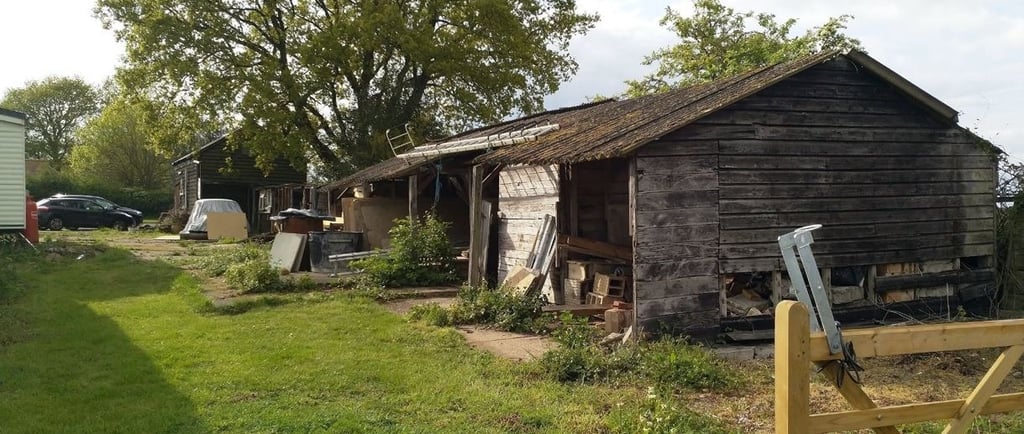
For example: A landowner may be seeking permission for a permanent building. However, they might already have the right to station caravans on the land. The decision-maker must compare the impacts of both scenarios.
If the fallback option would be less attractive or more harmful, that may weigh in favour of granting the application before them.
How Likely Does the Fallback Need to Be?
This is one of the most important legal principles.
In Schneck v Secretary of State for Housing, Communities and Local Government, the High Court clarified that a fallback does not need to be probable or even likely.
It only needs to be more than a purely theoretical possibility.
Even a slight chance of it occurring can make it a material consideration.
However, other cases emphasise that the fallback must be realistic. In Spedding v Wiltshire Council, the Court found that where there was no evidence a previous lawful use would resume, it could not properly be treated as a genuine fallback.
In Formby Parish Council v Sefton Council, the court confirmed there is no requirement for a formal statement of intent. It is enough that the fallback meets the minimum threshold of possibility.
The key point: There must be a real prospect — not a fanciful one.
Two Things Must Be Proven
The courts have made clear that fallback arguments have two essential components.
In Simpson v Secretary of State for Communities and Local Government, the High Court explained that:
The alternative development or use must be clearly identified in sufficient detail.
There must be some likelihood it would actually be implemented.
Without both elements, the fallback argument fails.
Comparing the Two Scenarios
Where a realistic fallback exists, decision-makers must compare:
The development being proposed, and
The development that could lawfully occur instead.
Failure to do so can be an error of law.
In Short v Secretary of State for the Environment, an Inspector failed to compare permanent chalets with caravans that could lawfully be stationed on the site. The court held that this comparison was necessary.
The exercise is not theoretical — it is about real-world impacts: appearance, amenity, traffic, noise, and character.
Reverting to a Lawful Use (Section 57(4))
Section 57(4) of the Town and Country Planning Act 1990 states that where an enforcement notice has been issued in respect of any development of land, planning permission is not required for its use for the purpose for which it could lawfully have been used if that development had not been carried out.
In Day & Mid-Warwickshire Motors v Secretary of State for the Environment, the court confirmed that a lawful former use can remain relevant.
However, lawful use rights can be lost. In Young v Secretary of State for the Environment, the House of Lords confirmed that implementing a new unlawful use can extinguish previous lawful use rights, potentially leaving a “nil use.”
Even where enforcement has not yet been taken, fallback under section 57(4) may still be relevant, as seen in Sefton Metropolitan Borough Council v Secretary of State for Transport, Local Government and the Regions.
Permitted Development as a Fallback
Permitted development (PD) rights under the GPDO can form a fallback position.
In Burge v Secretary of State for the Environment, the court confirmed that PD rights are material to the planning merits.
However, PD rights are not always available. Article 3(5) of the GPDO can prevent reliance on PD rights where the underlying building operations or use are unlawful.
This was explored in RSBS Developments Ltd v Secretary of State for Housing, Communities and Local Government, where the court confirmed that unlawful building works could prevent reliance on GPDO permission.
Decision-makers must also consider whether partial PD works might realistically occur. In Nolan v Secretary of State for the Environment, the Inspector erred by failing to consider whether a lower wall (which could be built under PD) would replace a higher unauthorised one.
Why It Matters for Landowners
Fallback arguments can:
Strengthen an appeal against a planning decision or enforcement notice
Support a planning application that may otherwise be marginal
Influence how much weight is given to planning harm
But they must be carefully structured. Poorly evidenced fallback claims are often rejected.
Final Thoughts on the Fallback Position
A fallback position is not a loophole. It is a recognised legal principle grounded in fairness and planning reality.
The decision-maker must consider what could lawfully happen anyway — and weigh that against what is being proposed.
However, whether a fallback carries significant weight depends on:
How clearly it is defined
Whether it is genuinely capable of being implemented
Whether it would be less desirable than the proposal
For landowners and developers, understanding fallback positions can make the difference between refusal and approval — particularly in enforcement and appeal cases. Professional advice is often crucial in assessing whether a fallback argument is robust and how much weight it is likely to carry.
Andrew Ransome MRTPI - Email: andrew@andrewransome.co.uk
About me
Andrew Ransome is a Planning Director and a Chartered Member of the Royal Town Planning Institute (RTPI), with more than two decades of experience in town planning.
He specialises in delivering strategic planning solutions for complex developments across both rural and urban environments, helping clients navigate planning challenges and unlock development opportunities. Connect with Andrew on Linkedin.




Get in Touch
Email: andrew@andrewransome.co.uk
Tel: 020 7096 8045
London Office:
60 Tottenham Court Road
Fitzrovia
London
W1T 2EW
© 2026 Andrew Ransome Town Planning Ltd. All rights reserved.
Content on this website is provided for general information and educational purposes only and does not constitute formal planning, professional, or legal advice. Planning policies, legislation, and guidance are subject to change. Site-specific assessment by a qualified consultant is recommended before making development decisions.
Projects highlighted across this website represent professional work undertaken by Andrew Ransome throughout his career.