What is Abandonment in Planning?
Abandonment in planning explained: the four tests, intervening uses, key cases and how to protect your lawful use or LDC application.
PLANNING ENFORCEMENT
Andrew Ransome
2/8/20263 min read
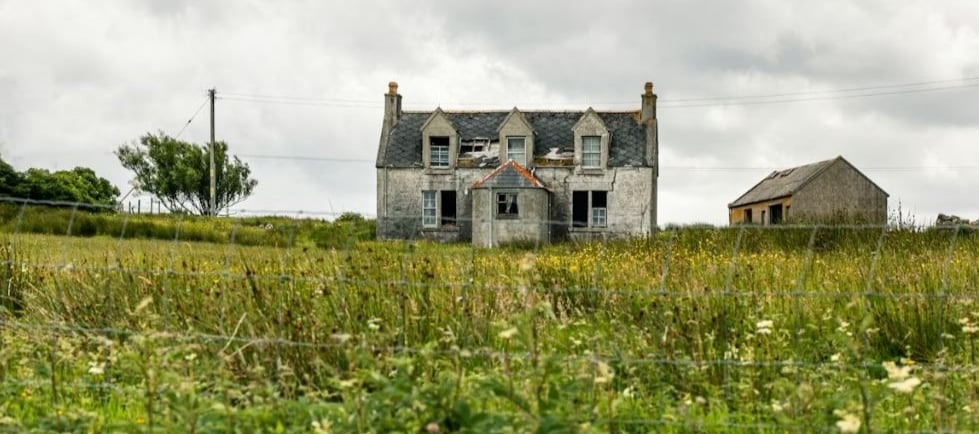
It’s common to hear people say “the use has been abandoned” when a building has been empty for a long time.
In everyday language that might make sense. In planning law, however, abandonment is a specific and surprisingly high bar.
Whether a historic or lawful use has been lost can have major consequences. It can affect:
whether a property can lawfully return to a former use;
whether a Certificate of Lawfulness can be obtained; and
whether a new planning permission is required.
So what actually counts as abandonment?
First principle: stopping a use is not automatically abandonment
Simply because a building or piece of land is unused does not mean the lawful use disappears.
The courts have repeatedly confirmed that the question is whether the circumstances would lead a reasonable observer to conclude that the use has been permanently given up, not merely paused.
This idea goes back decades. In Hartley v MHLG (1970), the court held that where land remains unused for a time and in such circumstances that a reasonable person might conclude the previous use would not resume, it may be treated as abandoned.
The four abandonment tests
The leading framework comes from Trustees of Castell-y-Mynach Estate v Taff-Ely BC (1985), later endorsed by the Court of Appeal in Hughes v SSETR (2000) and reaffirmed in Bramall v SSCLG (2011).
Decision-makers consider four main factors:
The period of non-use – how long has the activity stopped?
The physical condition of the land or buildings.
Whether any other use has taken place in the meantime.
The owner’s intentions – are they suspending the use, or have they effectively given it up?
No single factor is decisive. It is a matter of planning judgment.
Intention is important – but not decisive
A common misconception is that if an owner says “I always meant to restart the use”, that settles it.
It doesn’t.
In Hughes, a cottage had not been lived in for many years and had fallen into serious disrepair. Although the owner said he intended to live there again, the court confirmed the correct approach is objective: what would a reasonable person, knowing the facts, think?
If the situation on the ground looks like the use has ended for good, a stated intention to return may carry little weight.
How long is too long?
There is no magic number.
A property might sit empty for years and still not be abandoned if it is maintained, marketed, insured, and capable of being used again without major works.
Conversely, a shorter period could amount to abandonment if, for example, the building becomes derelict or is clearly incapable of resuming the former use.
What really causes problems: intervening events
Drawing on cases such as Pioneer Aggregates (1984) and more recently Hillside Parks v Snowdonia (2022), there are three main ways in which rights can effectively be lost:
An intervening different use (or even a nil use) that signals the former use has gone.
The creation of a new planning unit.
Implementation of another permission that makes the old one impossible to carry out.
These situations can be just as fatal as classic abandonment.
Abandonment vs dormant use
A use can be quiet, inactive or seasonal without being abandoned. Lawyers often call this a dormant use.
If the four abandonment factors are not met, the right to resume may still exist.
This distinction is particularly important in Certificate of Lawfulness applications. Following cases such as Panton & Farmer (1999), a dormant use can still be an “existing” use – provided it has not been lost through abandonment, a new planning unit, or a subsequent material change.
Can a lawful use proven by a certificate be abandoned later?
Yes.
A Certificate of Lawfulness confirms that a use was lawful at the date of the application. It does not freeze that status forever. If circumstances later indicate abandonment, the right can still be lost.
What evidence helps show a use has not been abandoned?
From my experience advising clients, the strongest cases usually include evidence such as:
maintenance and security of the property;
insurance;
marketing or attempts to let/sell for the relevant use;
utility connections;
photographs showing the building remains usable; and
explanations for any gaps in activity (probate, market conditions, refurbishment, etc.).
The aim is to demonstrate that, to an objective observer, the pause is temporary.
Why professional advice matters
Abandonment arguments are rarely straightforward. Small factual differences can swing the balance, and once a use is lost it can be very difficult – sometimes impossible – to recover.
If you are buying property, preparing a certificate application, or responding to enforcement concerns, it is essential to understand whether the historic right genuinely survives.
Andrew Ransome MRTPI - Email: andrew@andrewransome.co.uk
About me
Andrew Ransome is a Planning Director and a Chartered Member of the Royal Town Planning Institute (RTPI), with more than two decades of experience in town planning.
He specialises in delivering strategic planning solutions for complex developments across both rural and urban environments, helping clients navigate planning challenges and unlock development opportunities. Connect with Andrew on Linkedin.




Get in Touch
Email: andrew@andrewransome.co.uk
Tel: 020 7096 8045
London Office:
60 Tottenham Court Road
Fitzrovia
London
W1T 2EW
© 2026 Andrew Ransome Town Planning Ltd. All rights reserved.
Content on this website is provided for general information and educational purposes only and does not constitute formal planning, professional, or legal advice. Planning policies, legislation, and guidance are subject to change. Site-specific assessment by a qualified consultant is recommended before making development decisions.
Projects highlighted across this website represent professional work undertaken by Andrew Ransome throughout his career.