What is Class M of the GPDO? certain uses to dwellings
Class M GPDO allows conversion of betting shops, takeaways and launderettes to residential use without full planning permission. Learn the key rules, limits, prior approval process, and how to unlock development potential from commercial properties.
PRIOR APPROVAL
Andrew Ransome
4/15/20265 min read
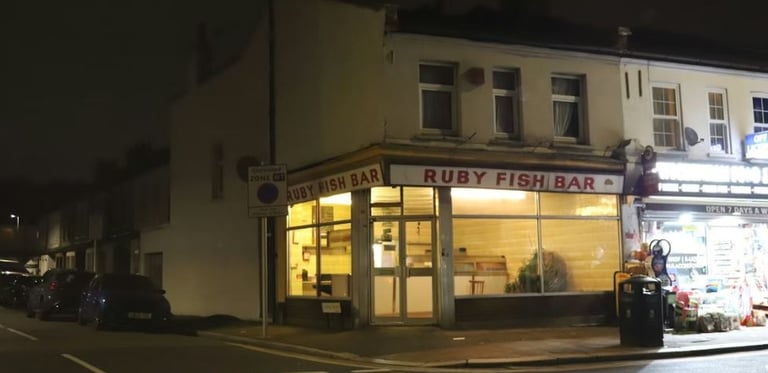
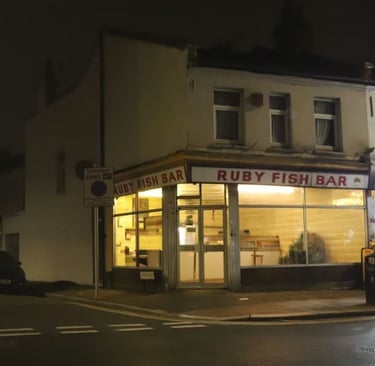
Class M – Various uses, such as, launderette, betting office, payday loan shop, hot food takeaway to dwellings
Class M of the General Permitted Development Order (GPDO) offers significant advantages for property owners and developers alike.
This provision allows for the conversion of specific types of commercial properties into residential dwellings without the need for full planning permission.
This streamlined process can save considerable time and resources compared to a traditional planning application, making it an attractive option for many in the property sector.
It provides an opportunity to breathe new life into underused or vacant commercial properties.
What Uses Fall Within Class M?
Class M permitted development rights apply to buildings last used as:
Launderettes
Betting offices
Payday loan shops
Hot food takeaways
Mixed-use buildings combining a dwellinghouse with one of the above (excluding takeaways)
This creates an opportunity to convert redundant or struggling commercial units into residential dwellings, supporting both regeneration and housing delivery.
Key Criteria for Class M Prior Approval
To benefit from Class M GPDO rights, several strict planning conditions must be met:
1. The 20th March 2013 “Date Stamp”
One of the most critical restrictions is that the building must have been in one of the qualifying uses:
On 20th March 2013, or
When it was last in lawful use (if vacant on that date)
If the unit changed use after this point, full planning permission is likely required.
2. Floorspace Limit
A maximum of 150 square metres can change use under Class M
This includes any previous Class M approvals within the building
For larger units, a common strategy is to retain a viable commercial frontage and convert the remainder to residential.
3. No External Enlargement
Permitted development under Class M allows building operations necessary for conversion, but:
No increase in external dimensions is permitted
Only minor works (e.g. shopfront alterations) are typically acceptable
The Prior Approval Process (56 Days)
Although full planning permission is not required, developers must still apply for Prior Approval from the Local Planning Authority.
The authority will assess:
Transport and highway impacts
Flood risk
Contamination
Impact on local services (particularly loss of launderettes)
Design and external appearance
Provision of adequate natural light to all habitable rooms
A decision is usually issued within 56 days, making it significantly faster than a full application.
Important Restrictions
Class M permitted development rights do not apply in the following circumstances:
Article 2(3) land (e.g. Conservation Areas, National Parks, AONBs, World Heritage Sites)
Sites of Special Scientific Interest (SSSI)
Safety hazard areas
Military explosives storage areas
Listed buildings
Scheduled monuments
These constraints mean that site-specific planning advice is essential at an early stage.
Time Limits and Implementation
Development must be completed within 3 years of prior approval
The building must be used as a Class C3 dwellinghouse only (aside from ancillary uses)
Relationship with Other GPDO Classes
Class M can often be considered alongside other permitted development rights. Strategic combinations of GPDO rights can maximise development potential, especially on mixed-use sites.
Why Use Class M?
Class M offers a fast-track route to residential development, helping:
Unlock value from underperforming commercial assets
Deliver small-scale housing in sustainable locations
Reduce planning risk compared to full applications
Class N Legislation in Full
Permitted development by Class M:
M. Development consisting of—
(a) a change of use of a building from—
(i) a use falling within one of the following—
(aa) launderette;
(bb) betting office;
(cc) pay day loan shop;
(dd) hot food takeaway; or
(ii) a mixed use combining use as a dwellinghouse with a use falling within one of the uses mentioned in paragraph (i)(aa), (bb) or (cc) (whether that use was granted permission under Class G of this Part or otherwise);
to a use falling within Class C3 (dwellinghouses) of Schedule 1 to the Use Classes Order; or
(b) development referred to in sub-paragraph (a) together with building operations reasonably necessary to convert the building to a use falling within Class C3 (dwellinghouses).
Development not permitted by Class M if:
M.1 Development is not permitted by Class M if—
(a) the building was not used for one of the uses referred to in Class M(a)
(i) on 20th March 2013, or
(ii) in the case of a building which was in use before that date but was not in use on that date, when it was last in use;
(c) the cumulative floor space of the existing building changing use under Class M exceeds 150 square metres;
(d) the development (together with any previous development under Class M) would result in more than 150 square metres of floor space in the building having changed use under Class M;
(e) the development would result in the external dimensions of the building extending beyond the external dimensions of the existing building at any given point;
(f) the development consists of demolition (other than partial demolition which is reasonably necessary to convert the building to a use falling within Class C3 (dwellinghouses) of the Schedule to the Use Classes Order); or
(g) the building is—
(i) on article 2(3) land;
(ii) in a site of special scientific interest;
(iii) in a safety hazard area;
(iv) in a military explosives storage area;
(v) a listed building; or
(vi) a scheduled monument.
Conditions
M.2—(1) Where the development proposed is development under Class M(a) together with development under Class M(b), development is permitted subject to the condition that before beginning the development, the developer must apply to the local planning authority for a determination as to whether the prior approval of the authority will be required as to—
(a) transport and highways impacts of the development,
(b) contamination risks in relation to the building,
(c) flooding risks in relation to the building,
(d) whether it is undesirable for the building to change to a use falling within Class C3 (dwellinghouses) of the Schedule to the Use Classes Order because of the impact of the change of use—
(i) on adequate provision of services of the sort that may be provided by a building falling within article 3(6)(c) (launderette) of the Use Classes Order, but only where there is a reasonable prospect of the building being used to provide such services,
(e) the design or external appearance of the building, and
(f) the provision of adequate natural light in all habitable rooms of the dwellinghouses,
and the provisions of paragraph W (prior approval) of this Part apply in relation to that application.
(2) Where the development proposed is development under Class M(a) only, development is permitted subject to the condition that before beginning the development, the developer must apply to the local planning authority for a determination as to whether the prior approval of the authority will be required as to the items referred to in sub-paragraphs (1)(a) to (d) and (f), and the provisions of paragraph W (prior approval) of this Part apply in relation to that application.
(3) Development under Class M is permitted subject to the condition that
(a) development under Class M(a), and under Class M(b), if any, must be completed within a period of 3 years starting with the prior approval date;
(b) a building which has changed use under Class M is to be used as a dwellinghouse within the meaning of Class C3 of the Schedule to the Use Classes Order and for no other purpose, except to the extent that the other purpose is ancillary to the primary use as such a dwellinghouse; and
(c) where the proposed development includes a change of use of a building from a use falling within Class A1 or Class A2 of the Use Classes Order, the developer must apply for a determination under sub-paragraph (1) or (2) on or before 31 July 2021.
Seeking Professional Planning Advice
Navigating Class M requires a combination of planning, design, and technical expertise. Early-stage advice can significantly improve the likelihood of success.
If you are considering a change of use to a dwelling, contact me today. I can provide advice to help you maximise the value of your asset while managing planning risk.
Andrew Ransome MRTPI - Email: andrew@andrewransome.co.uk
About me
Andrew Ransome is a Planning Director and a Chartered Member of the Royal Town Planning Institute (RTPI), with more than two decades of experience in town planning.
He specialises in delivering strategic planning solutions for complex developments across both rural and urban environments, helping clients navigate planning challenges and unlock development opportunities. Connect with Andrew on Linkedin.




Get in Touch
Email: andrew@andrewransome.co.uk
Tel: 020 7096 8045
London Office:
60 Tottenham Court Road
Fitzrovia
London
W1T 2EW
© 2026 Andrew Ransome Town Planning Ltd. All rights reserved.
Content on this website is provided for general information and educational purposes only and does not constitute formal planning, professional, or legal advice. Planning policies, legislation, and guidance are subject to change. Site-specific assessment by a qualified consultant is recommended before making development decisions.
Projects highlighted across this website represent professional work undertaken by Andrew Ransome throughout his career.