What is Class N of the GPDO? – casino or arcades to dwellings
Class N permitted development allows former casinos and amusement arcades to be converted into homes without full planning permission. This guide explains how it works, key limitations, and when it can be a fast, cost-effective route to residential development.
PRIOR APPROVAL
Andrew Ransome
4/15/20265 min read
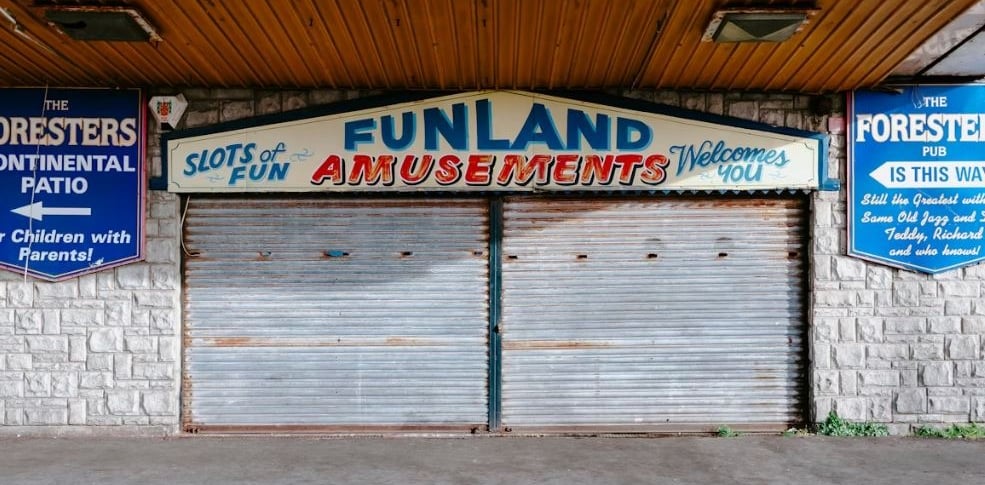
What is Class N? Turning Old Arcades and Casinos into Homes
Across the country, many older buildings—particularly amusement arcades and casinos—are no longer viable in today’s market. At the same time, there’s a growing demand for new homes.
Class N of the General Permitted Development Order (GPDO) helps bridge that gap.
It allows certain vacant or underused buildings to be converted into homes without the need for full planning permission.
What does Class N allow?
In simple terms, Class N lets you:
Convert a former amusement arcade or casino into a residential property (a house or flat)
Carry out basic building works needed to make it suitable for living
Why Class N is useful?
For property owners and developers, Class N offers a practical opportunity to:
Bring empty buildings back into use
Create new homes quickly
Avoid lengthy planning processes
Unlock value from sites that may otherwise be difficult to develop
For communities, it can help:
Reduce vacant high street units
Improve the appearance of tired buildings
Increase housing supply in sustainable locations
What are the main limitations?
Class N is helpful—but it’s quite tightly controlled. The key restrictions include:
1. Size limit
The building must be no larger than 150 square metres. This is relatively small, so the right type of property is important.
2. Previous use requirement
The building must have been used as an arcade or casino on or before 19 March 2014 (or last used as such before that date).
3. Location constraints
You cannot use Class N if the site is in sensitive areas such as:
National Parks, The Broads, and specified ecological areas
Areas of Outstanding Natural Beauty
World Heritage Sites
4. Heritage restrictions
It does not apply to listed buildings or sites with significant heritage protections.
5. Limited building works
Only basic conversion works are allowed, such as:
Installing windows and doors
Upgrading services (water, electricity, drainage)
Minor demolition
Major extensions or rebuilds are not permitted under this route.
Do you still need approval?
Yes—but not full planning permission.
Instead, you must go through a “prior approval” process with the local council. They will assess:
Transport and access
Flood risk
Contamination
Design and appearance
Natural light in the new homes
If the council is satisfied, you can proceed.
Is Class N commonly used?
In reality, Class N is quite niche compared to other permitted development rights. That’s mainly because:
The 150 sqm limit is restrictive
The qualifying use (arcade/casino) is relatively uncommon
However, where it does apply, it can be a very efficient route to development.
Final thoughts
Class N won’t apply to most sites—but for the right property, it can be a valuable planning tool.
Understanding whether a building qualifies early on is key. A simple planning review can confirm whether permitted development rights apply or whether a full planning application would be needed instead.
If you’re considering converting a commercial building into housing, it’s worth getting clear, site-specific advice at an early stage.
If you’re considering a scheme like this or want to understand whether Class N could apply to your property, feel free to get in touch for clear, practical advice tailored to your site.
Class N Legislation in Full
Class N – specified sui generis uses to dwellinghouses
Permitted development
N. Development consisting of— (a) a change of use of a building and any land within its curtilage from a use as—
(i) an amusement arcade or centre, or
(ii) a casino,
to a use falling within Class C3 (dwellinghouses) of the Schedule to the Use Classes Order; or
(b) development referred to in paragraph (a) together with building operations reasonably necessary to convert the building referred to in paragraph (a) to a use falling within Class C3 (dwellinghouses) of that Schedule.
Development not permitted
N.1 Development is not permitted by Class N if—
(a) the building was not used solely for one of the uses specified in Class N(a)—
(i) on 19th March 2014, or
(ii) in the case of a building which was in use before that date but was not in use on that date, when it was last in use;
(b) the cumulative floor space of the existing building changing use under Class N exceeds 150 square metres;
(c) the development (together with any previous development under Class N) would result in more than 150 square metres of floor space in the building having changed use under Class N;
(d) the development under Class N(b) would consist of building operations other than—
(i) the installation or replacement of—
(aa) windows, doors, roofs, or exterior walls, or
(bb) water, drainage, electricity, gas or other services,
to the extent reasonably necessary for the building to function as a dwellinghouse; and
(ii) partial demolition to the extent reasonably necessary to carry out building operations allowed by paragraph (d)(i);
(e) the building is within—
(i) an area of outstanding natural beauty;
(ii) an area specified by the Secretary of State for the purposes of section 41(3) of the Wildlife and Countryside Act 1981;
(iii) the Broads;
(iv) a National Park; or
(v) a World Heritage Site;
(f) the site is, or forms part of—
(i) a site of special scientific interest;
(ii) a safety hazard area;
(iii) a military explosives storage area;
(g) the building is a listed building or is within the curtilage of a listed building; or
(h) the site is, or contains, a scheduled monument.
Conditions
N.2—(1) Where the development proposed is development under Class N(a) together with development under Class N(b), development is permitted subject to the condition that before beginning the development, the developer must apply to the local planning authority for a determination as to whether the prior approval of the authority will be required as to—
(a) transport and highways impacts of the development,
(b) contamination risks in relation to the building,
(c) flooding risks in relation to the building,
(d) the design or external appearance of the building, and
(e) the provision of adequate natural light in all habitable rooms of the dwellinghouses, and the provisions of paragraph W (prior approval) of this Part apply in relation to that application.
(2) Where the development proposed is development under Class N(a) only, development is permitted subject to the condition that before beginning the development, the developer must apply to the local planning authority for a determination as to whether the prior approval of the authority will be required as to the items referred to in sub-paragraphs (1)(a) to (c) and (e), and the provisions of paragraph W (prior approval) of this Part apply in relation to that application.
(3) Development under Class N is permitted subject to the condition that development under Class N(a), and under Class N(b), if any, must be completed within a period of 3 years starting with the prior approval date.
Andrew Ransome MRTPI - Email: andrew@andrewransome.co.uk
About me
Andrew Ransome is a Planning Director and a Chartered Member of the Royal Town Planning Institute (RTPI), with more than two decades of experience in town planning.
He specialises in delivering strategic planning solutions for complex developments across both rural and urban environments, helping clients navigate planning challenges and unlock development opportunities. Connect with Andrew on Linkedin.




Get in Touch
Email: andrew@andrewransome.co.uk
Tel: 020 7096 8045
London Office:
60 Tottenham Court Road
Fitzrovia
London
W1T 2EW
© 2026 Andrew Ransome Town Planning Ltd. All rights reserved.
Content on this website is provided for general information and educational purposes only and does not constitute formal planning, professional, or legal advice. Planning policies, legislation, and guidance are subject to change. Site-specific assessment by a qualified consultant is recommended before making development decisions.
Projects highlighted across this website represent professional work undertaken by Andrew Ransome throughout his career.