What is Class Q of the GPDO?
Class Q allows agricultural buildings to be converted into homes under permitted development, but strict rules apply—especially around curtilage. Misinterpreting land limits, structural capability, or prior approval criteria can lead to refusal, making early planning advice essential.
PRIOR APPROVAL
Andrew Ransome
3/20/202616 min read
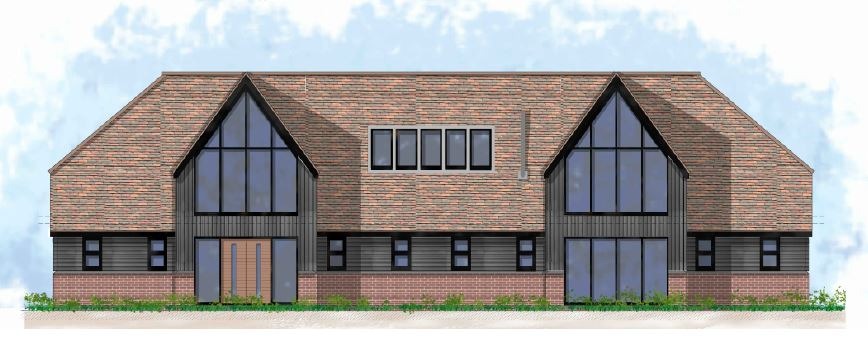
Permitted Development (PD) rights under Class Q of the GPDO 2015 have become one of the most significant tools for unlocking residential development in rural areas.
It offers a route to deliver new homes without engaging fully with the development plan, avoiding many of the policy constraints that would typically apply to countryside development.
However, Class Q is not straightforward.
It operates within a tightly defined legal framework, and small misunderstandings can result in refusal or failed appeals.
This article provides a detailed explanation of how Class Q operates in practice, common pitfalls, and strategic opportunities for applicants.
What Class Q Allows in Practice
At its core, Class Q permits the change of use of agricultural buildings to residential use (Use Class C3), together with building operations reasonably necessary to facilitate that change.
Since May 2024, it also allows limited extensions, which has expanded the scope of what can be achieved under the right.
The legislation distinguishes between buildings that are still part of an established agricultural unit and those that are no longer in agricultural use. In both cases, strict qualifying criteria apply, particularly in relation to how long the building has formed part of the unit and whether it has been used for non-agricultural purposes.
Importantly, Class Q does not just apply to the building itself. It also allows the change of use of land within the building’s curtilage. This is a critical point because it is this land that will form the residential setting of the converted dwelling—its garden, parking, and immediate surroundings.
The 2023 Reset and the Importance of the Established Agricultural Unit
A key change to Class Q is the introduction of a fixed “material date” of 24 July 2023, which effectively resets how eligibility is assessed. However, understanding this change requires clarity on two fundamental concepts: “agriculture” and an “established agricultural unit”.
What is “Agriculture”?
The definition of agriculture is set out in Section 336 of the Town and Country Planning Act 1990, which provides a broad and inclusive description. It states that agriculture includes, for example:
Horticulture and fruit growing
Seed growing
Dairy farming
The breeding and keeping of livestock (including for food, wool, skins or farming use)
Grazing land and meadow land
Market gardens and nursery grounds
Woodland, where ancillary to farming activities
This definition is important because Class Q only applies where a building has been used solely for agricultural purposes. Any alternative use—even informal or temporary—can disqualify the building.
What is an “Established Agricultural Unit”?
While not always fully understood in practice, an established agricultural unit (EAU) is is defined in Part 3, paragraph X as ‘agricultural land occupied as a unit for the purposes of agriculture.
As defined in Hidderley v Warwickshire CC [1963], ‘For the purposes of agriculture’ means the productive processes of agriculture and not food processing – or the buying and selling of agricultural products.
A unit of agricultural land that is occupied and used for the purposes of agriculture as defined in the 1990 Act, over the relevant qualifying period.
Under the updated Class Q:
If the building is still part of an agricultural unit, it must have been part of that unit on 24 July 2023, or
If brought into the unit after that date, it must have been part of it for at least 10 years before development begins
Why This Matters in Practice
The introduction of the 24 July 2023 date means the “clock has been reset”.
It is no longer sufficient to demonstrate that a building was once in agricultural use at some point in the past. Instead, there must be clear evidence of its relationship to an established agricultural unit at this fixed point in time.
In practical terms, local planning authorities may expect supporting information, often including:
Evidence of land ownership or control
Tenancy agreements or farming arrangements
Agricultural activity records
Supporting statements explaining how the unit operates
Simply asserting that a building forms part of an agricultural unit is unlikely to be sufficient.
A More Rigid Approach
This change introduces a much more rigid and evidence-based approach to Class Q. Attempts to bring buildings into agricultural use shortly before applying, or to restructure land holdings to qualify, are now far less likely to succeed.
As a result, understanding whether a site genuinely forms part of an established agricultural unit—and whether it did so on 24 July 2023—is now a critical first step in any Class Q assessment.
Curtilage in Class Q
The concept of curtilage has long been a source of debate in planning law, but the 2024 amendments introduced a specific definition for the purposes of Class Q. This definition fundamentally alters how schemes must be designed and assessed.
Curtilage is now defined as the lesser of two things:
first, the land immediately beside or around the building that is closely associated with it and serves its purposes; and
second, an area no larger than the footprint of the building itself.
The land must be physically adjacent to the building, functionally related to it, and limited in size.
The “whichever is the lesser” wording is particularly important. It creates a hard cap on curtilage, meaning that even where a building sits within a large yard or open area, the amount of land that can change use alongside it may be significantly restricted.
In practical terms, assessing curtilage requires a careful, evidence-based approach.
The first consideration is physical relationship. The land must be immediately beside or surrounding the building. This excludes land that is separated by physical barriers such as roads, hedgerows, or other structures, even if it is under the same ownership.
The second consideration is functional relationship. The land must have served the building in its agricultural use.
The third consideration is size. Even where land is clearly associated with the building, it cannot exceed the footprint of that building. This often comes as a surprise to applicants, particularly where larger residential curtilages are desired.
In practice, this means that many Class Q schemes must work within relatively tight site constraints, which can affect layout, amenity space, and overall design quality.
Building Operations and the Limits of Conversion
Class Q allows building operations where they are reasonably necessary to facilitate the change of use. This includes a wide range of works, from installing windows and doors to replacing roofs and adding services.
However, there is a clear legal boundary. The right does not allow for rebuilding.
This principle was established in the case of Hibbitt v Secretary of State for Communities and Local Government [2016], which confirmed that a building must be capable of conversion without substantial reconstruction. If the works go beyond conversion and effectively create a new building, Class Q does not apply.
This has significant implications for older or lightweight agricultural buildings, many of which were not designed for long-term structural integrity.
Floorspace and Unit Limits
The 2024 amendments introduced new limits on the size and number of dwellings that can be created under Class Q.
Each individual dwelling is now capped at 150 square metres, and across the wider agricultural unit there is a maximum of 10 dwellings or 1,000 square metres of floorspace.
These limits apply cumulatively, meaning that previous Class Q developments on the same agricultural unit must be taken into account. This requires careful due diligence, particularly on larger or phased sites.
At the same time, case law—particularly Mansell v Tonbridge and Malling BC—has confirmed that Class Q can apply to part of a building. This provides useful flexibility, allowing developers to phase conversions or target the most suitable parts of a structure.
Extensions Under the New Class Q
A key change introduced in May 2024 is the ability to incorporate extensions as part of a Class Q development.
This marks a notable shift from the previous position, where development was limited strictly to conversion works. In practice, this provides greater flexibility to improve layouts and create more viable residential units—but the scope of what is permitted remains tightly controlled.
Under the updated provisions, Class Q now allows a change of use together with the extension of the existing building, provided all relevant limitations are met.
The legislation imposes a series of strict parameters which effectively limit extensions to modest, subservient additions.
Extensions must be single storey only and located strictly to the rear of the existing building. There is no allowance for side extensions, wrap-around forms, or forward projections.
In addition, the extension can project no more than 4 metres beyond the rear wall, and its height must not exceed either the existing eaves height or 4 metres overall, whichever is lower. These controls are deliberately prescriptive and leave little room for interpretation.
One of the most significant practical constraints relates to the requirement for pre-existing hardstanding. Any extension must be sited on land that was already covered by a hard surface before development begins.
Furthermore, that surface must either have been in place on or before 24 July 2023, or have existed for a continuous period of at least 10 years. This requirement prevents applicants from artificially creating development platforms to enable extensions and, in many cases, will be the defining factor in whether an extension is feasible at all.
In practice, this means that extensions are generally limited to areas such as established farmyards, loading areas, or other clearly defined operational surfaces. Grassland, informal surfaces, or undeveloped land will not qualify.
From a strategic perspective, the ability to extend can significantly enhance the quality and usability of converted buildings. It can allow for more practical internal layouts, improved circulation, and better compliance with space standards.
What Sites and Locations Are Excluded from Class Q?
There are a number of designated areas where a Class Q application cannot be applied to barn buildings. These designated areas where Class Q is excluded include:
Article 2(3) land, which means Conservations Areas, Areas of Outstanding Natural Beauty (AONB), World Heritage Sites or National Parks.
A site of special scientific interest.
A safety hazard area.
A military explosives storage area.
A site that is, or contains, a scheduled monument.
A building that is listed.
The existing building would not be capable of complying with Nationally Described Space Standards
Prior Approval: A Different Decision-Making Framework
Even where a proposal meets all the criteria of Class Q, it is still subject to a prior approval process. This is not the same as a full planning application, and the scope of assessment is tightly controlled.
The local planning authority can only consider specific matters set out in the GPDO, including:
Transport and highways impacts - There will be various highway matters to consider, but the common issues to consider here include access on to the public highway, and the ability of larger vehicles such as refuse and fire tenders to access and leave the site.
Noise impacts of the development, for example, if intensive agricultural activities are still being carried out around the proposed new dwelling.
Contamination risks on the site. Given the former agricultural use, there are often contamination risks on site that need to be explored, and potential mitigation measures assessed.
Flood risk on the site to ensure tht future residents are safe from flooding.
Design and external appearance - Any design changes should be minimal and in keeping with the rural area. Any proposed changes beyond this would most likely require a full permission, and should be sought following approval of the Class Q application.
Natural light to assess the provision of adequate natural light in all habitable rooms of the dwellinghouses
Suitability of location to judge whether the location or siting of the building makes it otherwise impractical or undesirable for the building to change from agricultural use to a residential use. The permitted development right does not apply a test in relation to sustainability of location. This criteria instead looks at the practicality of the site, for example, the ability to install utilities, or proximity to neighbouring uses, such as intensive pig farming and associated odours.
Importantly, broader planning policy considerations—such as Green Belt policy or housing land supply—are not relevant. This creates a more predictable and focused decision-making process, but it also means that technical issues can become decisive.
Common Pitfalls and How to Avoid Them
In practice, most Class Q refusals fall into a relatively small number of categories. Understanding these can significantly improve the chances of success.
One of the most frequent issues is overestimating curtilage. Applicants often assume that larger areas of land can be included, only to find that the proposal falls outside the statutory definition.
Another common problem is structural inadequacy. Many agricultural buildings, particularly modern portal frame structures, require more work than is permissible under Class Q. Without a robust structural assessment, this risk can be difficult to identify early on.
Agricultural use tests are another critical area. The building must meet specific criteria relating to its use as part of an agricultural unit, and any intervening non-agricultural use can disqualify it.
Access is also a fundamental requirement. The building must have suitable existing access to a public highway. If this cannot be demonstrated, the development is not permitted.
Finally, design and layout issues can lead to refusal even where the principle of development is accepted. Poor natural light, substandard room sizes, or awkward layouts can all undermine a scheme.
Strategic Opportunities: Beyond Simple Conversion
While Class Q is often viewed as a straightforward conversion tool, it also has significant strategic value.
One of the most important uses is as a fallback position in planning applications.
If a site has a realistic prospect of being developed under Class Q, this can be a material consideration in determining a full planning application.
Planners and Inspectors may give weight to the fact that a certain level of development could occur without permission.
Class Q can also provide an alternative route for development in constrained locations. Because it is not policy-led, it can succeed in areas where a full planning application might fail, such as the Green Belt.
In some cases, developers use Class Q as part of a phased strategy. Securing prior approval can establish residential use on a site, which may then support future applications for additional development.
Even where it is not implemented, a Class Q approval can enhance land value by demonstrating development potential.
The Impact of the 2024 Amendments
The recent changes to Class Q have created both opportunities and constraints. On the one hand, the introduction of extensions and increased unit numbers provides greater flexibility and development potential.
On the other hand, the tightening of the agricultural use tests and the introduction of a formal curtilage definition have reduced the scope for interpretation. This places greater emphasis on careful site analysis and scheme design.
In many cases, the changes will favour well-prepared applications supported by robust evidence, while making it more difficult for speculative or loosely defined proposals to succeed.
Final Thoughts on Class Q
Class Q remains one of the most powerful permitted development rights available for rural development. However, it is also one of the most complex.
Success depends on a detailed understanding of the legislation, case law, and practical considerations that shape how it is applied.
Curtilage, in particular, has emerged as a defining issue. The new statutory definition provides clarity, but it also imposes strict limits that must be carefully navigated.
For landowners and developers, the key to unlocking Class Q lies in early, informed assessment.
Need Advice on a Class Q Scheme?
If you are considering the conversion of an agricultural building, or want to understand whether your site benefits from Class Q permitted development rights, we can provide a clear and commercially focused assessment.
We regularly advise on:
Class Q feasibility
Prior approval applications
Appeal strategies
Fallback positions for planning applications
👉 Get in touch to discuss your site and explore its development potential.
Class Q The Town and Country Planning (General Permitted Development) (England) Order 2015 in Full
Q. Development consisting of—
(a)a change of use of—
(i)a building that is part of an established agricultural unit and any land within that building’s curtilage, or
(ii)a former agricultural building that was (but is no longer) part of an established agricultural unit and any land within that building’s curtilage,
to a use falling within Class C3 (dwellinghouses) of Schedule 1 to the Use Classes Order,
(b)development referred to in sub-paragraph (a) together with the extension of the building referred to in sub-paragraph (a), or
(c)development referred to in sub-paragraph (a) together with building operations reasonably necessary to convert the building referred to in sub-paragraph (a) to a use falling within Class C3 (dwellinghouses) of that Schedule or to extend that building.
Development not permitted
Q1. Development is not permitted by Class Q if—
(a)in the case of a site that is part of an established agricultural unit, the site was not part of the established agricultural unit—
(i)on 24th July 2023, or
(ii)where the site became part of the established agricultural unit after 24th July 2023, for a period of at least 10 years before the date development under Class Q begins,
(b)in the case of a site that was (but is no longer) part of an established agricultural unit—
(i)the site was part of an established agricultural unit on 24th July 2023,
(ii)where the site ceased to be part of an established agricultural unit after 24th July 2023, the site has not been part of the established agricultural unit for a period of at least 10 years before the date development under Class Q begins, or
(iii)since ceasing to be part of an established agricultural unit, the site has been used for any non-agricultural purpose,
(c)the floor space of any dwellinghouse developed under Class Q having a use falling within Class C3 (dwellinghouses) of Schedule 1 to the Use Classes Order exceeds 150 square metres,
(d)the development under Class Q, together with any previous development under Class Q, within the original limits of an established agricultural unit (see paragraph Q.3(2) of this Part) would result in—
(i)the cumulative number of separate dwellinghouses having a use falling within Class C3 (dwellinghouses) of Schedule 1 to the Use Classes Order exceeding 10, or
(ii)the cumulative floor space of dwellinghouses having a use falling within Class C3 (dwellinghouses) of Schedule 1 to the Use Classes Order exceeding 1,000 square metres,
(e)the site is occupied under an agricultural tenancy, unless the express consent of both the landlord and the tenant has been obtained,
(f)less than 1 year before the date development begins—
(i)an agricultural tenancy over the site has been terminated, and
(ii)the termination was for the purpose of carrying out development under Class Q,
unless both the landlord and the tenant have agreed in writing that the site is no longer required for agricultural use,
(g)development under Class A(a) or Class B(a) of Part 6 of this Schedule (agricultural buildings and operations) has been carried out on the established agricultural unit during the period which is 10 years before the date development under Class Q begins,
(h)the development would result in the external dimensions of the building extending beyond the external dimensions of the existing building at any given point, other than—
(i)extension of the building allowed by paragraph Q.1(i);
(ii)protrusions of up to 0.2 metres to accommodate building operations allowed by paragraph Q.1(j)(i),
(i)the development under Class Q(b) would result in an extension that—
(i)has more than one storey,
(ii)is sited anywhere other than to the rear of the existing building,
(iii)extends beyond the rear wall of the existing building by more than 4 metres,
(iv)has eaves the height of which exceed the height of the eaves of the existing building,
(v)is higher than whichever is the lower of—
(aa)the highest part of the roof of the existing building, or
(bb)a height of 4 metres above the ground,
(vi)extends beyond a wall that forms a side or principal elevation of the existing building, or
(vii)would be sited on land that, before the development under Class Q(b), is not covered by a hard surface that was provided on the land by virtue of any development, and—
(aa)the hard surface was not provided on the land on or before 24th July 2023, or
(bb)where the hard surface was provided on the land after 24th July 2023, the hard surface has not been situated on the land for a period of at least 10 years before the date development under Class Q(b) begins,
(j)the development under Class Q(c) would consist of building operations other than—
(i)the installation or replacement of—
(aa)windows, doors, roofs, or exterior walls, or
(bb)water, drainage, electricity, gas or other services,
to the extent reasonably necessary for the building to function as a dwellinghouse, and
(ii)partial demolition to the extent reasonably necessary to carry out building operations allowed by paragraph Q.1(j)(i),
(k)the site is on article 2(3) land,
(l)the site is, or forms part of—
(i)a site of special scientific interest;
(ii)a safety hazard area;
(iii)a military explosives storage area,
(m)the site is, or contains, a scheduled monument,
(n)the building is a listed building,
(o)the existing building, excluding any proposed extension under Class Q(b) but including any proposed building operations under Class Q(c), would not be capable of complying with the nationally described space standard issued by the Department for Communities and Local Government on 27th March 2015 as read with the notes dated 19th May 2016 which apply to it, or
(p)the building does not have suitable existing access to a public highway.
Conditions
Q2.—(1) Where the development proposed is development under Class Q(a) together with development under Class Q(c), development is permitted subject to the condition that before beginning the development, the developer must apply to the local planning authority for a determination as to whether the prior approval of the authority will be required as to—
(a)transport and highways impacts of the development,
(b)noise impacts of the development,
(c)contamination risks on the site,
(d)flooding risks on the site,
(e)whether the location or siting of the building makes it otherwise impractical or undesirable for the building to change from agricultural use to a use falling within Class C3 (dwellinghouses) of Schedule 1 to the Use Classes Order,
(f)the design or external appearance of the building, and
(g)the provision of adequate natural light in all habitable rooms of the dwellinghouses,
and the provisions of paragraph W (prior approval) of this Part apply in relation to that application.
(2) Where the development proposed is development under Class Q(a) only, development is permitted subject to the condition that before beginning the development, the developer must apply to the local planning authority for a determination as to whether the prior approval of the authority will be required as to the items referred to in sub-paragraphs (1)(a) to (e) and (g), and the provisions of paragraph W (prior approval) of this Part apply in relation to that application.
(3) Where the development proposed includes development under Class Q(b), the developer must also apply, as part of the application under sub-paragraph (1) or (2) (as the case may be), for a determination as to whether the prior approval of the authority will be required as to the impact of the proposed extension on the amenity of any adjoining premises.
(4) Development under Class Q is permitted subject to the condition that development under Class Q(a), and under Class Q(b) or (c), if any, must be completed within a period of 3 years starting with the prior approval date.
Interpretation of Class Q
Q3.—(1) For the purposes of Class Q, “curtilage” means the lesser of—
(a)the piece of land, whether enclosed or unenclosed, immediately beside or around the building on an established agricultural unit or former agricultural building (as the case may be), closely associated with and serving the purposes of that building, and
(b)an area of land immediately beside or around the building on an established agricultural unit or former agricultural building (as the case may be) no larger than the land area occupied by that building.
(2) For the purposes of Class Q.1(d), “the original limits of an established agricultural unit” means—
(a)in the case of an established agricultural unit which ceased to exist prior to 24th July 2023, all the land which comprised the established agricultural unit at the time it came into existence;
(b)in the case of an established agricultural unit which exists on 24th July 2023, all the land which comprised the established agricultural unit at the time it came into existence;
(c)in any other case, all the land which comprises the established agricultural unit at the time it comes into existence.
Andrew Ransome MRTPI - Email: andrew@andrewransome.co.uk
About me
Andrew Ransome is a Planning Director and a Chartered Member of the Royal Town Planning Institute (RTPI), with more than two decades of experience in town planning.
He specialises in delivering strategic planning solutions for complex developments across both rural and urban environments, helping clients navigate planning challenges and unlock development opportunities. Connect with Andrew on Linkedin.




Get in Touch
Email: andrew@andrewransome.co.uk
Tel: 020 7096 8045
London Office:
60 Tottenham Court Road
Fitzrovia
London
W1T 2EW
© 2026 Andrew Ransome Town Planning Ltd. All rights reserved.
Content on this website is provided for general information and educational purposes only and does not constitute formal planning, professional, or legal advice. Planning policies, legislation, and guidance are subject to change. Site-specific assessment by a qualified consultant is recommended before making development decisions.
Projects highlighted across this website represent professional work undertaken by Andrew Ransome throughout his career.