What is Class R of the GPDO?
Class R of the GPDO allows agricultural buildings to change to flexible commercial uses without full planning permission. Learn the rules, 2024 updates, floorspace limits, and how landowners can use Class R to unlock rural development opportunities.
PRIOR APPROVAL
Andrew Ransome
3/24/20267 min read
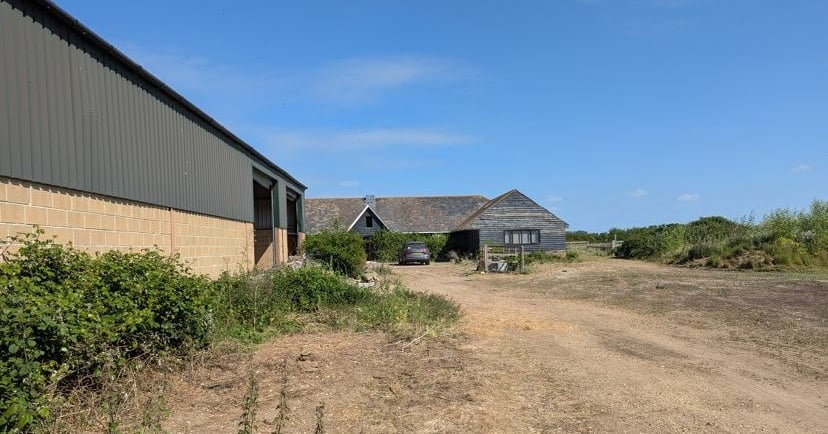
Class R of the Town and Country Planning (General Permitted Development) (England) Order 2015 (as amended)—commonly known as the GPDO—is a valuable permitted development rights available to rural landowners and developers.
Class R provides a mechanism to change the use of agricultural buildings to a range of flexible commercial uses without the need for full planning permission, subject to meeting specific criteria and, in certain cases, obtaining prior approval from the local planning authority.
In recent years, and particularly following the amendments that came into force on 21 May 2024, Class R has become increasingly relevant as a tool to support rural diversification, economic growth, and the reuse of existing buildings in the countryside.
This article provides a comprehensive and detailed guide to Class R, explaining what it is, how it works, what it allows, and how landowners and developers can use it effectively.
What does Class R allow?
At its core, Class R grants permitted development rights for:
The change of use of a building and any land within its curtilage from agricultural use to a flexible commercial use.
This means that an agricultural building—such as a barn, storage unit, or other operational structure—can be repurposed for commercial activities without applying for full planning permission, provided all relevant criteria are met.
Permitted uses under Class R (post–May 2024)
Following the 2024 amendments, the range of uses has been expanded significantly. Class R now allows conversion to the following:
Class B2 (General Industrial)
This use is restricted to the processing of raw goods (excluding livestock) produced on the site and intended for sale, together with activities ancillary to that processing. It is not a general industrial free-for-all and is tightly controlled.Class B8 (Storage and Distribution)
This includes warehousing, logistics, and storage uses, which are often well suited to rural locations with good transport links.Class C1 (Hotels)
This allows for short-term accommodation such as hotels and guesthouses, opening up opportunities for tourism and hospitality-led schemes.Class E (Commercial, Business and Service)
This is the broadest and most flexible category, encompassing uses such as:Offices
Cafés and restaurants
Retail
Gyms and fitness studios
Medical or professional services
Class F.2(c) (Outdoor Sport and Recreation)
This includes uses such as outdoor fitness, sports facilities, and recreational spaces.Agricultural training uses
This is a newer addition and supports education and skills development linked to agriculture.
Importantly, while Class R allows flexibility within a single use class, it does not permit a mix of uses across different classes within the same approval. This is a subtle but important limitation that must be carefully considered when designing a scheme.
Why Class R is important
Class R plays a critical role in supporting rural economic development and enabling landowners to diversify their income streams.
In practice, it allows underused or redundant agricultural buildings to be repurposed in a way that is both economically productive and aligned with national planning policy objectives.
The benefits of Class R can be summarised as follows:
It removes the need to establish the principle of development through a full planning application
It provides a faster and more cost-effective route to development
It supports farm diversification and rural enterprise
It enables incremental and flexible development strategies
It can apply in sensitive locations such as Conservation Areas and National Landscapes (AONBs)
For landowners, this means that a redundant barn could become a café, office space, gym, or storage unit with significantly less risk than a traditional planning route. For developers, it offers an opportunity to unlock value in rural assets that might otherwise be constrained by planning policy.
Key eligibility Class R criteria
Despite its flexibility, Class R is subject to a number of strict requirements. Understanding and correctly applying these is essential.
Agricultural use requirement
One of the most important aspects of Class R is the requirement relating to agricultural use.
The building must have been used solely for agriculture as part of an established agricultural unit:
On 3 July 2012, or
When it was last in use (if that use was before 3 July 2012), or
For a period of at least 10 years prior to the date development begins, if it was brought into use after that date
At first glance, this appears relatively straightforward. However, these criteria interact in a more nuanced way than many assume.
For example, The 10-year rule does not require the building to have been first brought into use after 2012. A building may have been in agricultural use in 2012, subsequently changed to another use, and then returned to agricultur. In such cases, the 10-year continuous use test becomes critical
This means that simply demonstrating use on 3 July 2012 is not always sufficient. The factual use history of the building must be carefully evidenced, particularly where there have been periods of non-agricultural use.
Established agricultural unit
The building must form part of an established agricultural unit, which broadly means agricultural land occupied and operated as a single unit for the purposes of agriculture.
This requirement ensures that Class R cannot be used opportunistically on isolated buildings that do not form part of a genuine agricultural enterprise.
Class R Floorspace limitations
Class R is subject to a cumulative floorspace limit:
The total floorspace that can change use under Class R within a planning unit is limited to 1,000 square metres
This limit applies across:
The entire planning unit
All buildings that have been converted under Class R
It is possible to convert multiple buildings, but the total combined floorspace must not exceed this threshold.
Buildings excluded from Class R
Certain buildings are excluded from Class R entirely. These include:
Listed buildings, or buildings within the curtilage of a listed building
Scheduled monuments
Buildings within safety hazard areas
Buildings within explosives storage areas
These restrictions reflect the need to protect heritage assets and public safety.
The Class R Prior Approval Process
While Class R removes the need for full planning permission, it does not eliminate the need for engagement with the local planning authority.
The process depends on the size of the building:
Developments under 150 square metres
Where the cumulative floorspace is 150 sqm or less, the developer is required to:
Provide specified information to the local planning authority
This is effectively a notification process, and formal prior approval is not required.
Developments over 150 square metres
Where the cumulative floorspace exceeds 150 sqm, the developer must:
Apply for prior approval
The local authority will then assess specific impacts, including:
Transport and highway impacts
Noise impacts
Contamination risks
Flooding risks
It is important to note that the authority is not reconsidering the principle of development, but rather these specific technical matters.
Class R Time limits
Once prior approval is granted, development must begin within:
Three years of the approval date
Failure to implement within this timeframe will result in the permission lapsing.
External works and operational development
A key limitation of Class R is that it allows for change of use only.
It does not permit external works.
In practice, this means that many Class R schemes require a parallel full planning application to secure the necessary physical changes to the building.
The concept of “flexible use”
Class R is often described as allowing a “flexible use”, but this concept is more complex than it first appears.
While the initial approval allows for flexibility within a defined use class, the position is that:
Once the change of use has occurred, the building is treated as having a Sui Generis Use.
This has several important implications:
The building is no longer considered to fall within a standard use class
Any further changes of use will generally require planning permission
Other permitted development rights (such as change to residential under Class MA) will not apply
However, Class R does allow for subsequent changes between the permitted flexible uses, subject to:
Notification (if under 150 sqm), or
A further prior approval process
This creates a degree of ongoing flexibility, but it is not unlimited and must be carefully managed.
Curtilage and associated land
Class R includes land within the curtilage of the building, which is defined as:
Land immediately surrounding and associated with the building, or
An area no larger than the footprint of the building
This can be used for purposes such as:
Access
Parking
Servicing
However, the extent of curtilage is tightly controlled, and assumptions about large areas of land being included are often incorrect.
Common Class R pitfalls
In practice, many Class R schemes fail due to avoidable errors. The most common issues include:
Misinterpreting the agricultural use test
Applicants often rely on historic use without properly evidencing continuous or qualifying useIgnoring the need for external works consent
Many buildings require alterations that fall outside Class RExceeding floorspace limits
Particularly where multiple buildings are involvedFailing to provide adequate prior approval information
Leading to refusals on technical groundsMisunderstanding the sui generis outcome
Which can affect future flexibility and value
Avoiding these pitfalls requires a clear understanding of both the legislation and how it is interpreted in practice.
How to use Class R strategically
When used correctly, Class R can form part of a broader development strategy.
Combining with full planning applications
A common approach is to:
Secure Class R approval to establish the principle of commercial use
Submit a full application for physical alterations
This can strengthen the overall planning case and reduce risk.
Phased development
Developers may choose to:
Start with a smaller conversion (under 150 sqm)
Expand later using prior approval
This can improve cash flow and reduce upfront costs.
Creating a fallback position
Class R can also be used to establish a fallback position in planning terms, which can be valuable when pursuing alternative proposals through full applications.
Class R Conclusions
Class R is one of the most powerful and flexible permitted development rights available in England, particularly following the 2024 amendments which expanded both the range of uses and the allowable floorspace.
It provides a valuable opportunity for landowners and developers to:
Repurpose agricultural buildings
Support rural economic growth
Deliver commercial development with reduced planning risk
However, it is not without complexity. The detailed requirements relating to agricultural use, prior approval, and the status of the resulting use mean that careful planning and expert advice are essential.
Speak to a planning consultant
If you are considering a Class R development, the difference between success and failure often lies in the detail.
We advise landowners and developers across England on:
Class R feasibility assessments
Prior approval applications
Planning strategy and risk management
Combining permitted development with full planning applications
Get in touch today to discuss your site and explore how Class R can unlock its full development potential.
Andrew Ransome MRTPI - Email: andrew@andrewransome.co.uk
About me
Andrew Ransome is a Planning Director and a Chartered Member of the Royal Town Planning Institute (RTPI), with more than two decades of experience in town planning.
He specialises in delivering strategic planning solutions for complex developments across both rural and urban environments, helping clients navigate planning challenges and unlock development opportunities. Connect with Andrew on Linkedin.




Get in Touch
Email: andrew@andrewransome.co.uk
Tel: 020 7096 8045
London Office:
60 Tottenham Court Road
Fitzrovia
London
W1T 2EW
© 2026 Andrew Ransome Town Planning Ltd. All rights reserved.
Content on this website is provided for general information and educational purposes only and does not constitute formal planning, professional, or legal advice. Planning policies, legislation, and guidance are subject to change. Site-specific assessment by a qualified consultant is recommended before making development decisions.
Projects highlighted across this website represent professional work undertaken by Andrew Ransome throughout his career.