What Is Curtilage in Planning?
What is curtilage in planning? A simple guide explaining what curtilage means, why it matters, key case law, and common pitfalls.
PLANNING APPLICATIONSPERMITTED DEVELOPMENT
Andrew Ransome
12/30/20256 min read
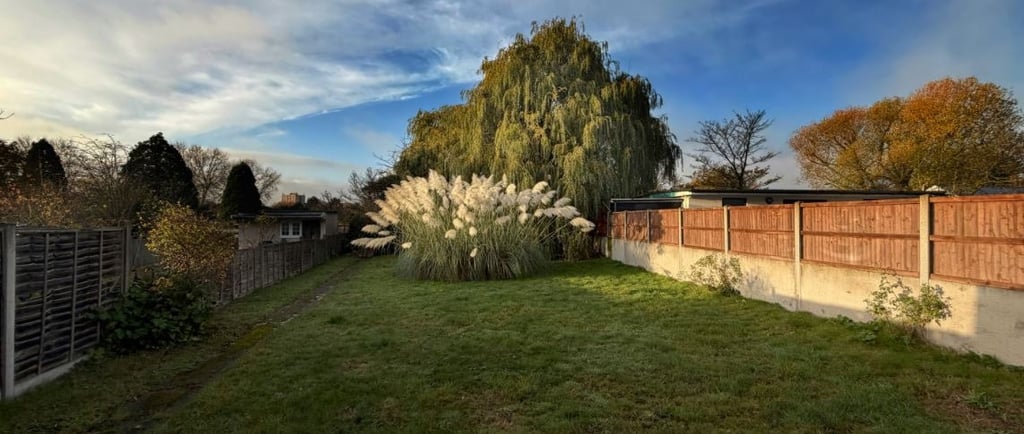
If you’ve ever heard a planner say “that’s not within the curtilage” and wondered what on earth they meant, you’re not alone. Curtilage is one of those planning terms that crops up everywhere — enforcement cases, permitted development rights, listed buildings — yet it has no neat definition you can point to in legislation.
In this article, I’ll explain what curtilage means in plain English, why it matters, and some of the common traps people fall into, especially when assuming land automatically counts as part of their garden.
Curtilage: the simple idea
At its most basic, curtilage refers to the land that is so closely associated with a building that it forms part of it.
In the context of a house, that usually means the area used for the comfortable enjoyment of the home — often the garden, yard, or driveway. But (and this is where problems start) curtilage is not automatically the same as everything inside your fence or everything you own with the house or the planning unit.
The courts have consistently said that curtilage is about relationship, not labels.
A useful early explanation comes from Sinclair-Lockhart’s Trustees v Central Land Board [1950], where the court said land can be curtilage if it:
serves the purpose of the house or building in some necessary or reasonably useful way
That land doesn’t need to be neatly marked out, fenced, or labelled as “garden”. What matters is how closely it is tied to the building itself.
Why does curtilage matter in planning?
Curtilage crops up in several key areas of planning law:
1. Enforcement
Under section 55(2)(d) of the Town and Country Planning Act 1990, using land within the curtilage of a dwelling for purposes incidental to living there is not development.
That means things like lawns, patios, play equipment, or sheds can be lawful without planning permission — but only if the land really is curtilage.
2. Permitted development rights
Most householder permitted development rights (under Part 1 of the GPDO) apply only to the curtilage of a dwellinghouse, not the whole planning unit.
This is a crucial distinction. If land isn’t curtilage, PD rights don’t apply, even if it feels like part of the garden.
3. Listed buildings
For listed buildings, curtilage is even more important. Structures within the curtilage of a listed building can themselves be treated as listed, even if not mentioned in the list description.
Curtilage is not the same as a planning unit
One very common mistake is to confuse curtilage with the planning unit. They are not the same thing.
A planning unit is about use — identifying the primary use of land and buildings. Curtilage, on the other hand, is about physical and functional association with a building.
As the courts confirmed in James v SSE and Chichester DC [1991], the two may overlap, but they don’t have to. In that case, a tennis court separated from a house by rough grass was not curtilage, even though it was within the same ownership.
This is why it’s wrong (and legally inaccurate) for enforcement notices to allege a “change of use to domestic curtilage”. Curtilage is not a use — it’s a status.
There is no single definition of curtilage
Frustratingly (or reassuringly, depending on your view), there is no all-encompassing legal definition of curtilage.
The courts have repeatedly said that deciding what is or isn’t curtilage is:
a matter of fact and degree
based on ordinary language
primarily a judgment call for the decision-maker
This was confirmed in Dyer v Dorset CC [1988] and more recently in Burford v SSCLG [2017].
So rather than a checklist, we have a set of guiding principles.
The three key tests: layout, ownership, and use
One of the most important cases is Methuen-Campbell v Walters [1979], where the Court of Appeal said land must be “intimately associated” with the building to count as curtilage — so much so that it forms “part and parcel” of it.
From later cases (notably Calderdale BC), three recurring factors emerge:
1. Physical layout
How close is the land to the building?
Is it visually and physically connected?
Is it within the same enclosure?
Physical enclosure isn’t essential — as confirmed in Sinclair-Lockhart and Sumption v Greenwich LBC [2007] — but it is often relevant.
2. Ownership (past and present)
Has the land historically been owned with the building?
Was it ever separate?
Common ownership makes curtilage more likely, but it is not decisive on its own.
3. Use or function (past and present)
Has the land been used in connection with the building?
Does it support the building’s function in a meaningful way?
Importantly, incidental use alone is not enough. In Burford, land used for keeping horses incidentally to a dwelling was still found not to be curtilage because it was physically separate.
Does curtilage have to be small?
Short answer: no.
In Skerritts of Nottingham Ltd v SSETR [2000], the Court of Appeal rejected the idea that curtilage must be limited in size. For large buildings, particularly historic or institutional ones, the curtilage can be extensive.
That said, relative size still matters. Decision-makers can (and do) ask whether the amount of land claimed makes sense when compared to the size and function of the building itself.
“Part and parcel” — not just part of the same unit
A more recent and important reminder comes from Hampshire CC v Blackbushe Airport [2020].
Here, the court made clear that the test is not whether land and buildings together form a functional unit. The question is narrower:
Is the land so intimately associated with the building that it forms part and parcel of the building itself?
This matters because people often argue that land is curtilage simply because it operates together with a building. That is not enough.
Curtilage and garden land: a common battleground
Disputes often arise where people extend their garden into adjoining land.
Moving a fence does not magically create curtilage. Other issues under this scenario can come into play, for example, has a change of use occured, and is the use lawful, before curtilage can even be considered.
In O’Flynn v SSCLG [2016], the High Court confirmed that inspectors must ask:
Was the land within the curtilage of the dwelling?
Was it being used for purposes incidental to the enjoyment of the dwelling?
Only if both are satisfied does section 55(2)(d) apply.
This makes it very difficult to argue that land historically used as a field has lawfully become garden land without clear evidence over time.
Curtilage and permitted development: a major pitfall
One of the biggest traps homeowners fall into is assuming that permitted development rights apply to all land they own around a house.
They don’t.
Part 1 of the GPDO applies only to the curtilage of a dwellinghouse, not the wider residential planning unit. This matters for things like:
garden buildings (Class E)
extensions
hardstandings
If the land isn’t curtilage, PD rights simply don’t apply — no matter how “domestic” it feels.
The government’s own Householder Technical Guidance now defines curtilage as land that “forms part and parcel with the house”, usually the garden — but potentially smaller for large properties.
Can curtilage change over time?
Potentially, yes — but cautiously.
Cases like Sumption and O’Flynn suggest that curtilage can evolve, but it is not easily extended, and certainly not by a single act like fencing or landscaping.
Each case turns on its facts, and there is no definitive court authority saying that PD rights automatically follow once land is found to be curtilage. This is an area where professional advice is especially important.
Curtilage - Key Takeaways
If you remember nothing else, remember this:
Curtilage is about intimate association with a building, not ownership alone
It is not the same as a planning unit or a use
There is no fixed boundary — it’s a matter of fact and degree
Permitted development rights only apply within curtilage
Extending gardens into fields will still require planning permission.
In planning terms, it can make the difference between something being lawful or requiring permission — or even facing enforcement action.
If you’re unsure where curtilage ends, that’s usually the point at which it’s worth getting advice before doing anything irreversible.
Andrew Ransome MRTPI - Email: andrew@andrewransome.co.uk
About me
Andrew Ransome is a Planning Director and a Chartered Member of the Royal Town Planning Institute (RTPI), with more than two decades of experience in town planning.
He specialises in delivering strategic planning solutions for complex developments across both rural and urban environments, helping clients navigate planning challenges and unlock development opportunities. Connect with Andrew on Linkedin.




Get in Touch
Email: andrew@andrewransome.co.uk
Tel: 020 7096 8045
London Office:
60 Tottenham Court Road
Fitzrovia
London
W1T 2EW
© 2026 Andrew Ransome Town Planning Ltd. All rights reserved.
Content on this website is provided for general information and educational purposes only and does not constitute formal planning, professional, or legal advice. Planning policies, legislation, and guidance are subject to change. Site-specific assessment by a qualified consultant is recommended before making development decisions.
Projects highlighted across this website represent professional work undertaken by Andrew Ransome throughout his career.