What Is the Definition of a Planning Unit?
What is a planning unit? A simple guide explaining the definition, and when planning units can be disputed.
PLANNING APPLICATIONS
Andrew Ransome
12/21/20254 min read
If you have submitted a planning application, you may have heard planners talk about the “planning unit”. It sounds technical, but the idea is actually quite simple — and very important.
Understanding what the planning unit is can be the difference between something being lawful without planning permission, or needing permission (and possibly enforcement action).
This article explains what a planning unit is, why it matters, and where things can become legally uncertain.
In Simple Terms: What Is a Planning Unit?
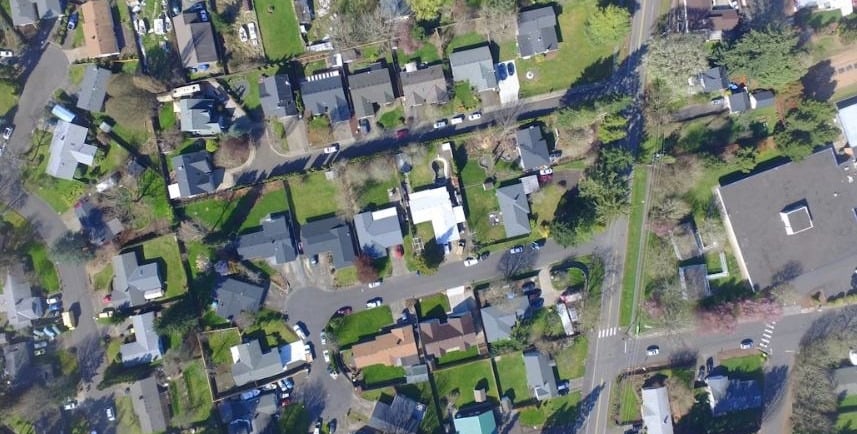
A planning unit is the area of land or buildings that planning law looks at when deciding how a site is being used.
It is the “unit” against which the planning system asks questions like:
What is the main use of this land or building?
Has that use changed?
If it has changed, is that change material (i.e. does it need planning permission)?
The key point is this:
Planning law does not always look at individual rooms, sheds, or bits of land in isolation. It usually looks at the site as a whole — the planning unit.
Why the Planning Unit Matters
The concept matters most when deciding whether there has been a material change of use (MCU).
Before anyone can answer “has the use changed?”, they must first answer:
What is the correct planning unit?
Get that wrong, and the conclusion on whether planning permission is needed may also be wrong.
This approach has been confirmed repeatedly by the courts, most notably in Burdle & Williams v Secretary of State [1972], the leading case on planning units.
The General Rule: The Unit of Occupation
As a starting point, the planning unit is usually the unit of occupation.
That means:
What is occupied together
By the same person or business
For a broadly consistent purpose
For example:
A house, its garden, and its garage are normally one planning unit
A factory complex is often one planning unit
A single shop unit is usually one planning unit
This was reinforced in cases such as G Percy Trentham Ltd v MHLG [1966], where storage inside a farm building was treated as part of the farm’s planning unit, not a separate storage use.
When Can a Smaller Planning Unit Exist?
Sometimes, a site that looks like one property can actually contain more than one planning unit.
The courts have said this depends on fact and degree, focusing on two key ideas:
1. Physical separation
Is the area clearly separate on the ground?
2. Functional separation
Is it used independently, for a different and unrelated purpose?
Both are important.
As the courts put it in Burdle & Williams, you generally need both physical and functional separation before you can identify a smaller planning unit.
Three Common Planning Unit Scenarios
The courts have identified three broad situations.
1. One Planning Unit with Incidental Uses
This is the most common situation.
There is:
One main (primary) use, and
Other activities that are incidental or ancillary
Example: A house with a home office, hobby workshop, or occasional storage. As long as those activities remain secondary, the planning unit stays residential.
This principle was confirmed in Vickers-Armstrong Ltd v CLB [1957], where changes between ancillary uses in a large factory did not amount to a material change of use.
2. One Planning Unit in Mixed Use
Sometimes, no single use is clearly “secondary”.
Example:
A house where a substantial car-repair business operates from the garage
A building used equally as a café and a shop
In these cases, the planning unit may be in mixed use.
The planning unit is still one unit — but its lawful use now consists of more than one activity.
3. Separate Planning Units on the Same Site
Where parts of a site are:
Physically separate, and
Used for different and unrelated purposes,
they may each be their own planning unit.
Example: A garage that is:
Let to a separate business
Operated independently from the house
Functionally unconnected to the dwelling
In that situation, the house and garage are likely to be different planning units.
This approach has been supported in cases such as Johnston & Johnston v SSE [1974], where individual garages were treated as separate planning units based on occupation.
Situations Where the Planning Unit Is Often Disputed
Some scenarios regularly cause difficulty.
Home Businesses
Working from home does not automatically create a new planning unit.
But if:
The business activity becomes dominant, or
Parts of the property are functionally separated,
the planning unit — and its lawful use — may change.
Large Sites with Multiple Activities
Farms, industrial estates, and leisure sites often host multiple uses.
For example:
Markets or boot fairs on farmland are often treated as part of the farm planning unit, not individual fields
Coordinated activities across different land parcels can still form one planning unit
This was upheld where boot fairs operated across adjacent land in different ownerships.
Can Planning Permission Be “Lost” by Creating a New Planning Unit?
Yes.
In Stone & Stone v SSCLG [2014], the court confirmed that:
Creating a new planning unit can extinguish a previously authorised use
Whether this has happened is a question of fact and degree
This is particularly important where land is subdivided or re-occupied in new ways.
However. local planning authorities cannot artificially divide a planning unit just to make enforcement more restrictive. This principle comes from De Mulder v SSE [1973].
However:
Enforcement notices do not always have to cover the whole planning unit
Authorities can enforce against part of a site if justified
The key test is whether doing so causes injustice.
Key Takeaways
A planning unit is the area of land or buildings assessed as a whole for planning purposes
It is usually the unit of occupation
Smaller planning units only exist where there is real physical and functional separation
Many disputes come down to fact and degree, not rigid rules
Getting the planning unit wrong can lead to incorrect conclusions about lawful use or enforcement
Why This Matters in Practice
If you are:
Changing how part of a property is used
Letting out buildings separately
Introducing new commercial or leisure activities
Facing planning enforcement
…the definition of the planning unit is often the starting point — and sometimes the deciding factor.
If you’re unsure, professional planning advice early on can prevent costly mistakes later.
Andrew Ransome MRTPI - Email: andrew@andrewransome.co.uk
About Me
Andrew Ransome is a Planning Director and a Chartered Member of the Royal Town Planning Institute (RTPI), with more than two decades of experience in town planning.
He specialises in delivering strategic planning solutions for complex developments across both rural and urban environments, helping clients navigate planning challenges and unlock development opportunities. Connect with Andrew on Linkedin.




Get in Touch
Email: andrew@andrewransome.co.uk
Tel: 020 7096 8045
London Office:
60 Tottenham Court Road
Fitzrovia
London
W1T 2EW
© 2026 Andrew Ransome Town Planning Ltd. All rights reserved.
Content on this website is provided for general information and educational purposes only and does not constitute formal planning, professional, or legal advice. Planning policies, legislation, and guidance are subject to change. Site-specific assessment by a qualified consultant is recommended before making development decisions.
Projects highlighted across this website represent professional work undertaken by Andrew Ransome throughout his career.