When Can Lawful Use Rights Be Lost?
Can lawful use rights be lost? This guide explains when existing planning uses can be extinguished, why it happens, and what property owners need to watch out for.
PERMITTED DEVELOPMENTPLANNING ENFORCEMENT
Andrew Ransome
1/26/20265 min read
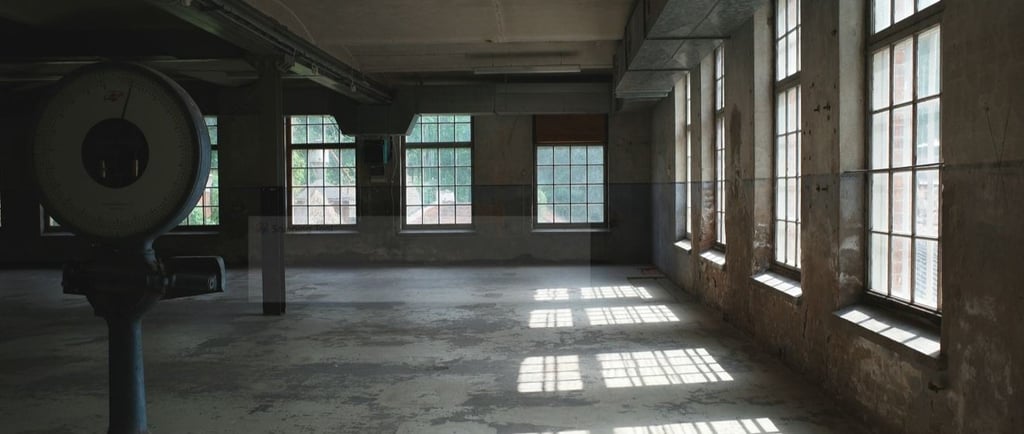
In planning terms, a “lawful use” is not as permanent as many people assume. While a use may have been lawful for many years – sometimes even decades – there are several situations where those rights can be lost or extinguished.
This article explains, in straightforward terms, how lawful use rights can be lost, why this matters, and some of the key legal principles that planning authorities rely on when making these decisions.
What Are Lawful Use Rights?
A lawful use is one that is legal in planning terms. This can arise in two main ways:
Because planning permission has been granted and implemented; or
Because a use has continued for a sufficiently long period without enforcement action, making it lawful through the passage of time.
Lawful use rights can often be confirmed by a Lawful Development Certificate (LDC), but an LDC does not make a use immune from being lost in the future. It confirms lawfulness only at the time it is issued.
The Key Ways Lawful Use Rights Can Be Lost
Planning law recognises several situations where lawful use rights may be extinguished. These are well established through statute and case law.
Discontinuance Orders
Lawful uses may be brought to an end through formal legal mechanisms, including:
A Discontinuance Order made under section 102 of the Town and Country Planning Act.
While uncommon, these mechanisms demonstrate that lawful use rights are not absolute and can be deliberately removed through legal process.
Loss Through Conditions on a New Planning Permission
A lawful use can also be lost if a new planning permission is granted subject to a condition that expressly prevents the continuation of the existing use.
For such a condition to be effective it must be lawful, necessary, and reasonable. Importantly:
The condition will only take effect if the permission is implemented.
If the permission is never carried out, the existing lawful use remains intact.
This often arises where redevelopment is permitted on the basis that an earlier use should cease, such as commercial uses in residential areas.
Material Change of Use and the Creation of a New Planning Unit
One of the most significant ways lawful use rights can be lost is through a material change of use to something else.
Stone & Stone v Secretary of State and Cornwall Council [2014]
In Stone & Stone, the High Court confirmed a crucial principle:
an existing lawful use can be extinguished by the creation of a new planning unit authorised by planning permission.
In practical terms, this means that:
Where land or buildings are developed and used in a fundamentally different way under a new permission, the original lawful use does not necessarily survive in the background.
The planning system does not assume that previous uses remain “on standby” once a new use has lawfully taken hold.
However, the judgment also highlighted the importance of enforcement procedure. Where an enforcement notice is served against the newer use, section 57(4) of the Act may, in some circumstances, allow a landowner to revert to the previous lawful use. This is a limited protection and only applies where enforcement action is taken against the later use.
Inconsistent Development and Physical Change
Lawful use rights can also be lost where development takes place that is physically or functionally incompatible with the continuation of the existing use.
Petticoat Lane Rentals v Secretary of State [1971]
This case established that where planning permission is granted and implemented for a new building and new use, the previous use rights on the site are expunged.
Once the permission is carried out, the site’s planning status is reset to reflect the newly authorised development.
Jennings Motors v Secretary of State [1982]
This case clarified that not every physical alteration automatically results in the loss of lawful use rights. The courts held that:
The erection of a new building on part of a site does not necessarily create a new planning unit or extinguish the existing use.
Much depends on whether there has been a break in the planning history or a fundamental change in how the site operates.
This highlights that planning decisions are highly fact-specific.
Abandonment of Use
A lawful use may also be lost through abandonment.
Abandonment is not simply about intention. Planning authorities and Inspectors will consider:
How long the use has ceased;
The physical condition of the site or buildings;
Whether the site has been put to another use; and
Whether the original use could realistically resume.
Once a use is abandoned, it cannot be revived without planning permission.
Enforcement Notices and the Loss of Lawful Use Rights
Enforcement action can permanently remove lawful use rights if not handled correctly.
Staffordshire County Council v Challinor [2007] and Wokingham Borough Council v Scott [2017]
These cases confirm that an enforcement notice can, in some circumstances, take away lawful use rights entirely.
Section 285 of the Act provides that once an enforcement notice takes effect, it cannot later be questioned on grounds that could have been raised on appeal. This means:
If an enforcement notice is served and the recipient does not appeal on the basis that the use is lawful, those lawful use rights may be lost forever.
Even an existing Lawful Development Certificate does not necessarily prevent this outcome, as an LDC is only conclusive at the date it is issued.
This underlines the importance of responding properly and promptly to enforcement action.
Demolition of Buildings and Loss of Use Rights
Another critical principle is that a use cannot survive without the buildings or installations necessary to carry it on.
Iddenden v Secretary of State [1972]
The Court of Appeal held that where everything required to sustain a use is destroyed – even by accident – the use cannot continue.
Hancock v Secretary of State and Windsor & Maidenhead [2012]
This case confirmed that where a building is demolished and replaced without planning permission, the only lawful use that remains is the lawful use of the land. There is no automatic right to have buildings on the site or to resume the former building use.
However, where a replacement building is lawfully constructed, it may still be possible to continue the existing lawful use of the planning unit, depending on the planning history.
Why This Matters
The loss of lawful use rights can have serious consequences, including:
Loss of flexibility in how land or buildings can be used;
Reduced property value;
Exposure to enforcement action; and
The need for new planning permission to resume a former use.
Many difficulties arise because landowners assume that long-standing uses are permanently protected. In reality, lawful use rights are conditional, fragile, and highly dependent on planning history.
Final Thoughts
Lawful use rights are valuable, but they are not guaranteed forever. They can be lost through redevelopment, enforcement action, demolition, or long periods of inactivity.
Anyone relying on an existing use, or considering changes to a site with a complex planning background, should take advice before acting. Understanding when and how lawful use rights can be lost is often the difference between a straightforward project and a serious planning problem.
Andrew Ransome MRTPI - Email: andrew@andrewransome.co.uk
About me
Andrew Ransome is a Planning Director and a Chartered Member of the Royal Town Planning Institute (RTPI), with more than two decades of experience in town planning.
He specialises in delivering strategic planning solutions for complex developments across both rural and urban environments, helping clients navigate planning challenges and unlock development opportunities. Connect with Andrew on Linkedin.




Get in Touch
Email: andrew@andrewransome.co.uk
Tel: 020 7096 8045
London Office:
60 Tottenham Court Road
Fitzrovia
London
W1T 2EW
© 2026 Andrew Ransome Town Planning Ltd. All rights reserved.
Content on this website is provided for general information and educational purposes only and does not constitute formal planning, professional, or legal advice. Planning policies, legislation, and guidance are subject to change. Site-specific assessment by a qualified consultant is recommended before making development decisions.
Projects highlighted across this website represent professional work undertaken by Andrew Ransome throughout his career.