When Permitted Development Rights Do Not Apply
Permitted Development rights can simplify development, but they do not always apply. This guide explains the key pitfalls for property owners, including planning conditions, Article 4 Directions, unlawful buildings, exceeding PD limits, and failing to obtain prior approval.
PERMITTED DEVELOPMENT
Andrew Ransome
3/15/20266 min read
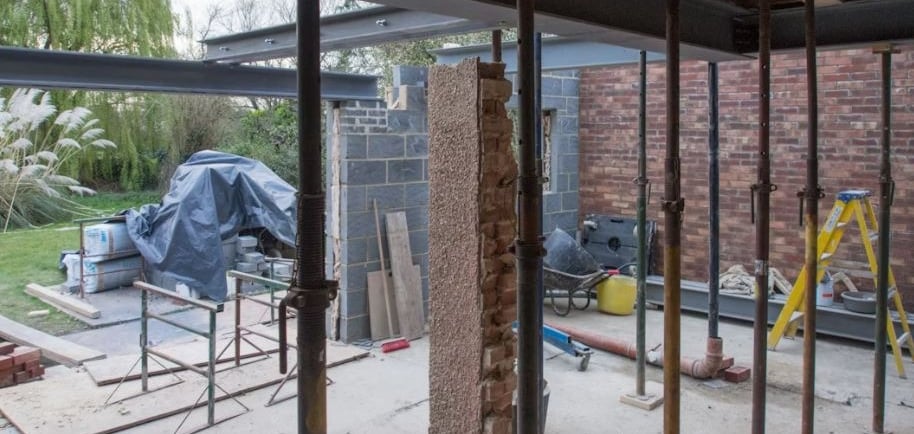
Permitted Development (PD) rights are one of the most useful tools in the planning system. They allow certain types of development to proceed without the need for a full planning application, provided that the development meets the conditions and limitations set out in national legislation.
Extensions, loft conversions, changes of use, and agricultural building conversions are all examples of development that may benefit from these rights.
However, a common misconception is that if something appears to fall within permitted development limits, it is automatically lawful. In reality, PD rights are subject to a range of restrictions and conditions. In some situations they simply do not apply at all.
This article explains the most common situations where permitted development rights do not apply, and highlights the key risks property owners should be aware of before relying on them.
What Are Permitted Development Rights?
Permitted Development rights are granted through the Town and Country Planning (General Permitted Development) (England) Order 2015, usually referred to as the GPDO.
Rather than requiring a planning application for every minor change to buildings or land, the GPDO allows certain classes of development. These include many common alterations to houses, agricultural building conversions, and some changes of use between different property types.
However, this permission only applies if the development complies with all relevant limitations, conditions, and procedural requirements set out in the legislation.
If any of these requirements are not met, the development is not permitted development and express planning permission is required.
Planning Conditions That Remove Permitted Development Rights
One of the most common reasons PD rights do not apply is because they have been removed by a planning condition attached to an earlier planning permission.
Local planning authorities have the power to impose conditions when granting planning permission. These conditions can restrict future development or remove certain permitted development rights entirely.
For example, a planning permission for a new dwelling may include a condition stating that:
“Notwithstanding the provisions of the Town and Country Planning (General Permitted Development) Order, no extensions or alterations shall be carried out without express planning permission.”
Where such a condition exists, the homeowner cannot rely on normal householder PD rights for extensions or outbuildings. Even relatively small works that would normally be permitted development would instead require a planning application.
Conditions can also restrict changes of use. In some cases a condition may specify that a building must only be used for a particular purpose unless further planning permission is obtained.
These conditions are often imposed where the local authority considers it necessary to control development, for example:
in sensitive rural locations
where design control is important
where cumulative extensions could harm character or amenity
where a building was approved as part of a carefully controlled scheme
A common mistake property owners make is assuming that permitted development rights apply simply because the GPDO allows them nationally.
In practice, the first step should always be to check the planning history of the property to confirm whether any conditions remove or restrict those rights.
Article 4 Directions
Another situation where permitted development rights do not apply is where an Article 4 Direction has been made.
An Article 4 Direction is a legal mechanism that allows a local planning authority (or the Secretary of State) to remove permitted development rights in a specific area.
Where such a direction is in place, development that would normally be permitted development instead requires a planning application.
Article 4 Directions are commonly used in locations where tighter planning control is considered necessary. Examples include:
conservation areas
historic town centres
areas with a distinctive architectural character
areas where commercial-to-residential conversions need to be controlled
In recent years many local authorities have introduced Article 4 Directions to control changes of use from commercial premises to residential use, particularly following the introduction of national permitted development rights allowing offices and shops to convert to housing.
Government policy now encourages Article 4 Directions to be used in a targeted and evidence-based way, typically focused on the core of town centres or areas where the loss of commercial space could undermine local vitality.
For property owners, the key point is that permitted development rights may vary depending on location. A change of use that is permitted development in one town may require planning permission in another because of an Article 4 Direction.
Before relying on PD rights, it is therefore essential to check whether any Article 4 Directions apply to the property.
Unlawful Buildings or Uses
Permitted development rights only apply to lawful buildings and lawful uses.
This is an important but often overlooked rule. If a building or use has been created without planning permission and is not lawful, it cannot benefit from permitted development rights.
For example:
An unlawfully built extension cannot be further extended using PD rights.
An unlawful residential use cannot rely on householder PD rights.
An agricultural building that was not lawfully constructed cannot be converted under agricultural permitted development rights.
The legislation specifically prevents unlawful development from gaining further benefits through permitted development rights.
This issue can arise in situations where:
previous owners carried out works without permission
buildings were constructed differently from approved plans
changes of use occurred without formal consent
Sometimes a building may appear lawful because it has existed for many years. However, unless it has planning permission, is immune from enforcement, or has been confirmed through a Lawful Development Certificate, its legal status may still be uncertain.
Where the lawfulness of a building or use is unclear, it is often advisable to establish its status before relying on permitted development rights.
Exceeding Permitted Development Limits
Permitted development rights are subject to precise limitations, often relating to size, height, location, or design.
If any of these limits are exceeded, the development is not permitted development.
Importantly, planning law generally takes an “all or nothing” approach. If a development exceeds a permitted development limit, the entire development becomes unlawful rather than just the element that exceeds the limit.
For example:
An extension that is slightly too large is not partly permitted development; it requires planning permission in full.
A building that exceeds a height restriction cannot rely on PD rights simply because the excess is small.
There is no concept of a “de minimis” breach within permitted development rights. Even a minor exceedance can invalidate the right entirely.
Another important point is that permitted development cannot normally be retrospectively corrected by removing part of the development. Once built, the development must be assessed as a whole against the permitted development criteria.
For property owners this means that careful measurement and compliance with the rules is essential. Small design changes during construction can sometimes inadvertently push a project outside permitted development limits.
Failure to Obtain Prior Approval
Many permitted development rights are subject to a prior approval process.
Prior approval is not the same as applying for planning permission. Instead, it is a process where the developer must notify the local planning authority and obtain approval for specific matters before the development begins.
These matters might include:
transport and highways impacts
contamination and flooding risks
design and external appearance
impacts on neighbours
noise or amenity considerations
Prior approval is commonly required for development such as:
agricultural building conversions to residential use
office-to-residential conversions
additional storeys on existing buildings
some larger householder extensions
Crucially, prior approval must be obtained before development starts. It operates as a pre-commencement condition attached to the permitted development right.
If work begins before the prior approval process has been completed, the development is not permitted development and becomes unlawful.
Unlike planning permission, there is no mechanism to obtain prior approval retrospectively once development has started. This means that starting work too early can create serious planning risks.
Why Professional Advice Is Often Essential
Permitted development rights are often presented as a simplified route through the planning system. In many cases they can provide a straightforward way to deliver development without a full planning application.
However, as the examples above illustrate, the rules governing permitted development are detailed and highly technical. Factors such as planning conditions, Article 4 Directions, prior approval procedures, and the lawfulness of existing buildings can all affect whether the rights actually apply.
Mistakes can be costly.
For this reason it is often advisable to seek professional planning advice before proceeding with development under permitted development rights.
While permitted development can offer significant opportunities for property owners, understanding its limitations is essential to avoid the hidden traps within the system.
Andrew Ransome MRTPI - Email: andrew@andrewransome.co.uk
About me
Andrew Ransome is a Planning Director and a Chartered Member of the Royal Town Planning Institute (RTPI), with more than two decades of experience in town planning.
He specialises in delivering strategic planning solutions for complex developments across both rural and urban environments, helping clients navigate planning challenges and unlock development opportunities. Connect with Andrew on Linkedin.




Get in Touch
Email: andrew@andrewransome.co.uk
Tel: 020 7096 8045
London Office:
60 Tottenham Court Road
Fitzrovia
London
W1T 2EW
© 2026 Andrew Ransome Town Planning Ltd. All rights reserved.
Content on this website is provided for general information and educational purposes only and does not constitute formal planning, professional, or legal advice. Planning policies, legislation, and guidance are subject to change. Site-specific assessment by a qualified consultant is recommended before making development decisions.
Projects highlighted across this website represent professional work undertaken by Andrew Ransome throughout his career.