4 Dwellings Outside of the Settlement Boundary Approved by Uttlesford
Permission in Principle from Uttlesford District Council for four dwellings on an edge-of-village site outside the settlement boundary, demonstrating a housing land supply shortfall and the sustainability of the village location.
PLANNING APPROVALSUTTLESFORDESSEXPERMISSION IN PRINCIPLE
Andrew Ransome
7/2/20262 min read
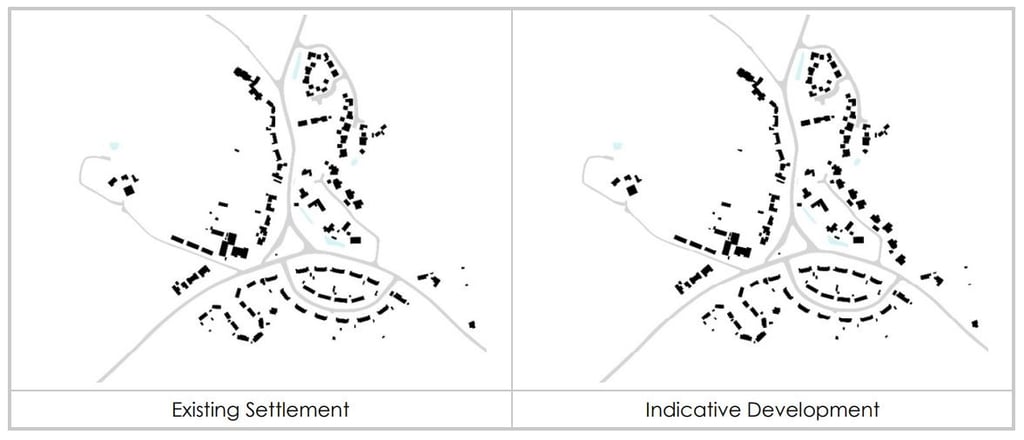
In 2019, Uttlesford District Council approved one of its first Permission in Principle applications, for four dwellings on an edge-of-village site outside the settlement boundary.
The case was resolved by demonstrating that Uttlesford could not show a five-year housing land supply, that adopted settlement boundary policies were therefore out of date, and that the site was in a demonstrably sustainable location within a higher-order village identified in the Council's own local plan.
Permission in Principle for a Residential Development in Uttlesford
Permission in Principle was secured from Uttlesford District Council for four dwellings on an edge-of-village site in Felsted, Uttlesford, Essex.
The application was among the first PiP applications submitted to and approved by Uttlesford District Council.
The site was located outside the settlement boundary, where local planning policies would ordinarily resist residential development.
The planning case was built on two key arguments.
First, a detailed review of Uttlesford's housing land supply demonstrated that the Council could not evidence five years of deliverable housing supply.
Where that is the case, local plan policies restricting development outside settlement boundaries are considered out of date under the NPPF, and the presumption in favour of sustainable development applies — requiring the Council to grant permission unless any adverse impacts would significantly and demonstrably outweigh the benefits.
Second, the sustainability of the specific site was established: despite being located beyond the settlement boundary, the site had good public transport accessibility, was within easy reach of local schools, and was situated in a settlement that Uttlesford's own local plan had identified as one of the district's higher-order villages by virtue of its range of available services and facilities.
Permission in Principle is designed to determine whether the principle of residential development on a small site is acceptable without requiring the submission of technical details upfront.
Uttlesford District Council granted the Permission in Principle, confirming the site's development potential.
Planning Application Advice
If you have a small development site where the principle of residential development is uncertain, Permission in Principle can be a cost-effective way to test it before committing to full design and technical work. Contact me to discuss your site.
Andrew Ransome MRTPI - Email: andrew@andrewransome.co.uk
About me
Andrew Ransome is a Planning Director and a Chartered Member of the Royal Town Planning Institute (RTPI), with more than two decades of experience in town planning.
He specialises in delivering strategic planning solutions for complex developments across both rural and urban environments, helping clients navigate planning challenges and unlock development opportunities. Connect with Andrew on Linkedin.


Planning Successes in Uttlesford
Planning Application Information


Get in Touch
Email: andrew@andrewransome.co.uk
Tel: 020 7096 8045
London Office:
60 Tottenham Court Road
Fitzrovia
London
W1T 2EW
© 2026 Andrew Ransome Town Planning Ltd. All rights reserved.
Content on this website is provided for general information and educational purposes only and does not constitute formal planning, professional, or legal advice. Planning policies, legislation, and guidance are subject to change. Site-specific assessment by a qualified consultant is recommended before making development decisions.
Projects highlighted across this website represent professional work undertaken by Andrew Ransome throughout his career.