Can You Build New Homes in the Green Belt?
Can you build a new home in the Green Belt? Learn when planning permission may be granted for new housing, including Grey Belt, previously developed land, village infilling and very special circumstances.
GREEN BELT
Andrew Ransome
8/26/20266 min read
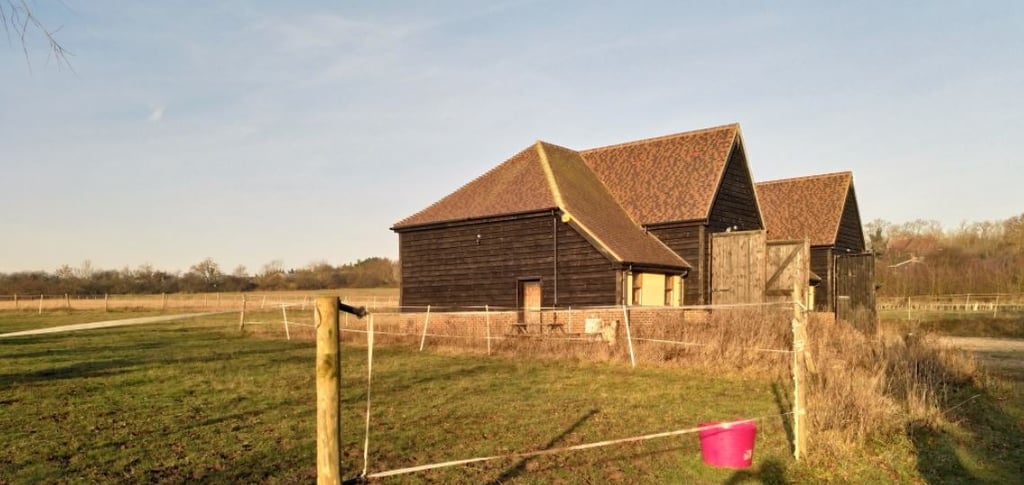
Can you build a new home in the Green Belt? Yes — but only in limited circumstances.
The construction of a new home in the Green Belt is generally regarded as inappropriate development. This means planning permission will usually be refused unless a recognised policy exception applies or the proposal is supported by very special circumstances.
In practice, however, new homes are regularly approved. The key is identifying the correct planning route for the particular site and designing the proposal to fit that policy framework.
The National Planning Policy Framework published in August 2026 has restructured Green Belt policy into a codified set of policies, GB1 to GB8, and has introduced a genuinely new route to new-build housing near stations. This article sets out the current routes.
New Homes Are Inappropriate Unless an Exception Applies
Policy GB6 of the August 2026 NPPF confirms that development in the Green Belt is inappropriate unless it falls within one of the categories set out at policy GB7.
A new standalone dwelling will not normally fall within those exceptions simply because it is well designed or sustainably located. However, there are several established pathways by which planning permission for a new home can be obtained.
1. Limited Infilling in Villages
Policy GB7(1)(c) permits limited infilling in villages lying within the Green Belt.
Whether a proposal qualifies depends on the characteristics of the site and the surrounding settlement pattern.
Typically, the development must occupy a genuine gap within an otherwise built-up frontage and amount to modest infilling rather than outward expansion.
The gap must also be within an identifiable village.
The definition of a village can sometimes be debated. It is also worth noting that under policy GB4(1)(b), villages included within the Green Belt because of the contribution their open character makes to Green Belt openness are not identified as "settlements" for the purposes of the wider spatial strategy — a distinction that can matter when a scheme is also being tested against policies applying outside settlements.
2. Affordable Housing for Local Community Needs
Policy GB7(1)(d) allows limited affordable housing for local community needs, including rural exception sites where supported by development plan policy — now set out at policy HO10.
These schemes are commonly delivered as 100% affordable housing and may be subject to occupancy restrictions linked to local connections.
Where they comply with national and local policy requirements, they can provide a viable route to residential development within the Green Belt.
3. Redevelopment of Previously Developed Land
Policy GB7(1)(e) permits the redevelopment of previously developed land (PDL), including a material change of use to residential or mixed use including residential, provided the development would not cause substantial harm to the openness of the Green Belt.
This exception can be particularly valuable for redundant or underused developed sites, although whether land qualifies as previously developed must always be assessed against the NPPF definition at Annex B.
Some sites that have been used for commercial, institutional or intensive equestrian purposes may qualify as previously developed land.
Open land and buildings last occupied for agriculture or forestry are generally excluded.
Careful evidence is often required to demonstrate that the development would not cause 'substantial' harm to openness.
4. Grey Belt Development
The concept of grey belt, introduced in December 2024, remains a central part of Green Belt policy under the August 2026 NPPF.
Where land is properly identified as grey belt, policy GB7(1)(g) provides that development is not inappropriate, subject to four conditions:
the development must utilise grey belt land and not fundamentally undermine the purposes of the remaining Green Belt taken together;
there must be an evidenced unmet need for the type of development proposed;
the site must be in a sustainable location, with particular reference to policy TR3; and,
for major housing development, the scheme must comply with the "Golden Rules" now set out at policy GB8 — covering affordable housing, infrastructure contributions and accessible green space.
The methodology for identifying grey belt land has been elevated from planning practice guidance into Annex E of the Framework itself, strengthening its weight in decision-making and at examination.
It is also worth noting that the express list of protected designations previously excluded from grey belt status — Local Green Space, National Landscapes, National Parks, Heritage Coast, irreplaceable habitats, heritage assets and flood risk areas — is no longer written into the grey belt definition itself.
Those protections continue to apply through their own separate policies, so a site can still be constrained by them even where it otherwise qualifies as grey belt.
For suitable sites, this remains one of the most important routes in current Green Belt policy.
5. Development Near Well-Connected Stations
A genuinely new route introduced by the August 2026 NPPF is found at policy GB7(1)(h).
Residential or mixed-use development within reasonable walking distance of a well-connected station is not inappropriate, provided:
it is physically well related to the station or the settlement in which it is located;
is of a scale that can be accommodated by existing or proposed infrastructure, and
does not prejudice long-term comprehensive development in the same location; and
for major housing development, this route also requires compliance with the Golden Rules at policy GB8.
This route does not require the site to be grey belt or previously developed land, and — unlike the grey belt route — it does not require an evidenced unmet need to be demonstrated.
Where a plan's spatial strategy has already identified land around a well-connected station for release, policy GB3(4) goes further still, removing the requirement to demonstrate exceptional circumstances at the boundary-alteration stage altogether.
For sites near stations, this route should be one of the first checked, since it can be more straightforward to satisfy than the grey belt or very special circumstances routes.
6. Replacement Dwellings
Where a lawful dwelling already exists on the site, replacing it may offer a more straightforward route than seeking permission for an entirely new additional home.
Replacement buildings are addressed within policy GB7(1)(b) of the August 2026 Framework, alongside the reuse, extension and alteration of existing buildings — these were separate exceptions under the previous Framework and have now been consolidated into a single provision.
The test for a replacement dwelling is unchanged in substance:
the new building must be for the same use and not materially larger than the one it replaces.
In many cases, pursuing a replacement dwelling can be significantly less contentious than promoting a new residential unit on undeveloped Green Belt land.
6. Demonstrating Very Special Circumstances
Where none of the policy exceptions applies, planning permission can only be granted under policy GB6 if very special circumstances clearly outweigh the harm to the Green Belt by reason of inappropriateness and any other harm arising from the proposal.
There is no prescribed checklist of what amounts to very special circumstances.
Decision-makers consider all material considerations in the round, and a combination of factors may collectively justify permission even where no individual factor would do so alone.
An established fallback position can also carry substantial weight. For example, in Mansell v Tonbridge and Malling Borough Council [2017], the Court of Appeal confirmed that a realistic fallback — such as an implementable permitted development scheme — may be treated as a material consideration when assessing an alternative proposal.
Can General Housing Need Alone Justify a New Home?
Usually not.
A borough-wide shortage of housing or a failure to maintain a five-year supply of deliverable housing sites will rarely, by itself, amount to very special circumstances for an individual dwelling in the Green Belt.
However, housing need can still be an important component of the planning balance when combined with other factors, and it is one of the required conditions for the grey belt route under policy GB7(1)(g) discussed above.
It is also important to distinguish between housing land supply policy and Green Belt policy.
A shortfall in housing supply may affect the weight given to certain development plan policies and engage the presumption in favour of sustainable development under policy S5 for non-Green Belt sites.
Within the Green Belt, however, the routes set out above — and, failing those, the very special circumstances test under policy GB6 — remain the principal gateways for proposals that are otherwise inappropriate.
Self-Build and Custom Housebuilding
Demand for self-build and custom housebuilding may also contribute to a case for planning permission.
Local authorities must maintain registers of individuals seeking self-build opportunities, and evidence of substantial unmet demand may form part of a wider very special circumstances case, particularly where opportunities elsewhere in the authority are limited.
On its own, however, self-build demand is unlikely to be sufficient.
New Homes in the Green Belt - Summary
So, can you build a new home in the Green Belt? The answer is yes — but only where the proposal falls within a recognised policy exception or is supported by compelling very special circumstances.
The routes available under the August 2026 NPPF include limited village infilling, affordable housing for local needs, redevelopment of suitable previously developed land, qualifying grey belt sites, the new route for development near well-connected stations, replacement dwellings, and carefully evidenced cases where very special circumstances clearly outweigh Green Belt harm.
The prospects of success depend heavily on the characteristics of the site and the planning strategy adopted from the outset, making an early assessment of policy constraints and opportunities essential before significant time or money is invested.
Planning Application Advice
If you own land or a building in the Green Belt and want to understand your development options, I can advise on planning strategy and manage your application from initial assessment through to decision. Contact me to discuss your site.
Andrew Ransome MRTPI - Email: andrew@andrewransome.co.uk
About me
Andrew Ransome is a Planning Director and a Chartered Member of the Royal Town Planning Institute (RTPI), with more than two decades of experience in town planning.
He specialises in delivering strategic planning solutions for complex developments across both rural and urban environments, helping clients navigate planning challenges and unlock development opportunities. Connect with Andrew on Linkedin.


Green Belt Information
Green Belt Approvals


Get in Touch
Email: andrew@andrewransome.co.uk
Tel: 020 7096 8045
London Office:
60 Tottenham Court Road
Fitzrovia
London
W1T 2EW
© 2026 Andrew Ransome Town Planning Ltd. All rights reserved.
Content on this website is provided for general information and educational purposes only and does not constitute formal planning, professional, or legal advice. Planning policies, legislation, and guidance are subject to change. Site-specific assessment by a qualified consultant is recommended before making development decisions.
Projects highlighted across this website represent professional work undertaken by Andrew Ransome throughout his career.