Can You Replace a Building in the Green Belt?
Discover the rules for replacing buildings in the Green Belt, including size limits, same use requirements, key court decisions, and common planning pitfalls.
GREEN BELT
Andrew Ransome
8/27/20266 min read
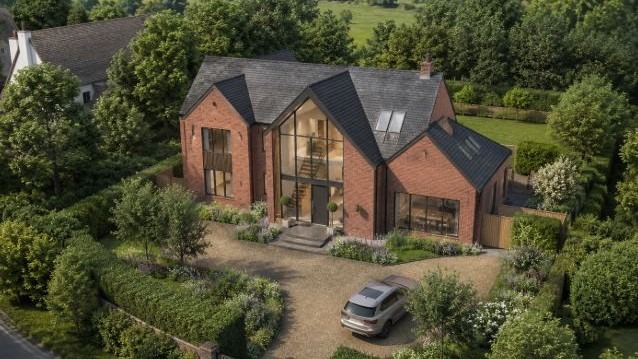
Can You Replace a Building in the Green Belt? In most cases, yes—you can replace an existing building in the Green Belt, provided the replacement is in the same use and is not materially larger than the building it replaces.
If those two conditions are satisfied, permission can be sought without needing to demonstrate very special circumstances.
This article examines both conditions in detail, and explains how the baseline for comparison is established.
The Green Belt Policy Test: Policy GB7(1)(b)
Policy GB7(1)(b) of the National Planning Policy Framework published in August 2026 states that the replacement of a building in the Green Belt is not inappropriate development, provided the new building is in the same use and is not materially larger than the building it replaces.
This provision has been restructured under the current NPPF.
Replacement is now addressed within the same sub-paragraph as the reuse, extension and alteration of existing buildings, rather than as a separate exception (previously paragraph 154(d).
For replacement dwellings specifically, however, the substantive test itself is unchanged: two conditions, both of which must be satisfied — same use, and not materially larger.
A finding that a replacement building is not inappropriate removes the need to demonstrate very special circumstances under policy GB6.
The proposal still needs to be assessed against all other relevant planning policies — design, landscape impact, heritage, highways, and so on — but is not considered harmful to the Green Belt.
The Baseline: What Is Being Replaced?
The baseline for the 'not materially larger' assessment is the existing building to be replaced — the actual physical development on the site at the time of the application.
This was confirmed by the High Court in Athlone House Ltd v Secretary of State for Communities and Local Government [2015]. The judge held that the baseline is the extent of the physical built development on the site as a question of fact.
This means what is physically there, not what could theoretically be built, not what was there many years ago, and not what could be erected under an unimplemented planning permission.
Unimplemented Permissions Cannot Inflate the Baseline
A consequence of the Athlone House reasoning that is often overlooked is that an existing but unimplemented planning permission for a larger building cannot form part of the baseline for the replacement test.
The permission exists as a legal right — but it has not been implemented, so there is no physical building to compare against.
However, as the judge in Athlone House observed, an unimplemented permission is not entirely irrelevant. It may be relevant at the very special circumstances stage of the assessment under policy GB6, as a fallback that has a realistic prospect of being implemented.
If There Is No Existing Building
Policy GB7(1)(b) depends, for the replacement limb, on the existence of a building to be replaced.
If the building on the site has already been demolished before the planning application is made, there is nothing to replace, and the exception cannot apply.
This is a practical trap for applicants who demolish existing structures ahead of a planning application.
Once the building has gone, the replacement route under policy GB7(1)(b) is closed, and any new dwelling will instead need to demonstrate very special circumstances under policy GB6. This is a common but avoidable error in Green Belt.
What Does 'Not Materially Larger' Mean?
The assessment of whether a proposed replacement building is materially larger than the one it replaces is primarily an objective one by reference to size.
The relevant physical dimensions will depend on the particular circumstances of the case. The judgment in R (Heath and Hampstead Society) v Camden London Borough Council [2007] confirmed that the comparison should be made by reference to the physical size of the buildings — but which dimension is most relevant will depend on the facts.
Floorspace, footprint, built volume, height, width and depth may all be material, and the decision-maker must have regard to the overall impression created by the comparison.
The assessment does not involve the visual impact of the proposed building on the openness of the Green Belt. That is a separate consideration, assessed under Green Belt openness policy and the character and appearance of the area.
The not materially larger test is a straightforward size comparison between the existing and proposed buildings.
Subterranean Development: Basements Count
Whether a proposed basement should be included in the comparison when assessing whether a replacement building is materially larger was considered in Feather v Cheshire East Borough Council [2010].
The court held that the basement is a material consideration and must be taken into account in the size comparison.
If those basements would make the replacement building materially larger in overall built volume, policy GB7(1)(b) will not be satisfied.
Reasonable Tolerance
The word 'materially' is significant: the test is not whether the proposed building is larger than the one it replaces, but whether it is materially larger.
Some degree of tolerance is implicit.
A modestly larger building — reflecting design improvements, updated building fabric, or contemporary space standards — may not be materially larger in overall terms.
Precisely where the threshold lies is a matter of planning judgement in each case, and there is no fixed percentage that defines the boundary.
Same Use
The requirement that the new building must be in the same use as the one it replaces is generally the less contentious of the two conditions, but it should not be overlooked.
The most common application is the replacement of a residential dwelling with a new residential dwelling — in the same C3 use class.
Where an applicant proposes to take the opportunity of a replacement to also change the use of the building — for example, replacing a dwelling with a small office building — the same use condition would not be met, and the proposal would not qualify under policy GB7(1)(b).
Where the existing building is in multiple or mixed uses, the same use condition requires the replacement to replicate that pattern.
An applicant cannot use the replacement exception to achieve a material change of use. If a change of use is genuinely sought alongside the replacement, it may need to be assessed separately under a different exception — such as the reuse limb of policy GB7(1)(b) itself, discussed in our article on building conversions — or under the very special circumstances test at policy GB6.
Replacing Multiple Buildings
The replacement exception refers to the replacement of a building in the singular. Can a single new building replace a group of existing buildings?
The High Court in Tandridge District Council v Secretary of State for Communities and Local Government and Syrett [2015] held that it can, in the right circumstances.
The court confirmed that the word 'building' in this exception should not be read as excluding replacement of more than one building, provided that as a matter of planning judgement the existing buildings can sensibly be considered together in comparison with what is proposed.
A group of redundant outbuildings, and a dilapidated farmhouse could therefore collectively form the baseline for a replacement dwelling, provided the decision-maker is satisfied that it is sensible to treat them for this purpose.
The more functionally distinct and physically dispersed the existing buildings are, the harder it will be to argue they should be treated together.
This is a matter of planning judgement, not a rule of law, and the Tandridge reasoning remains equally applicable under the current wording of policy GB7(1)(b).
The Relationship Between Replacement and Extension
A frequent planning scenario involves an applicant seeking to replace an existing building and also to extend the replacement.
The replacement and extension limbs of the test now sit within the same sub-paragraph — policy GB7(1)(b) — but they remain functionally distinct, and the way they interact is unchanged from the previous Framework.
The original building — as first built, or as at 1 July 1948 — remains the comparator for any future addition test, even after a replacement has been erected.
This means that an applicant who replaces a building under the "not materially larger" limb of policy GB7(1)(b) and then immediately seeks further extensions under the "disproportionate increase" limb of the same policy must assess those extensions against the original building baseline, not the replacement.
Replacement Dwelling in the Green Belt: Summary
Replacing a building in the Green Belt is not inappropriate development under policy GB7(1)(b) of the August 2026 NPPF, provided the new building is in the same use and is not materially larger than the one it replaces.
The baseline is the existing physical building at the time of application — not any unimplemented permission.
If the building has already been demolished, the exception cannot apply.
The 'not materially larger' test is an objective size comparison, assessed across all relevant physical dimensions.
Multiple existing buildings can in appropriate circumstances be treated as a composite baseline.
Planning Application Advice
If you own land or a building in the Green Belt and want to understand your development options, I can advise on planning strategy and manage your application from initial assessment through to decision. Contact me to discuss your site.
Andrew Ransome MRTPI - Email: andrew@andrewransome.co.uk
About me
Andrew Ransome is a Planning Director and a Chartered Member of the Royal Town Planning Institute (RTPI), with more than two decades of experience in town planning.
He specialises in delivering strategic planning solutions for complex developments across both rural and urban environments, helping clients navigate planning challenges and unlock development opportunities. Connect with Andrew on Linkedin.


Green Belt Information
Green Belt Approvals


Get in Touch
Email: andrew@andrewransome.co.uk
Tel: 020 7096 8045
London Office:
60 Tottenham Court Road
Fitzrovia
London
W1T 2EW
© 2026 Andrew Ransome Town Planning Ltd. All rights reserved.
Content on this website is provided for general information and educational purposes only and does not constitute formal planning, professional, or legal advice. Planning policies, legislation, and guidance are subject to change. Site-specific assessment by a qualified consultant is recommended before making development decisions.
Projects highlighted across this website represent professional work undertaken by Andrew Ransome throughout his career.