Chelmsford Approves Retrospective Planning Permission for a Rural Residential Flat
Retrospective planning permission from Chelmsford City Council for the change of use of a garage first floor to a self-contained flat in the rural area beyond the Green Belt at Bicknacre, Essex.
PLANNING APPROVALSCHELMSFORDESSEX
Andrew Ransome
6/29/20262 min read
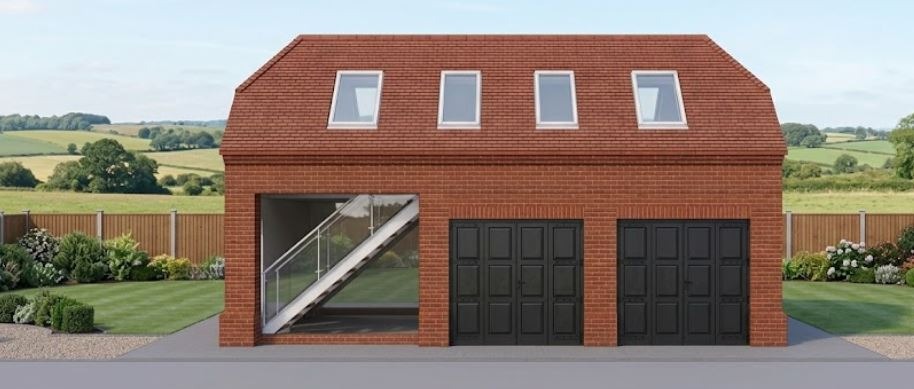
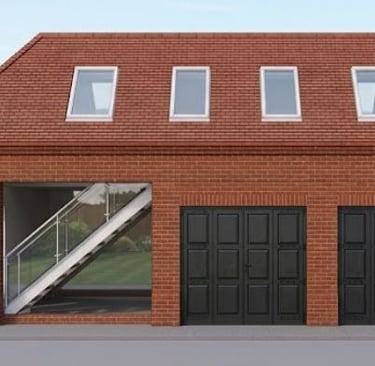
In 2018, Chelmsford City Council approved a retrospective planning application for the change of use of the first floor of a detached garage to a self-contained one-bedroom flat at Bicknacre, Essex — a rural area beyond the Metropolitan Green Belt.
The key challenge was demonstrating compliance with policies for the reuse of rural buildings, and was resolved by showing the building was of permanent construction, that the conversion did not intrude on the countryside, and that the use was contained entirely within the existing building group.
Rural Planning Policies in Chelmsford
Retrospective planning permission was obtained from Chelmsford City Council for the retention of a one-bedroom flat within the first floor of a detached garage in Bicknacre.
The site lies within the rural area beyond the Metropolitan Green Belt — a location where planning policy applies specific tests before development will be permitted, including the reuse or adaptation of existing buildings.
The building in question was a two-storey detached garage whose upper floor had been converted and initially occupied as an annexe to Beech House, before being let independently as a private rented dwelling.
The flat contained a living room, kitchen and bathroom, together with a small amenity area of approximately 50 sq m to the rear and shared use of the parking forecourt.
The key policy framework was Chelmsford's DC57 (Re-use of Rural Buildings) and Local Policy CO6, both of which permit residential reuse of rural buildings where the building is of permanent and substantial construction, the alterations required are not significantly more intrusive in the countryside, and the use is carried out entirely within the confines of the existing building group.
The planning case demonstrated that each of these tests was met.
Chelmsford City Council was satisfied that the proposal complied with the adopted Development Plan Policies and approved the application in accordance with the objectives of the NPPF.
Planning Application Advice
If you have carried out works or a change of use without planning permission and need to regularise the position, a retrospective application may be the most straightforward route. I can advise on whether your building meets the relevant criteria and manage the application on your behalf. Contact me to discuss your situation.
Andrew Ransome MRTPI - Email: andrew@andrewransome.co.uk
About me
Andrew Ransome is a Planning Director and a Chartered Member of the Royal Town Planning Institute (RTPI), with more than two decades of experience in town planning.
He specialises in delivering strategic planning solutions for complex developments across both rural and urban environments, helping clients navigate planning challenges and unlock development opportunities. Connect with Andrew on Linkedin.


Planning Successes in Chelmsford
Planning Application Information


Get in Touch
Email: andrew@andrewransome.co.uk
Tel: 020 7096 8045
London Office:
60 Tottenham Court Road
Fitzrovia
London
W1T 2EW
© 2026 Andrew Ransome Town Planning Ltd. All rights reserved.
Content on this website is provided for general information and educational purposes only and does not constitute formal planning, professional, or legal advice. Planning policies, legislation, and guidance are subject to change. Site-specific assessment by a qualified consultant is recommended before making development decisions.
Projects highlighted across this website represent professional work undertaken by Andrew Ransome throughout his career.