Green Belt Barn Conversion Approved in Chelmsford
Planning permission for the conversion of three redundant Green Belt barns to a residential dwelling, a garage and an ancillary space.
PLANNING APPROVALSGREEN BELT APPROVALSCHELMSFORDESSEX
Andrew Ransome
6/27/20262 min read
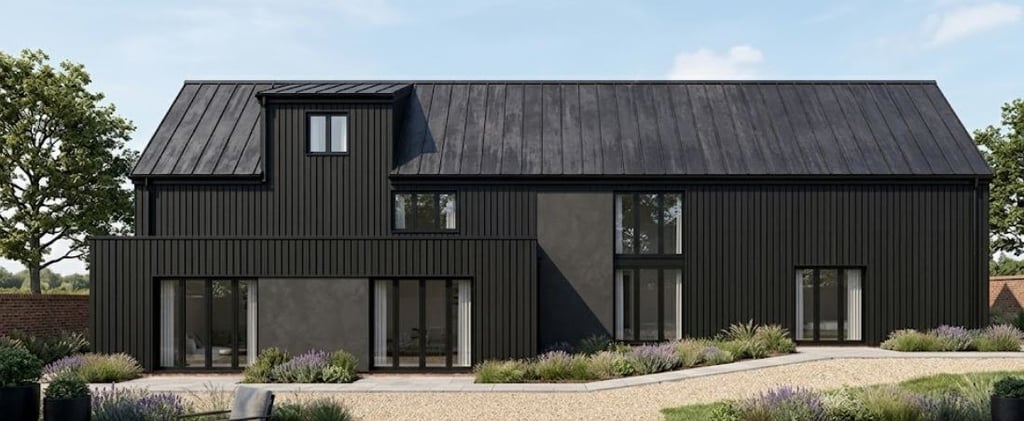
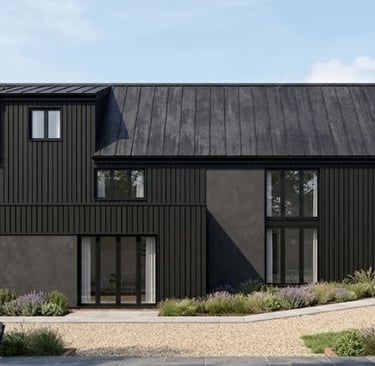
In 2019, planning permission was secured for the conversion of a group of three redundant barns in the Green Belt to a residential dwelling, a replacement garage and an ancillary space.
Rather than pursuing a piecemeal Class Q approach for individual barns, a comprehensive full planning application was submitted for the entire farmyard site, enabling a more ambitious and coherent scheme to be approved in one decision.
Barn Conversions in Chelmsford
Planning permission was obtained for the conversion of a redundant farmyard in the Green Belt comprising three barns.
The scheme was ambitious: the main barn was to be converted to a full residential dwelling, a second barn was to be demolished and replaced with a garage building, and the third barn converted to an ancillary space.
The Green Belt designation added a layer of policy complexity that demanded careful and well-evidenced argument at each stage.
Rather than submitting separate Class Q prior approval applications for the individual barns — which would have been a piecemeal approach carrying significant risk of inconsistent outcomes — a strategic decision was made to submit a single, comprehensive full planning application for the whole site.
This approach allowed the scheme to be presented as a coherent whole, with each element of the proposal justified in the context of the others, rather than assessed in isolation.
Structural surveys were commissioned at the outset, as these are frequently the starting point for barn conversion applications — establishing whether the buildings are structurally capable of conversion without effectively being demolished and rebuilt.
The planning case was then built around the conversion tests applicable to Green Belt policy, demonstrating that the proposals preserved the openness of the Green Belt and the character of the rural landscape.
The demolition of the second barn was justified on the basis that the replacement garage would result in no net increase in built form.
Planning permission was granted for all three elements of the scheme.
Planning Application Advice
If you own redundant barns or agricultural buildings in the Green Belt and are considering conversion, I can advise on whether a full planning application or a Class Q prior approval route is more appropriate for your specific site. Contact me to discuss your project.
Andrew Ransome MRTPI - Email: andrew@andrewransome.co.uk
About me
Andrew Ransome is a Planning Director and a Chartered Member of the Royal Town Planning Institute (RTPI), with more than two decades of experience in town planning.
He specialises in delivering strategic planning solutions for complex developments across both rural and urban environments, helping clients navigate planning challenges and unlock development opportunities. Connect with Andrew on Linkedin.


Planning Successes in Chelmsford
Planning Application Information


Get in Touch
Email: andrew@andrewransome.co.uk
Tel: 020 7096 8045
London Office:
60 Tottenham Court Road
Fitzrovia
London
W1T 2EW
© 2026 Andrew Ransome Town Planning Ltd. All rights reserved.
Content on this website is provided for general information and educational purposes only and does not constitute formal planning, professional, or legal advice. Planning policies, legislation, and guidance are subject to change. Site-specific assessment by a qualified consultant is recommended before making development decisions.
Projects highlighted across this website represent professional work undertaken by Andrew Ransome throughout his career.