Office-to-Residential Change of Use in West Mersea Approved by Colchester
Planning permission from Colchester City Council for the change of use of a ground and first floor office to residential use in West Mersea, overcoming adopted employment protection policies through evidence of low market demand and emerging local plan policy.
PLANNING APPROVALSCOLCHESTERESSEX
Andrew Ransome
7/3/20262 min read
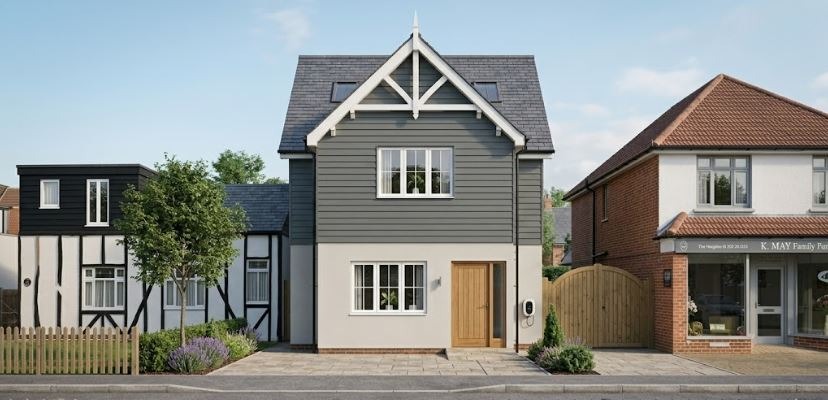
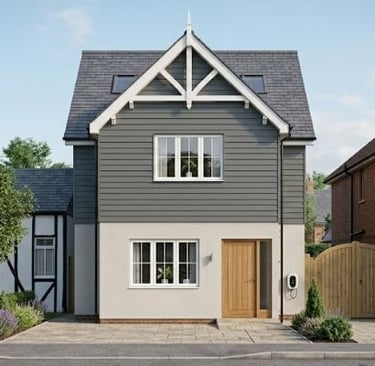
In 2020, Colchester City Council approved planning permission for the change of use of a ground and first-floor office in West Mersea to residential use, to be incorporated into an existing dwelling to the rear.
The case required overcoming the Council's adopted policy resisting the loss of office space, resolved by demonstrating an abundance of available office stock in the area, the site's poor functionality as an office, and the weight of emerging local plan policy.
Office to Residential Change of Use in Colchester
Planning permission was obtained from Colchester City Council for the change of use of the ground and first floors of a building from office (B1a) in West Mersea to residential use.
The existing building comprised an office at the front across both floors, with a separate residential dwelling to the rear.
The proposed scheme sought to incorporate the office into the residential dwelling, with elevation changes to give the building a unified residential appearance throughout.
Ordinarily, an office-to-residential change of use would have been pursued via Class O of the General Permitted Development Order 2015 — a streamlined prior approval route that bypasses normal planning policy.
In this instance, however, the site did not meet all the eligibility criteria, and a full planning application was required instead.
That meant engaging directly with Colchester City Council's adopted policies, which resist the loss of office space and employment uses — a challenging starting point.
The planning case was built around three material considerations that, in combination, undermined the policy basis for refusal.
First, the Council's own evidence base demonstrated that this part of the borough had an abundance of available office space and very low office market activity — meaning the loss of this modest unit would not harm the local employment market in any meaningful way.
Second, the site had poor practical functionality as an office, lacking parking and creating amenity conflicts with the residential use to the rear.
Third, the emerging local plan — argued to be at an advanced stage and therefore entitled to significant weight — had softened the Council's position on existing employment sites of this type.
Colchester City Council accepted the case and approved the application.
Planning Application Advice
If you need to change the use of an office or other employment premises, I can advise on the available routes and the evidence needed to make a persuasive case. Contact me to discuss your project.
Andrew Ransome MRTPI - Email: andrew@andrewransome.co.uk
About me
Andrew Ransome is a Planning Director and a Chartered Member of the Royal Town Planning Institute (RTPI), with more than two decades of experience in town planning.
He specialises in delivering strategic planning solutions for complex developments across both rural and urban environments, helping clients navigate planning challenges and unlock development opportunities. Connect with Andrew on Linkedin.


Planning Successes in Colchester
Planning Application Information


Get in Touch
Email: andrew@andrewransome.co.uk
Tel: 020 7096 8045
London Office:
60 Tottenham Court Road
Fitzrovia
London
W1T 2EW
© 2026 Andrew Ransome Town Planning Ltd. All rights reserved.
Content on this website is provided for general information and educational purposes only and does not constitute formal planning, professional, or legal advice. Planning policies, legislation, and guidance are subject to change. Site-specific assessment by a qualified consultant is recommended before making development decisions.
Projects highlighted across this website represent professional work undertaken by Andrew Ransome throughout his career.