Office-to-Residential Prior Approval Change of Use Approved by Eastbourne
Class O prior notification consent from Eastbourne Borough Council for the change of use of a vacant 1960s office building to residential use, overcoming local plan designation restrictions through permitted development rights.
PRIOR APPROVAL SUCCESSESEASTBOURNEEAST SUSSEX
Andrew Ransome
7/3/20262 min read
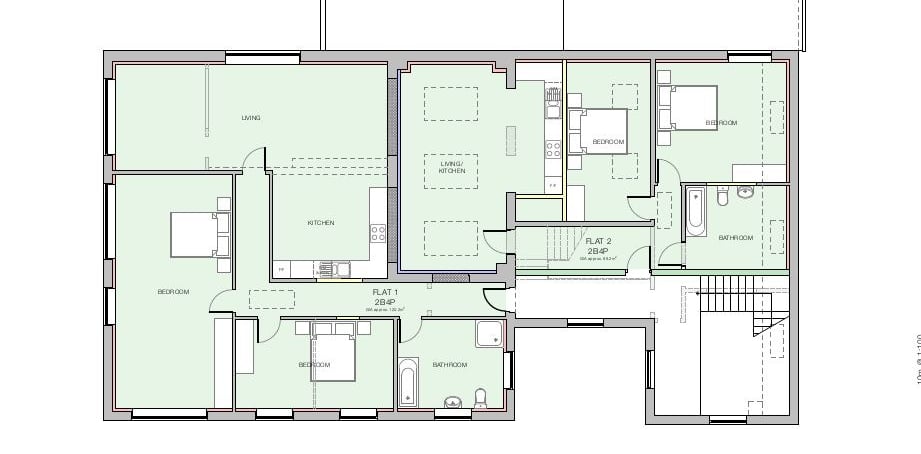
In 2020, Eastbourne Borough Council granted prior notification consent under Class O of the General Permitted Development Order for the change of use of a vacant 1960s office building to residential use.
The site lay on the fringes of a designated commercial area where normal planning policy would have resisted the conversion, but Class O allowed the change to proceed subject to a systematic demonstration that all specified prior approval criteria were met.
Prior Approval in Eastbourne
Class O prior notification consent was obtained from Eastbourne Borough Council for the change of use of a two-storey 1960s office building to residential use.
The building had been vacant for almost a year and required significant renovation. Had it remained within office use, viability constraints would have made investment in the building difficult to justify.
The prior notification route under Class O of the Town and Country Planning (General Permitted Development) (England) Order 2015 provided a practical and efficient mechanism to secure the most viable use for the building.
Class O — since superseded by Class MA under the 2021 amended GPDO — allowed the change of use of Class B1(a) offices to residential use subject to a prior approval assessment.
Critically, it operated outside the normal planning policy framework: the local planning authority could only consider specified matters, rather than applying its adopted development plan policies.
In this case, the site lay on the fringes of a designated commercial area, meaning that a conventional planning application would very likely have been refused on policy grounds. The Class O route bypassed that obstacle entirely.
The prior approval application was prepared systematically, demonstrating compliance with each of the specified assessment criteria in turn.
The application addressed transport and highways impacts, confirming no material increase in movements; contamination, with no site risks identified; and flood risk, which required a detailed flood risk assessment — the site fell within Flood Zone 3, but it was demonstrated that the proposed residential use would not be subject to unacceptable risk. A noise assessment was also submitted, confirming no material impact from neighbouring commercial premises on future residents.
Eastbourne Borough Council granted prior approval, breathing new life into a building that would otherwise have remained vacant.
Planning Application Advice
If you own a vacant office that may be suitable for residential conversion, I can advise on whether Class MA or another route applies and manage the prior approval process efficiently. Contact me to discuss your building.
Andrew Ransome MRTPI - Email: andrew@andrewransome.co.uk
About me
Andrew Ransome is a Planning Director and a Chartered Member of the Royal Town Planning Institute (RTPI), with more than two decades of experience in town planning.
He specialises in delivering strategic planning solutions for complex developments across both rural and urban environments, helping clients navigate planning challenges and unlock development opportunities. Connect with Andrew on Linkedin.


Prior Approval Successes
Prior Approval Information


Get in Touch
Email: andrew@andrewransome.co.uk
Tel: 020 7096 8045
London Office:
60 Tottenham Court Road
Fitzrovia
London
W1T 2EW
© 2026 Andrew Ransome Town Planning Ltd. All rights reserved.
Content on this website is provided for general information and educational purposes only and does not constitute formal planning, professional, or legal advice. Planning policies, legislation, and guidance are subject to change. Site-specific assessment by a qualified consultant is recommended before making development decisions.
Projects highlighted across this website represent professional work undertaken by Andrew Ransome throughout his career.