Outdoor Sport and Recreation in the Green Belt
Learn how outdoor sport and recreation developments can gain planning permission in the Green Belt while preserving openness and complying with planning policy.
GREEN BELT
Andrew Ransome
8/29/20266 min read
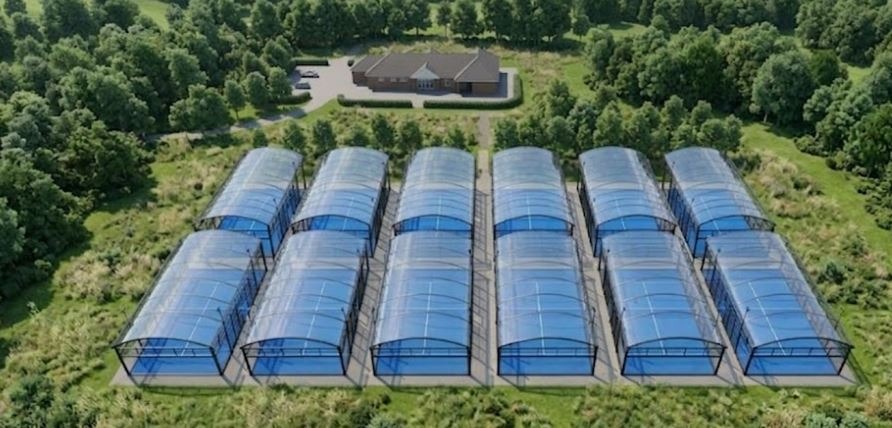
Within the National Planning Policy Framework, outdoor sport and recreation have always occupied a recognised and valued place.
Playing fields, golf courses, cricket grounds, allotments and cemeteries are, in their different ways, consistent with the essential openness of the Green Belt.
The NPPF reflects this by providing specific exceptions for buildings, engineering works and land use changes associated with these uses.
This article explains the current exception under policy GB7(1)(f) of the August 2026 NPPF — and, importantly, a significant change to the legal test that applies, which materially affects how these schemes should now be assessed and argued.
Green Belt Policy: A Consolidated Provision at GB7(1)(f)
Under the previous NPPF, buildings for outdoor sport, recreation, cemeteries and allotments sat in their own dedicated provision (paragraph 154(b)), separate from the wider "other forms of development" category (paragraph 154(h)) covering engineering operations, mineral extraction, infrastructure and material changes of use.
The August 2026 NPPF has consolidated both of these into a single provision, policy GB7(1)(f), which reads:
Certain other forms of development, provided the impact on the openness of the Green Belt is minimised, and there would not be a significant conflict with the Green Belt purposes. These are:
i. Mineral extraction and processing, engineering operations, and transport, electricity network, water and telecommunications infrastructure required in a Green Belt location;
ii. Development brought forward under a Community Right to Build Order or Neighbourhood Development Order;
iii. Material changes in the use of land (such as changes of use for outdoor sport or recreation, or for cemeteries and burial grounds); and
iv. The provision of appropriate facilities (in connection with the existing use of land or a change of use), including buildings, for outdoor sport, outdoor recreation, cemeteries and burial grounds and allotments.
This is a genuine structural change, not just renumbering. What were previously two separate categories of exception, tested independently, are now four sub-categories sitting under a single shared test set out in policy GB7(1)(f).
The Central Change: From 'Preserve' to 'Minimised Impact'
This is the most important change!!
Under the previous NPPF, the exception for outdoor sport and recreation buildings expressly required that the facilities preserve the openness of the Green Belt and not conflict with the purposes of including land within it. The courts interpreted "preserve" strictly.
In R (Amanda Boot) v Elmbridge Borough Council [2017] EWHC 12 (Admin), the High Court held that even a limited or not significant adverse impact on openness meant that openness was not preserved. The test was binary — openness was either preserved, or it was not, with no room for a decision-maker to conclude that a modest or well-mitigated impact was acceptable.
Policy GB7(1)(f) of the August 2026 NPPF replaces this with a materially more permissive standard. The impact on openness must be minimised, and there must be no significant conflict with the Green Belt purposes.
This is a real change in the threshold. "Minimised" does not require the complete absence of impact — it requires that whatever impact does arise has been reduced as far as reasonably practicable, and that the residual impact does not rise to the level of a significant conflict with Green Belt purposes.
A scheme with a modest, well-designed and appropriately sited impact on openness may now satisfy policy GB7(1)(f), even though the same scheme would previously have failed the strict "preserve" test established in Boot.
This does not mean Boot is now irrelevant. The court's underlying reasoning about how to assess openness impact — the relevance of scale, siting, screening and visual prominence — remains directly useful in understanding what a decision-maker will look at when assessing whether impact has genuinely been minimised.
What has changed is the conclusion that follows from identifying some degree of impact. A scheme is no longer automatically disqualified simply because an adverse effect, however limited, can be identified.
The practical effect is that design and siting remain critically important — a well-sited, appropriately scaled and effectively screened facility is far more likely to satisfy the minimised-impact test than a prominent, poorly integrated one. But the bar has moved from "no adverse impact" to "impact reduced as far as reasonably possible, with no significant conflict with Green Belt purposes."
Four Conditions Still Apply
Notwithstanding the more permissive openness threshold, a proposal for a sport, recreation, cemetery or allotment building must still satisfy all of the following, drawn from policy GB7(1)(f)(iv):
The facility must be a building, or falls within GB7(1)(f)(i)–(iii) if it is an engineering operation, Community Right to Build/NDO development, or a material change of use;
The building should be for one of the specified uses: outdoor sport, outdoor recreation, cemeteries and burial grounds, or allotments;
The building must be for appropriate facilities for that use — not any building that happens to be on land used for sport;
The facilities must be in connection with the existing use of the land or a proposed change of use — not a speculative building with no established or proposed sporting use; and
The impact on openness must be minimised, and there must be no significant conflict with the Green Belt purposes.
A proposal that satisfies the first four conditions but fails the fifth is not protected by policy GB7(1)(f) and becomes inappropriate development, requiring very special circumstances under policy GB6.
Appropriate Facilities
The word 'appropriate' in policy GB7(1)(f)(iv) means that not every building associated with an outdoor sporting use will qualify.
The facilities must be appropriate to and necessary for the use in question, rather than buildings of a scale or character that goes beyond what the use genuinely requires.
A modest changing room and toilet block serving a community rugby club on a Green Belt pitch is likely to be an appropriate facility.
A large two-storey clubhouse with a bar, a function room, a gym and permanent office space serving the same club may well not be — particularly if the scale of the building exceeds what the club genuinely needs.
In Connection with the Existing Use or a Change of Use
The requirement that the building must be in connection with the existing use of the land, or with a change of use, is a functional link requirement.
It means that the exception does not permit speculative buildings that are constructed in anticipation of a future sporting use that has not yet been established.
In practical terms, a proposed changing room block on land currently used as a playing field is in connection with an existing use and satisfies this requirement.
A proposed pavilion on agricultural land for which a change of use to a playing field is simultaneously applied for would also satisfy the condition.
A proposed sports building on agricultural land with no associated sporting use, either current or proposed, would not satisfy the condition.
Engineering Operations and Associated Works
Vehicular access tracks, car parking areas, earthwork bunds, drainage works and lighting columns are not buildings.
They now fall within policy GB7(1)(f)(i), alongside mineral extraction and infrastructure, rather than sitting in a separate provision as they did previously — but, as with the buildings limb, the applicable test is now "minimised impact," not "preserve."
All-weather sports surfaces require careful assessment — for example, MUGA pitches, tennis courts, padel courts and menages. An artificial surface creates a large area of hard landscape material that is permanently visible and could still weigh against a proposal, even under the more permissive current test.
Considerate design remains important. Where the surface is sunken, well-screened and modest in scale, it is more likely to satisfy the minimised-impact standard.
Where a scheme involves significant lighting columns, perimeter fencing, hardstanding car parks and associated ancillary buildings, the cumulative impact on openness may still be substantial enough to amount to a significant conflict with Green Belt purposes, even under the current wording.
Floodlighting for outdoor sport remains a particularly sensitive issue in the Green Belt. Even where the physical structures are relatively modest, the light spill and visual impact at night can be a material consideration in assessing whether impact has genuinely been minimised.
Cemeteries, Burial Grounds and Allotments
Cemeteries, burial grounds and allotments are specifically listed in policy GB7(1)(f)(iv) alongside outdoor sport and recreation.
In all cases, the exception applies to buildings for appropriate facilities in connection with those uses — not to the land use itself, which typically requires a material change of use application, now addressed at policy GB7(1)(f)(iii).
A cemetery chapel, a maintenance building for a burial ground, an allotment tool store or a communal allotment shed may all qualify as not inappropriate buildings under this exception, provided the appropriateness, connection and minimised-impact tests are satisfied.
Outdoor Sport and Recreation in the Green Belt - Summary
Outdoor sport, recreation, cemeteries, burial grounds and allotments retain a well-established place in the Green Belt. Buildings, engineering works and land use changes supporting those uses are now addressed together under policy GB7(1)(f) of the August 2026 NPPF.
The most significant change is the shift from the strict "preserve openness" test — under which Boot [2017] held that any adverse impact, however limited, meant the test was failed — to a "minimised impact, no significant conflict" standard. This is a genuinely more achievable test than before, though design, siting and screening remain critical to satisfying it.
Planning Application Advice
If you own land or a building in the Green Belt and want to understand your development options, I can advise on planning strategy and manage your application from initial assessment through to decision. Contact me to discuss your site.
Andrew Ransome MRTPI - Email: andrew@andrewransome.co.uk
About me
Andrew Ransome is a Planning Director and a Chartered Member of the Royal Town Planning Institute (RTPI), with more than two decades of experience in town planning.
He specialises in delivering strategic planning solutions for complex developments across both rural and urban environments, helping clients navigate planning challenges and unlock development opportunities. Connect with Andrew on Linkedin.


Green Belt Information
Green Belt Approvals


Get in Touch
Email: andrew@andrewransome.co.uk
Tel: 020 7096 8045
London Office:
60 Tottenham Court Road
Fitzrovia
London
W1T 2EW
© 2026 Andrew Ransome Town Planning Ltd. All rights reserved.
Content on this website is provided for general information and educational purposes only and does not constitute formal planning, professional, or legal advice. Planning policies, legislation, and guidance are subject to change. Site-specific assessment by a qualified consultant is recommended before making development decisions.
Projects highlighted across this website represent professional work undertaken by Andrew Ransome throughout his career.