Part 6, Class A: Agricultural Buildings and the Prior Approval Procedure
A practical guide to GPDO Part 6 Class A agricultural permitted development rights, covering qualifying criteria, prior approval, case law and common pitfalls.
PRIOR APPROVAL
Andrew Ransome
7/12/20267 min read
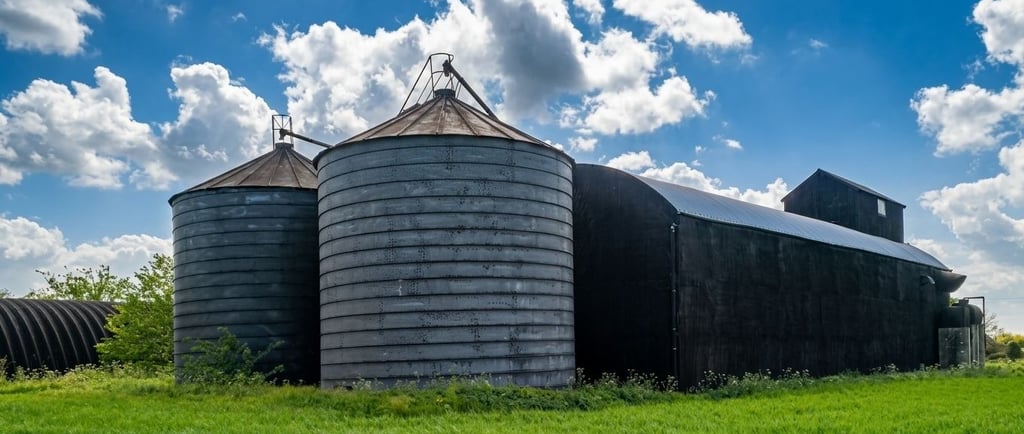
Farmers and rural landowners frequently find themselves needing new buildings, extensions or engineering works to support their operations — and the planning system, if navigated incorrectly, can be both expensive and time-consuming.
Part 6, Class A of the GPDO 2015 grants planning permission for a wide range of agricultural development, but it comes with conditions, limitations and a prior notification procedure that must be followed carefully.
This article explains what Class A permits, the five-hectare threshold, the critical "reasonably necessary" test, how the prior approval procedure works, and the pitfalls that most often catch landowners out.
What Does Part 6, Class A Permit?
Class A permits two categories of agricultural development on qualifying agricultural units:
Class A(a) — the carrying out on agricultural land comprised in an agricultural unit of five hectares or more of works for the purposes of agriculture within that unit, consisting of:
The erection, extension or alteration of a building
The formation or alteration of a private way
The carrying out of excavations or the deposit of waste material (including slurry) reasonably necessary for the purposes of agriculture, where the superficial area of the deposit does not exceed 0.5 hectares
The placing or assembly of a tank in any waters
Class A(b) — any excavation or engineering operations
Both rights apply only to land that is "agricultural land" comprised in an agricultural unit of five hectares or more in area.
The five-hectare threshold is calculated across the whole agricultural unit, not just the parcel on which the development is proposed — but see below for the separate parcel rule.
The Five-Hectare Unit and the Separate Parcel Rule
To benefit from Class A, the agricultural unit must be at least 5 hectares.
Agricultural holdings below this threshold must use Part 6, Class B instead.
In calculating the five-hectare area, the extent of any dwelling (with its garden) occupied for the purposes of farming by the person who occupies the unit, and the extent of any farm worker's dwelling on the land, can be included.
However, even where the unit exceeds five hectares, development on a separate parcel of less than 1 hectare is not permitted under Class A(a).
Whether land forms a "separate parcel" is a matter of fact and degree — a substantial feature of separation, such as a road, is generally required. Fences or hedges alone are unlikely to be sufficient.
The "Reasonably Necessary" Test
The "Reasonably Necessary" test is is the single most important assessment in a Class A case.
The development must be "reasonably necessary for the purposes of agriculture within that unit." T
his is not the same as "essential" or "absolutely required" — the courts have been consistent in applying a less demanding standard.
The courts have confirmed that there is no requirement that the building is intended to accommodate an existing agricultural activity, provided there is an agricultural use of the land and the building is reasonably required for agriculture.
The applicant is expected to demonstrate the need, but the test does not carry any connotation of profit or business viability.
The Courts have also found that a planning decision-maker should consider what agricultural use the land might reasonably be put to, taking account of more than just the current occupier's intentions.
Practically, this means that a well-evidenced case for "reasonably necessary" should address the agricultural enterprise on the unit as a whole, the specific operational need that the proposed building or works would meet, and why the proposed scale and type of development is appropriate.
The size of the proposed building alone is not a ground for refusal.
"Designed for Agricultural Purposes"
Under paragraph A.1(d), development consisting of the erection of a building is not permitted if the building is not designed for agricultural purposes.
"Designed" in this context relates to the building's physical layout and appearance, not simply its intended function.
The Courts have held that "designed for agricultural purposes" is for the decision-maker to decide as a matter of fact and degree — appearance, layout and stated intentions are all relevant.
A building that looks like a barn and is dimensioned for agricultural use will generally satisfy this test.
A building that has the appearance of a commercial warehouse or a residential structure is likely to fail it.
The Livestock Accommodation Bar
One of the most significant and most frequently misapplied limitations in Class A is paragraph A.1(i):
development is not permitted if the works would consist of the erection or construction of, or works to, a building or structure to be used or to be used for the accommodation of livestock, and the land in question is within 400 metres of the curtilage of a protected building.
A "protected building" is a permanent building normally used for residential purposes — not an agricultural building. This limitation is designed to prevent the intensification of livestock accommodation near homes.
Paragraph A.1(i) applies to all works for accommodating livestock — it is not limited to some form of habitation or shelter. It could include hard standing used for feeding sheep.
The Ground Area Limits
The permitted ground area for Class A development is:
Any works or structure (other than a fence) for accommodating livestock or plant or machinery arising from engineering operations: must not cover more than 1,000 square metres
Any building erected, extended or altered under Class A: must not cover more than 1,500 square metres
Prior to the May 2024 amendments, both thresholds were 1,000 square metres. Prior to April 2018, the limit was 465 square metres.
Development is not permitted under Class A if the erection or extension of a building would be carried out on land or a building that is a scheduled monument or within its curtilage.
Part 6 and Class Q Interaction
Paragraph A.1(b) provides that development is not permitted under Class A if it would consist of the erection or extension of any agricultural building on an established agricultural unit where development under Part 3, Class Q or Class S has been carried out on that unit in the preceding ten years.
This is a critical limitation for landowners who have converted agricultural buildings to residential use under Class Q and subsequently wish to erect new agricultural buildings.
The interaction between Class Q and Class A must be checked carefully — the Order expressly prevents the cycle of conversion and replacement being used to circumvent the limits on Class Q.
The Prior Notification Procedure
For certain types of Class A development — principally the erection of buildings, significant excavations and the formation of roads — a prior notification procedure applies under paragraph A.2(2).
The developer must notify the LPA of the proposed development before work begins, and the LPA has a window within which to require prior approval.
The procedure works as follows:
The developer submits a written notification to the LPA, including details of the proposed development, a plan of the site, and information about the proposed use of any building.
The LPA has 28 days from receipt of the notification to decide whether it wishes to make a prior approval requirement. If it does not respond within 28 days, the developer may proceed.
If the LPA notifies the developer that prior approval is required, the LPA then has a further period — ending 56 days after the initial notification was received — to determine whether to grant prior approval.
If the LPA fails to notify its decision on prior approval within that extended period, prior approval is deemed to be granted.
During the 28-day initial period, the applicant must display a site notice. The LPA may then consult relevant bodies before deciding whether prior approval is required.
The prior approval matters for Class A are: siting, design and external appearance of the proposed building or structure.
The LPA's assessment is confined to these matters — it cannot refuse on the basis of agricultural need or land use policy if the development otherwise satisfies the requirements of the Class.
The "Trade or Business" Requirement
Agricultural land must be used for the purposes of a trade or business to qualify for Part 6 rights.
No one factor is decisive as to whether activities constitute a trade or business — factors such as whether the activity is carried out for pleasure, whether accounts are kept, the size of turnover and any profit made are all relevant.
A profit may not be made in the early stages of a business.
But where there is no intention to make a profit, that may be evidence of recreational rather than business activity.
Common Reasons Class A Prior Notifications Fail
The most common reasons for refusal include:
Failure to demonstrate agricultural need. Insufficient evidence that the development is reasonably necessary for the purposes of agriculture on the agricultural unit.
Disproportionate scale. The size of the building or engineering works appears excessive when compared with the agricultural enterprise being carried on.
Poor siting. The proposed location is isolated from the existing farmstead or lacks a convincing operational justification.
Unsatisfactory design or appearance. The building appears industrial, commercial or domestic rather than being designed for agricultural purposes.
Livestock accommodation within 400 metres of a protected building. Paragraph A.1(i) removes permitted development rights altogether in these circumstances.
Class Q or Class S restrictions. Agricultural buildings cannot be erected or extended under Class A where the ten-year restriction in paragraph A.1(b) applies.
Failure to satisfy the qualifying requirements. For example, the agricultural unit is less than five hectares, the development is on a separate parcel of less than one hectare, or the land is not used for agriculture as part of a trade or business.
Incomplete prior notification. Missing plans, inaccurate drawings or insufficient supporting information can delay or prejudice the application, even though the prior approval procedure is intended to be relatively informal.
In practice, many refusals can be avoided by providing a clear explanation of the agricultural enterprise, the operational need for the development, and how the proposal complies with each of the requirements of Class A
Part 6, Class A: Agricultural Buildings - Summary
Part 6, Class A is a valuable right for farmers and agricultural landowners, but it is far from straightforward.
The "reasonably necessary" test, the livestock accommodation bar, the five-hectare threshold, the parcel rules, and the interaction with Class Q all require careful analysis.
The prior notification procedure, while lighter than a full planning application, still requires engagement with the LPA and carries real consequences if not followed correctly.
The body of case law on Class A reflects decades of dispute over what the right does and does not permit. Professional advice before proceeding is strongly recommended.
Get Prior Approval Planning Advice
If you are considering a project that may benefit from the prior approval route, get in touch for clear, practical advice on your options.
Andrew Ransome MRTPI - Email: andrew@andrewransome.co.uk
About me
Andrew Ransome is a Planning Director and a Chartered Member of the Royal Town Planning Institute (RTPI), with more than two decades of experience in town planning.
He specialises in delivering strategic planning solutions for complex developments across both rural and urban environments, helping clients navigate planning challenges and unlock development opportunities. Connect with Andrew on Linkedin.




Get in Touch
Email: andrew@andrewransome.co.uk
Tel: 020 7096 8045
London Office:
60 Tottenham Court Road
Fitzrovia
London
W1T 2EW
© 2026 Andrew Ransome Town Planning Ltd. All rights reserved.
Content on this website is provided for general information and educational purposes only and does not constitute formal planning, professional, or legal advice. Planning policies, legislation, and guidance are subject to change. Site-specific assessment by a qualified consultant is recommended before making development decisions.
Projects highlighted across this website represent professional work undertaken by Andrew Ransome throughout his career.