Planning for Renewable Energy in the Green Belt
Renewable energy development in the Green Belt often requires Very Special Circumstances. Learn how solar farms, battery storage and NPPF policy apply.
GREEN BELT
Andrew Ransome
8/28/20265 min read
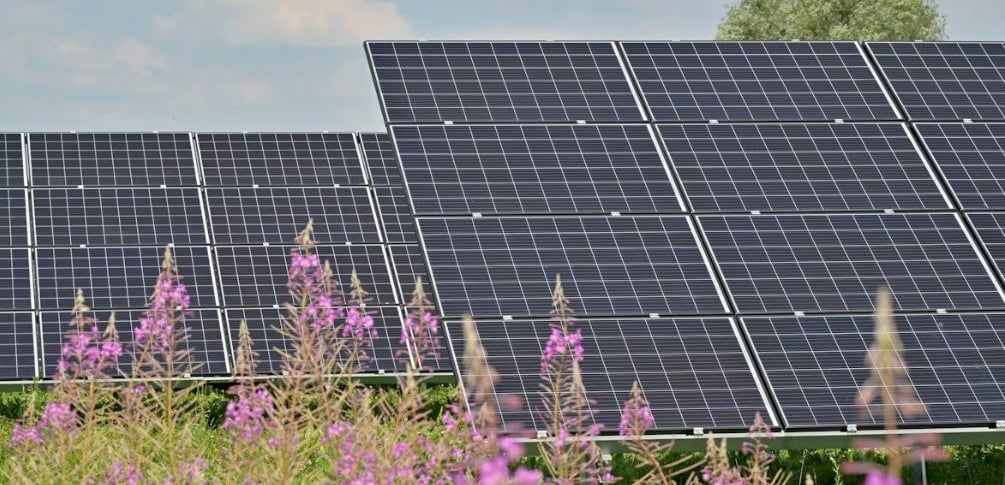
As the national drive towards net zero carbon accelerates, landowners and developers are increasingly exploring whether solar farms, wind turbines, battery storage facilities and other energy infrastructure can be accommodated in the Green Belt.
The policy position under the National Planning Policy Framework published in August 2026 remains clear: most renewable energy development in the Green Belt is inappropriate, requiring a demonstration of very special circumstances.
However, the NPPF explicitly recognises that the environmental benefits of renewable energy generation can, in the right case, constitute those circumstances — and the wider policy support for renewable energy elsewhere in the Framework has, if anything, strengthened under the current restructuring.
The Policy Position: Inappropriate by Default
Policy GB6(3) of the August 2026 NPPF states:
In the case of proposals for renewable and low carbon energy development, very special circumstances may include the wider environmental benefits associated with increased production of energy from renewable sources.
This carries forward, in substance, the position previously found at paragraph 160 of the December 2024 NPPF, now renumbered as part of the very special circumstances policy itself.
This is a meaningful acknowledgement: the NPPF expressly contemplates that renewable energy benefits can in principle constitute very special circumstances.
This represents a more permissive approach than the position under earlier iterations of the Framework, and reflects the increasing weight the planning system attaches to climate change mitigation as a material consideration.
Is All Renewable Energy Development Inappropriate?
Not necessarily. The starting point is policy GB7, which sets out the closed list of exceptions to inappropriate development.
Certain elements of renewable energy schemes may fall within those exceptions.
Engineering operations, and transport, electricity network, water and telecommunications infrastructure required in a Green Belt location — such as certain groundworks, cable trenching and site preparation — fall within policy GB7(1)(f)(i), and are not inappropriate provided the impact on the openness of the Green Belt is minimised and there would not be a significant conflict with the Green Belt purposes.
This is a materially more permissive standard than applied under the previous NPPF. The equivalent provision previously required development of this kind to preserve the openness of the Green Belt — a strict test under which any adverse impact, however limited, meant the test was failed.
The current wording requires only that the impact be minimised, and that any residual impact not amount to a significant conflict with Green Belt purposes.
For renewable energy schemes involving cabling, access tracks, hardstanding and similar groundworks, this is a genuinely easier test to satisfy than the one that applied previously, and it is worth ensuring any planning statement reflects the current standard rather than the older, stricter formulation.
A material change of use involving no new buildings may also fall within policy GB7(1)(f)(iii), which covers material changes in the use of land, subject to the same "minimised impact" test.
However, the principal components of most renewable energy schemes — solar panel arrays, wind turbines, battery storage buildings, substation buildings — are likely to be treated as new buildings or as engineering operations of a scale that goes beyond what GB7(1)(f) can accommodate, and will typically still require very special circumstances under policy GB6.
Very Special Circumstances for Renewable Energy
Where renewable energy development is inappropriate, the applicant must demonstrate that other considerations clearly outweigh the totality of Green Belt harm and any other harm, in accordance with policy GB6(2).
The explicit reference to wider environmental benefits at policy GB6(3) provides a material starting point. In practice, the following factors have supported VSC arguments:
Demonstrable carbon reduction benefits, with evidence of generation capacity and carbon savings over the scheme's lifetime.
Reversibility: solar farms are sometimes granted for a fixed period (commonly 25–40 years) with a decommissioning condition. The temporary nature of the harm is relevant to the balance, and policy W3(3) of the August 2026 NPPF requires time-limited renewable energy schemes to be accompanied by decommissioning and site restoration proposals in any event.
Limited harm to openness: where the site is well-screened, panels are low-profile and there are limited public views, the degree of openness harm may be assessed as moderate.
Weak contribution to Green Belt purposes: where the site makes limited contribution to checking sprawl, preventing settlement merger or preserving a historic setting, the purposes harm may be limited.
Agrivoltaic arrangements combining solar generation with grazing or crop production, maintaining an agricultural character.
It is worth setting the Green Belt-specific tests in the context of the wider decision-making support for renewable energy under the August 2026 Framework.
Policy W3 requires substantial weight to be given to the benefits of renewable and low carbon energy development and electricity network infrastructure — including the contribution to energy security, economic development and the transition to net zero, and the particular benefits of re-powering and life-extending existing sites.
Policy W3(2) also confirms that applicants should not be required to demonstrate the need for such development.
This substantial weight sits alongside, rather than instead of, the Green Belt harm identified under policy GB6 — it does not remove the need for very special circumstances where the development is inappropriate, but it strengthens the "other considerations" side of the balance for a well-evidenced scheme.
Flood Risk and Solar Farms
Annex F of the August 2026 NPPF continues to classify solar farms as essential infrastructure for flood risk vulnerability purposes.
This does not remove the Green Belt constraint — Green Belt policy applies regardless of flood risk — but it has implications for sites in flood zones where other uses might otherwise be prevented, since essential infrastructure is treated more permissively than most other development categories under the Framework's flood risk vulnerability classification.
Renewable Energy in the Green Belt: Summary
Renewable energy development in the Green Belt is in most cases inappropriate, requiring very special circumstances under policy GB6.
Policy GB6(3) provides a firm policy footing by expressly acknowledging that wider environmental benefits of renewable energy may constitute very special circumstances, and policy W3 provides substantial supporting weight from outside the Green Belt chapter.
Certain ancillary elements — cabling, groundworks, and other engineering operations or land use changes — may now fall within policy GB7(1)(f), which has moved from a strict "preserve openness" test to a more achievable "minimised impact" standard.
The strength of the wider VSC case depends on demonstrable carbon reduction, reversibility, the degree of openness harm, and contribution to Green Belt purposes.
Early pre-application engagement with the local planning authority is advisable.
Planning Application Advice
If you own land or a building in the Green Belt and want to understand your development options, I can advise on planning strategy and manage your application from initial assessment through to decision. Contact me to discuss your site.
Andrew Ransome MRTPI - Email: andrew@andrewransome.co.uk
About me
Andrew Ransome is a Planning Director and a Chartered Member of the Royal Town Planning Institute (RTPI), with more than two decades of experience in town planning.
He specialises in delivering strategic planning solutions for complex developments across both rural and urban environments, helping clients navigate planning challenges and unlock development opportunities. Connect with Andrew on Linkedin.


Green Belt Information
Green Belt Approvals


Get in Touch
Email: andrew@andrewransome.co.uk
Tel: 020 7096 8045
London Office:
60 Tottenham Court Road
Fitzrovia
London
W1T 2EW
© 2026 Andrew Ransome Town Planning Ltd. All rights reserved.
Content on this website is provided for general information and educational purposes only and does not constitute formal planning, professional, or legal advice. Planning policies, legislation, and guidance are subject to change. Site-specific assessment by a qualified consultant is recommended before making development decisions.
Projects highlighted across this website represent professional work undertaken by Andrew Ransome throughout his career.