Retrospective Replacement Dwelling Granted by Braintree
Retrospective planning permission from Braintree District Council for a replacement dwelling at Black Notley, Essex, resolving a complex question of when extensions cross the legal threshold to become a new dwelling requiring fresh planning permission.
PLANNING APPROVALSBRAINTREEESSEX
Andrew Ransome
7/4/20262 min read
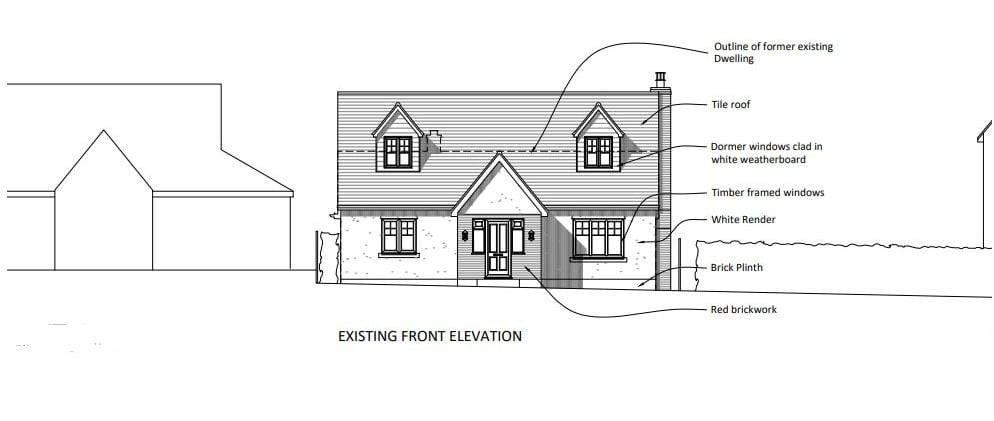
In 2020, Braintree District Council approved retrospective planning permission for a replacement dwelling at Black Notley, Essex, regularising a situation in which approved extensions had not been built as drawn and the original structure had been substantially demolished.
The case raised the legally significant question of when works to an existing building cross the threshold to constitute a new dwelling, requiring a fresh planning permission in their own right.
Retrospective Planning Approval in Braintree
Retrospective planning permission was obtained from Braintree District Council for a replacement four-bedroom dwelling at Black Notley.
Planning permission had originally been granted for extensions to the existing property.
During construction, however, the works departed materially from the approved plans: the original structure was substantially demolished in the process of building the extensions, raising an important legal question about whether what had been constructed could properly be described as an extension or whether it had in fact become a new building.
This question — at what point does demolition associated with extensions become the construction of a new dwelling — has been considered by the courts on a number of occasions.
The established legal position is that where the development results in a new building in effect, it does not matter that works were carried out to a pre-existing structure: the outcome may properly be regarded as a replacement dwelling rather than an extension, and a fresh planning permission is required.
The degree of demolition and the nature of the works must be assessed on the specific facts of each case.
In this case, a retrospective planning application was necessary to regularise the development as built.
The planning case demonstrated that the dwelling as constructed was of good design, met the National Described Space Standards, provided suitable rear garden amenity, and offered adequate off-street parking in line with the Council's adopted standards.
The application was transparent about the works that had been undertaken and the legal context, which contributed to a constructive determination process.
Braintree District Council accepted the case and granted retrospective planning permission.
Planning Application Advice
If works have been carried out that differ significantly from what was approved — whether through design changes or unforeseen construction decisions — early advice on how to regularise the position can make a significant difference. Contact me to discuss your situation.
Andrew Ransome MRTPI - Email: andrew@andrewransome.co.uk
About me
Andrew Ransome is a Planning Director and a Chartered Member of the Royal Town Planning Institute (RTPI), with more than two decades of experience in town planning.
He specialises in delivering strategic planning solutions for complex developments across both rural and urban environments, helping clients navigate planning challenges and unlock development opportunities. Connect with Andrew on Linkedin.


Planning Successes in Essex
Planning Application Information


Get in Touch
Email: andrew@andrewransome.co.uk
Tel: 020 7096 8045
London Office:
60 Tottenham Court Road
Fitzrovia
London
W1T 2EW
© 2026 Andrew Ransome Town Planning Ltd. All rights reserved.
Content on this website is provided for general information and educational purposes only and does not constitute formal planning, professional, or legal advice. Planning policies, legislation, and guidance are subject to change. Site-specific assessment by a qualified consultant is recommended before making development decisions.
Projects highlighted across this website represent professional work undertaken by Andrew Ransome throughout his career.