What Is a Fallback Position in Green Belt Planning?
Learn what a fallback position is in planning, how it applies in Green Belt cases, the legal principles from Mansell, and how permitted development and lawful development certificates can strengthen a planning application.
GREEN BELT
Andrew Ransome
8/25/20264 min read
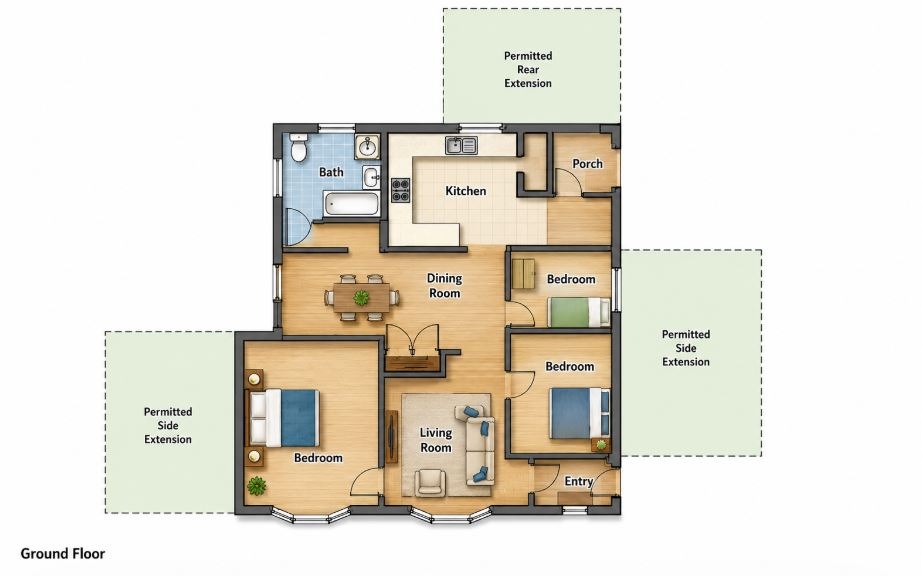
The fallback position is one of the most strategically important tools available to applicants and appellants in the Green Belt.
In Green Belt planning, a fallback position is an alternative development that could already lawfully happen on the site and is used to argue that the proposed scheme may have less or comparable impact.
Used well, it can transform a seemingly weak case into a compelling argument that refusal would lead to a worse outcome for the Green Belt than approval.
This article explains what a fallback position is, the legal framework governing its use, and how it operates in practice — including the increasingly common Class Q fallback strategy.
The principle itself derives from case law rather than the NPPF, so it is unaffected by the restructuring of Green Belt policy into policies GB1 to GB8 in the August 2026 NPPF.
What Is a Fallback Position?
A fallback position is development that could lawfully be carried out on the site without the planning permission now being sought.
It is the answer to the question: what would the landowner do instead if this application were refused?
Where there is a realistic prospect that the fallback would be implemented, it becomes a material planning consideration that decision-makers must take into account.
Fallback positions most commonly arise from:
existing planning permissions that remain live;
permitted development rights under the GPDO — including Class Q conversions of agricultural buildings, householder PD extensions, additional storeys under the upward extension rights, and prior approval for changes of use; and
Certificates of Lawful Development (Proposed) under section 192 of the Town and Country Planning Act 1990, which confirm that a specified development would be lawful without a planning application.
The Legal Framework: Mansell v Tonbridge and Malling
The leading Court of Appeal authority is Mansell v Tonbridge and Malling Borough Council [2017] . The Court confirmed that permitted development rights can legitimately represent a fallback position when considering alternative proposals for development on the site, and set out the key principles:
First: is there a fallback — is there a lawful ability to undertake the alternative development?
Second: is there a realistic prospect of the fallback being implemented? This is a matter of planning judgement.
Third: does the fallback materially affect the decision?
The Two-Stage Approach
A two-stage approach is taken when a fallback is raised as an other consideration in the very special circumstances exercise, now set out at policy GB6(2) of the August 2026 NPPF:
first, assess the effect of the development itself on the Green Belt and on openness;
second, assess whether any benefits achieved by avoiding the fallback position amount to very special circumstances.
How the Fallback Position May Operates in Green Belt Cases - Examples
1. Reducing the Weight Against a Disproportionate Addition
An applicant seeks permission for a substantial extension that would be a disproportionate addition, and therefore inappropriate under policy GB7(1)(b), which permits the extension or alteration of an existing building only where this would not result in a disproportionate increase in size compared to the original building.
They have established a certificate of lawfulness for PD additions that, combined, would have a larger volume or more disjointed appearance than the proposed scheme.
The argument is that refusing the proposed scheme leads to the fallback being implemented, which is worse for the Green Belt.
This does not mean the scheme must be approved — it must still survive the Very Special Circumstances test — but the fallback reduces the net harm attributable to the proposed scheme and strengthens the weight of the other considerations.
2. Class Q as a Fallback for New-Build Dwellings
An applicant seeks permission for a new dwelling on the site of an agricultural building — inappropriate development requiring very special circumstances under policy GB6, since a new dwelling does not fall within any of the categories of development that are not inappropriate under policy GB7.
However, the applicant has secured a prior approval under Class Q to convert the agricultural building to residential.
The Class Q approval establishes the acceptability of residential use on the site in principle and provides a realistic alternative outcome.
The Very Special Circumstances case is built around the argument that the proposed new dwelling would be of better design, greater sustainability and lesser visual impact than the Class Q conversion — and that these benefits, weighed against the fallback, constitute other considerations that clearly outweigh the residual Green Belt harm.
Strengthening a Fallback: Certificates of Lawfulness for Permitted Development
A section 192 certificate provides confirmation that a proposed development, belived to be permitted development, is lawful — it cannot be disputed by the LPA in the planning balance.
An unconfirmed assertion that PD rights are available is more easily challenged.
The strategic value of running the certificate application first, and using it as the foundation for the fallback argument in the subsequent planning application, is well-established. It is the most reliable way to establish the realistic prospect of the fallback and prevent the LPA from disputing its availability.
Fallback Position - Summary
A fallback position is not a mechanism for avoiding Green Belt policy, nor does it guarantee planning permission. Its significance lies in providing a realistic alternative against which the proposed development can be assessed.
Where a lawful fallback exists and there is a genuine prospect that it would be implemented if permission were refused, decision-makers must take it into account as a material planning consideration.
In Green Belt cases, a well-evidenced fallback can reduce the additional harm attributable to a proposal and strengthen the applicant's case within the very special circumstances balance under policy GB6.
Whether based on an extant planning permission, permitted development rights or a Certificate of Lawful Development, establishing the fallback clearly and credibly can be one of the most influential elements of a planning strategy.
Planning Application Advice
If you own land or a building in the Green Belt and want to understand your development options, I can advise on planning strategy and manage your application from initial assessment through to decision. Contact me to discuss your site.
Andrew Ransome MRTPI - Email: andrew@andrewransome.co.uk
About me
Andrew Ransome is a Planning Director and a Chartered Member of the Royal Town Planning Institute (RTPI), with more than two decades of experience in town planning.
He specialises in delivering strategic planning solutions for complex developments across both rural and urban environments, helping clients navigate planning challenges and unlock development opportunities. Connect with Andrew on Linkedin.


Green Belt Information
Green Belt Approvals


Get in Touch
Email: andrew@andrewransome.co.uk
Tel: 020 7096 8045
London Office:
60 Tottenham Court Road
Fitzrovia
London
W1T 2EW
© 2026 Andrew Ransome Town Planning Ltd. All rights reserved.
Content on this website is provided for general information and educational purposes only and does not constitute formal planning, professional, or legal advice. Planning policies, legislation, and guidance are subject to change. Site-specific assessment by a qualified consultant is recommended before making development decisions.
Projects highlighted across this website represent professional work undertaken by Andrew Ransome throughout his career.