What Is Grey Belt Land in the Green Belt?
What is Grey Belt land in the Green Belt? Learn how the new NPPF definition works, which sites qualify, and when development is permitted under the Golden Rules.
GREEN BELT
Andrew Ransome
8/28/20266 min read
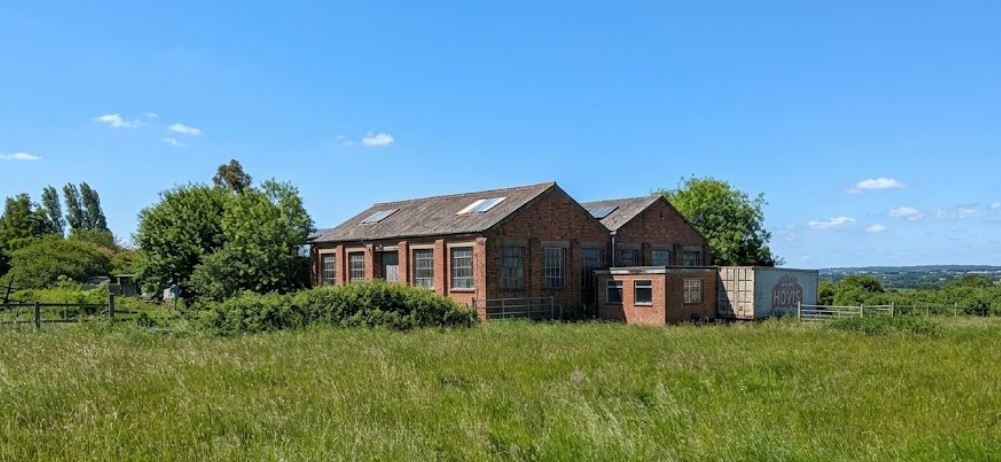
The concept of grey belt was introduced by the December 2024 National Planning Policy Framework and represented the most significant change to Green Belt policy in England since the designation framework was established in the 1950s.
The National Planning Policy Framework published in August 2026 has retained grey belt as a central part of Green Belt policy, but has restructured the surrounding provisions into a codified set of policies, GB1 to GB8, and has elevated the assessment methodology for identifying grey belt land from planning practice guidance into Annex E of the Framework itself.
This article explains what grey belt is under the current Framework, how it is identified, what conditions must be met for development to be not inappropriate, and what the Golden Rules require.
The Definition of Grey Belt in the NPPF
The Annex B glossary to the August 2026 NPPF defines grey belt as:
land in the Green Belt comprising previously developed land and/or any other land that, in either case, does not strongly contribute to any of purposes (a), (b), or (d) in policy GB2.
Two limbs: the first captures previously developed land (PDL) within the Green Belt — land lawfully developed and occupied by a permanent structure and associated fixed surface infrastructure.
The second captures any other land — whether PDL or not — that does not strongly contribute to purposes:
(a) checking urban sprawl,
(b) preventing settlement merger, or
(d) preserving the setting of historic towns.
Note: only three of the five Green Belt purposes, now set out at policy GB2(1), are relevant.
Land can score strongly against purposes (c) (safeguarding the countryside from encroachment) and (e) (assisting urban regeneration) and still qualify as grey belt, provided it does not strongly contribute to (a), (b) or (d).
Note also that "in either case" means the purposes test applies equally to PDL and to undeveloped land — PDL status alone does not automatically make a site grey belt, it still has to be tested against purposes (a), (b) and (d).
How Is Grey Belt Land Identified?
Identification of grey belt is now governed by policy GB2 and the assessment process at Annex E of the NPPF.
This strengthens the previous position, where the detailed methodology sat in planning practice guidance rather than in the Framework itself.
Annex E requires local planning authorities to identify the location and scale of the area or areas to be assessed, consider all Green Belt within the plan area in the first instance, and subdivide assessment areas where necessary to allow variations in their contribution to Green Belt purposes to be identified.
Each assessment area is then evaluated against purposes (a), (b) and (d) using a strong/moderate/weak-or-none scale, with illustrative features set out for each purpose and each level of contribution.
Planning authorities must also consider whether release or development of the assessment area(s) would fundamentally undermine the five Green Belt purposes, taken together, across the remaining Green Belt in the plan area.
The boundary between land that "does not strongly contribute" and land that does remains a matter of planning judgement, and one that continues to be tested through planning applications, appeals and examinations.
Purposes (a) and (b) are about location and spatial function — not aesthetic quality. Scrubby or degraded land in a location that performs a clear coalescence-prevention function will not qualify as grey belt simply because it is unattractive.
When Is Development on Grey Belt Not Inappropriate?
Policy GB7(1)(g) sets out four conditions, all of which must be met:
The development would utilise grey belt land and would not fundamentally undermine the purposes (taken together) of the remaining Green Belt across the area of the plan;
There is an evidenced unmet need for the type of development proposed;
The development would be in a sustainable location, with particular reference to policy TR3 of the Framework; and
In the case of major development involving the provision of housing, the development complies with the Golden Rules in policy GB8.
Where all four conditions are met, the development is not inappropriate.
Substantial weight need not be given to Green Belt harm, and the very special circumstances test under policy GB6 does not apply.
More than that: policy GB8(2) provides that, in considering applications for major housing development on grey belt land, substantial weight should be given to the importance of complying with the Golden Rules.
A Related but Distinct Route: Well-Connected Stations
Alongside grey belt, the August 2026 NPPF has introduced a further, separate route for Green Belt release around well-connected stations.
Policy GB7(1)(h) treats residential or mixed-use development within reasonable walking distance of a well-connected station as not inappropriate in its own right, without needing to establish grey belt status.
This test is provided the development is physically well related to the station or settlement, of a scale the available infrastructure can accommodate, and does not prejudice long-term comprehensive development in the area.
At the boundary-alteration stage, policy GB3(4) goes further still, removing the need to demonstrate exceptional circumstances where a spatial strategy has identified land around a well-connected station for release.
For sites near stations, this route should be checked alongside — and may be more straightforward than — the grey belt route.
The Grey Belt 'Golden Rules'
a) Affordable Housing
Affordable housing must reflect either:
development plan policy requirements for major development on land within or released from the Green Belt, established under policy HO5(1)(a)(ii); or
until such policies are in place, 15 percentage points above the highest existing affordable housing requirement that would otherwise apply, subject to a cap of 50%.
Where there is no pre-existing affordable housing requirement, 50% applies by default.
Policy GB8(3) sets out three specific circumstances in which a viability assessment demonstrating that full compliance is not possible may be submitted:
where the development is on previously developed land and demonstrably burdened by costs not accounted for in the plan's viability evidence;
where it is a strategic site; or
where it is of a wholly different type to that considered in the viability assessment underpinning the development plan.
Even in these circumstances, the development should still make the maximum possible contribution, and proposals offering significantly less than the policy requirement will only be acceptable in exceptional, fully evidenced and justified cases.
b) Infrastructure
Necessary improvements to local or national infrastructure must be provided.
The NPPF does not specify a minimum quantum or scope, but the obligation must be proportionate to the development's infrastructure impacts — typically secured by planning obligation under section 106 of the Town and Country Planning Act 1990.
c) Green Spaces
New or improved green spaces accessible to the public must be provided.
Policy GB8(1)(c) sets out that these must make a positive contribution to the landscape setting of the development, support nature recovery, and meet local standards for green space provision where these exist in the development plan.
Where no local standards exist, national standards apply — including Natural England's standards on accessible green space and urban greening factor, and Green Flag criteria.
Where land has been identified for habitat creation or nature recovery within Local Nature Recovery Strategies, proposals should contribute to these outcomes.
Grey Belt and the Sequential Approach to Release
Policy GB4(1)(d)(i) establishes a sequential hierarchy for Green Belt release in plan-making.
previously developed land first, then
grey belt which is not previously developed, then
other Green Belt locations, so long as this promotes a sustainable pattern of development overall.
Sustainable location is an overarching consideration throughout.
In decision-taking on individual applications, the relevant question is whether the land qualifies as grey belt and whether the policy GB7(1)(g) conditions are met.
Grey Belt Summary
Grey belt remains defined as PDL in the Green Belt and/or any land making no strong contribution to purposes (a), (b) or (d) in policy GB2.
The August 2026 NPPF's Annex B definition no longer carries an express list of excluded designations, but those designations continue to be protected through their own separate policies, which apply independently of grey belt status.
Identification now follows a defined methodology at Annex E — a material strengthening of grey belt's evidential and policy weight compared with the previous reliance on planning practice guidance.
Development on grey belt land satisfying the four conditions in policy GB7(1)(g) is not inappropriate. This removes the need for very special circumstances.
A scheme complying with the Golden Rules in policy GB8 (affordable housing at plan-policy level or 15 percentage points above the highest existing requirement capped at 50%, necessary infrastructure, and accessible green spaces) should be given substantial weight.
For sites near well-connected stations, the separate GB7(1)(h) and GB3(4) routes should also be considered, and may offer a more direct path to release than grey belt.
Planning Application Advice
If you own land or a building in the Green Belt and want to understand your development options, I can advise on planning strategy and manage your application from initial assessment through to decision. Contact me to discuss your site.
Andrew Ransome MRTPI - Email: andrew@andrewransome.co.uk
About me
Andrew Ransome is a Planning Director and a Chartered Member of the Royal Town Planning Institute (RTPI), with more than two decades of experience in town planning.
He specialises in delivering strategic planning solutions for complex developments across both rural and urban environments, helping clients navigate planning challenges and unlock development opportunities. Connect with Andrew on Linkedin.


Green Belt Information
Green Belt Approvals


Get in Touch
Email: andrew@andrewransome.co.uk
Tel: 020 7096 8045
London Office:
60 Tottenham Court Road
Fitzrovia
London
W1T 2EW
© 2026 Andrew Ransome Town Planning Ltd. All rights reserved.
Content on this website is provided for general information and educational purposes only and does not constitute formal planning, professional, or legal advice. Planning policies, legislation, and guidance are subject to change. Site-specific assessment by a qualified consultant is recommended before making development decisions.
Projects highlighted across this website represent professional work undertaken by Andrew Ransome throughout his career.