What Is Infill Development in the Green Belt?
Learn what infill development in the Green Belt means, how it is defined in planning policy, the rules that apply, and the key considerations for homeowners and developers.
GREEN BELT
Andrew Ransome
8/26/20265 min read
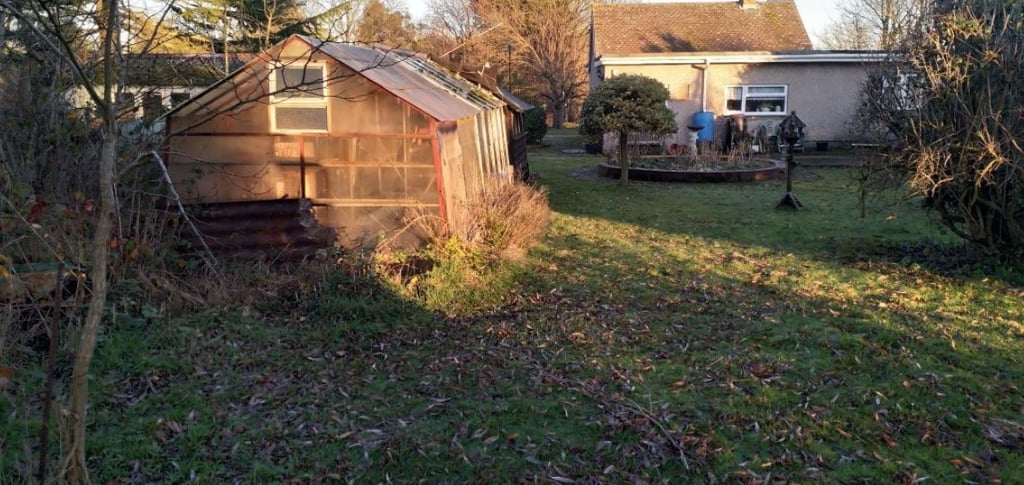
Infill development in a village is one of the few forms of new building that may be acceptable in the Green Belt without needing to demonstrate very special circumstances.
It sounds straightforward: small-scale development filling a gap in an otherwise built-up village.
In practice, each of the three key words — limited, infilling, village — generates its own arguments, and the courts have confirmed that none of them is defined in the NPPF.
This article examines what they mean, how inspectors and courts have approached them, and what applicants must demonstrate.
The Green Belt Policy Framework
Policy GB7(1)(c) of the National Planning Policy Framework published in August 2026 provides that the construction of new buildings in the Green Belt is not inappropriate where it constitutes 'limited infilling in villages lying within the Green Belt.'
This is the same wording that applied under the previous NPPF, now renumbered as part of the wider restructuring of Green Belt policy into codified policies GB1 to GB8. No definition is provided for any of the three terms, and no numerical thresholds are specified.
This is deliberate: the NPPF leaves assessment to planning judgement in each case, with regard to the particular site and its context.
The starting point is therefore not a policy checklist but a sequence of factual and evaluative questions.
Is It a Village?
This is often the first battleground.
The Court of Appeal confirmed in Julian Wood v Secretary of State for Communities and Local Government and Gravesham Borough Council [2015] that the boundary of a settlement defined in a local plan is not necessarily determinative of whether it is a village for this purpose.
The situation on the ground is what matters.
A settlement can qualify as a village for policy GB7(1)(c) even without a formal settlement boundary.
Relevant factors include: the number and grouping of buildings; the facilities and services available in the village; and the relationship of the site with surrounding built development.
The absence of a village boundary in the development plan is not fatal — but the burden of demonstrating village character falls on the applicant.
Decision makers will have regard to the situation on the ground as well as any relevant policies.
A cluster of a dozen dwellings around a farm track is unlikely to meet the threshold; a settlement with clear services and a physical centre is more likely to do so.
Does the Site Represent Infilling?
Infilling means development filling a gap within an otherwise built-up frontage or built-up area.
It is not simply that a site is vacant — it must sit within a continuous built form in a manner that means its development would complete, rather than extend, the built edge of the settlement.
The Court of Appeal in R (Tate) v Northumberland County Council [2018] confirmed that 'limited' and 'infilling' are essentially questions of fact and planning judgement, having regard to the nature and size of the development, the location of the application site, and its relationship to other existing development adjoining and adjacent to it.
A proposal that extends the built edge of a village — even modestly — is unlikely to constitute infilling.
A site at the end of a row of houses, with open countryside beyond, will not generally meet the test even if it is only one plot in width.
The spatial relationship between the site and the surrounding built form is everything.
Would the Infilling Be Limited?
Even where a site is within a village and could be described as a gap in the built form, the proposal must be limited in scale.
The NPPF prescribes no maximum number of dwellings or site area.
The question is whether scale and form are commensurate with the character and grain of the village.
A scheme of two or three dwellings on a modest plot will typically be easier to characterise as limited than a scheme of ten units on a larger gap site.
Decision makers will consider whether density and typology are consistent with the existing village.
Development that would alter the settlement's character may be resisted by the planners. Whereas a scheme fills rather than dominates the gap will more likely be accepted.
Villages Within and Outside the Green Belt: The Inset Question
The limited infilling exception is relevant for villages that are washed over by the Green Belt.
Policy GB4(1)(b) and (c) of the August 2026 NPPF continues to distinguish between villages included within the Green Belt because their open character makes an important contribution to Green Belt openness, and villages whose character is instead protected through other means such as conservation area designation.
Where a village is included within the Green Belt on this basis, policy GB4(1)(b) confirms it should not be identified as a "settlement" for the purposes of the wider spatial strategy — a point that matters when a site's status is also being tested against the settlement-based policies.
Many local plans have inset villages — drawing the Green Belt boundary around them so that the settlement itself sits outside it.
For inset villages, Green Belt policy does not apply to development within the settlement boundary. It may apply for parts of the village that extend beyond the settlement boundary and into the Green Belt.
Whether a village is inset or washed over remains a plan-making decision taken through the local plan process under policy GB4, and cannot be altered through an individual planning application.
The Relationship with Other Green Belt Policies
A finding under policy GB7(1)(c) means the development is not inappropriate — the very special circumstances test under policy GB6 is not required.
All other relevant policies in the development plan and the NPPF must still be satisfied, including design, landscape, heritage, highways and residential amenity.
Unlike some of the other GB7 exceptions, limited infilling in villages does not carry an express openness test of its own. There is no requirement to demonstrate that the development preserves, minimises impact on, or avoids substantial harm to, the openness of the Green Belt.
Provided a proposal genuinely satisfies the village, infilling and limited tests discussed above, there is no further, separate openness hurdle to clear under GB7(1)(c) itself.
Green Belt Infill Development Summary
Limited infilling in villages under paragraph 154(e) is a narrow but genuinely available exception.
The three components — village, infilling, limited — are matters of planning judgement, not legal definition, and each must be satisfied on the particular site.
Planning Application Advice
If you own land or a building in the Green Belt and want to understand your development options, I can advise on planning strategy and manage your application from initial assessment through to decision. Contact me to discuss your site.
Andrew Ransome MRTPI - Email: andrew@andrewransome.co.uk
About me
Andrew Ransome is a Planning Director and a Chartered Member of the Royal Town Planning Institute (RTPI), with more than two decades of experience in town planning.
He specialises in delivering strategic planning solutions for complex developments across both rural and urban environments, helping clients navigate planning challenges and unlock development opportunities. Connect with Andrew on Linkedin.


Green Belt Information
Green Belt Approvals


Get in Touch
Email: andrew@andrewransome.co.uk
Tel: 020 7096 8045
London Office:
60 Tottenham Court Road
Fitzrovia
London
W1T 2EW
© 2026 Andrew Ransome Town Planning Ltd. All rights reserved.
Content on this website is provided for general information and educational purposes only and does not constitute formal planning, professional, or legal advice. Planning policies, legislation, and guidance are subject to change. Site-specific assessment by a qualified consultant is recommended before making development decisions.
Projects highlighted across this website represent professional work undertaken by Andrew Ransome throughout his career.