What Is the Green Belt?
What is the Green Belt in UK town planning? Discover its origins, five NPPF purposes, how it's designated and how it differs from other countryside designations.
GREEN BELT
Andrew Ransome
8/19/202610 min read
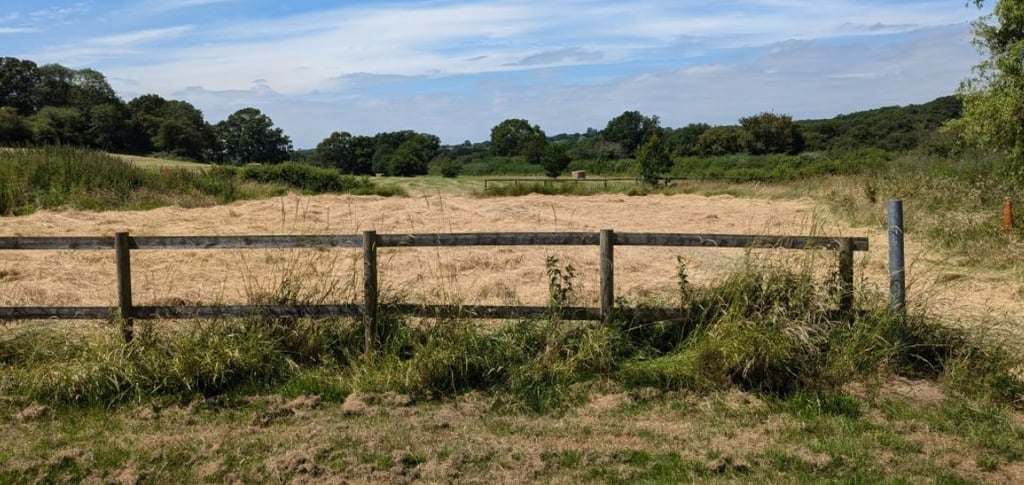
The Green Belt is a designated area of land around towns and cities where development is strictly controlled to prevent urban sprawl, protect the countryside and maintain the separation between settlements.
Yet despite its prominence in planning decisions, it remains one of the most misunderstood concepts in English town planning.
Millions of people live near it, own land within it, or have had planning applications refused because of it — with only a vague sense of what protections it actually carries and, crucially, what it does not.
This article addresses four foundational questions:
where the Green Belt came from and how it is governed today;
what the five purposes of the Green Belt are;
how Green Belt is designated and how much of England it covers; and
how it differs from other countryside designations.
Where Did the Green Belt Come From?
The concept of a green belt around London was first given statutory force by the Green Belt (London and Home Counties) Act 1938.
However, it was the 1955 Ministry of Housing Circular 42/55 that transformed Green Belt from a London-specific idea into a national planning tool — instructing local authorities across England to define their own Green Belts in their development plans.
Planning Policy Guidance Note 2 (PPG2), first issued in 1988 and substantially revised in 1995, set out the purposes and policies that became deeply embedded in planning practice.
When the Coalition Government replaced the entire suite of PPG and PPS documents with the National Planning Policy Framework in March 2012, the core Green Belt policies were carried over substantially intact — a deliberate political signal of their enduring importance.
The National Planning Policy Framework has continued to evolve since.
The December 2024 NPPF represented the most significant revision to Green Belt policy since the designation era, introducing the concept of grey belt, placing new obligations on local authorities to review Green Belt boundaries to meet housing need, and establishing the Golden Rules for development on released land.
The August 2026 NPPF has built on that foundation. Rather than a paragraph-by-paragraph document, Green Belt policy is now set out as a codified set of policies — GB1 to GB8 — and several of the underlying tests have themselves changed, not just their numbering.
Despite this restructuring, the fundamental architecture of Green Belt policy has remained constant. Once designated, boundaries should be altered only in exceptional circumstances through the development plan process, and development within the Green Belt is inappropriate unless it falls within one of a defined set of exceptions.
What Are the Five Purposes of the Green Belt?
Policy GB2(1) of the August 2026 NPPF sets out the five purposes of the Green Belt — carried forward unchanged in substance from the previous paragraph 143, now embedded within the policy governing the strategic assessment of existing Green Belt land.
They are the benchmarks against which boundary changes must be justified, the framework for assessing whether land makes a sufficient contribution to warrant continued Green Belt status, and the criteria — now applied through the formal Annex E methodology — for determining whether land qualifies as grey belt.
Understanding each purpose in depth is essential to any serious engagement with Green Belt policy.
Purpose (a): To check the unrestricted sprawl of large built-up areas
This is the original and still dominant purpose of the Green Belt.
The term 'sprawl' is not defined in the NPPF — it is a matter of planning judgement in each case.
What the courts and inspectors have consistently emphasised is that this purpose is concerned with the general pattern of outward urban growth, not simply the physical impact of any single scheme.
A parcel of land on the urban fringe can score strongly against this purpose even if it offers little visual or ecological value.
The relevance is locational and functional: does this land, if developed, contribute to the outward march of the built-up area in a way that erodes the integrity of the Green Belt boundary?
Purpose (b): To prevent neighbouring towns from merging into one another
This purpose is often highly site-specific.
It applies most acutely to land in the gaps between settlements — what is sometimes called 'coalescence'.
The key considerations are the width and character of the remaining gap, the degree to which development would visually and physically reduce the perceived separation between the two settlements, and whether a sense of distinct identity would be lost.
Decision makers have often found against proposals on this purpose where the gap between two towns was already narrow and any further encroachment would create a nearly continuous built form.
The test is not simply whether the two settlements would literally touch, but whether the sense of separation that gives each its distinct identity would be materially eroded.
Purpose (c): To assist in safeguarding the countryside from encroachment
This purpose is widely misunderstood. It is about encroachment — the intrusion of an urban character into rural land — rather than landscape quality or ecological value.
Land does not need to be attractive, productive or ecologically sensitive to score against this purpose.
Scrubby, degraded or visually unremarkable land can serve it perfectly well, provided its rural character and openness would be lost to development.
The question is whether development would constitute an encroachment of the urban into the rural — a functional and spatial question, not an aesthetic one.
Applicants who argue that their site is 'scrubland' or 'of no landscape value' routinely find that this carries little weight against purpose (c).
Purpose (c) is deliberately excluded from the grey belt test — land can score strongly against it and still qualify as grey belt, provided it does not strongly contribute to purposes (a), (b) or (d).
Purpose (d): To preserve the setting and special character of historic towns
The least frequently applied of the five purposes in day-to-day decision-making, but one of considerable importance in the right context.
It applies principally around historic cities and market towns whose character and legibility depend substantially on their relationship with open countryside.
The test is often whether the openness of the surrounding Green Belt makes a material contribution to preserving that character and setting.
Purpose (e): To assist in urban regeneration by encouraging the recycling of derelict and other urban land
This is the most counterintuitive of the five purposes, and the one most frequently overlooked by applicants.
The purpose is systemic rather than site-specific — it reflects the policy rationale for containment itself. Like purpose (c), it is excluded from the grey belt test.
How Much Green Belt Is There, and How Is It Designated?
England has approximately 1.6 million hectares of designated Green Belt, accounting for around 12.5% of the total land area, though the precise figure shifts modestly year on year as boundaries are reviewed through local plans.
It is not evenly distributed.
The largest Green Belt by far is the Metropolitan Green Belt surrounding London, which extends across parts of Essex, Hertfordshire, Buckinghamshire, Berkshire, Surrey and Kent.
Beyond London, significant Green Belts exist around the West Midlands, Greater Manchester and Merseyside, West and South Yorkshire, Tyne and Wear, and a number of other cities including Bristol, Oxford, Cambridge, Gloucester, York and Burton upon Trent.
Designation is a function of local planning authorities, carried out through the development plan process.
Local plans must define Green Belt boundaries clearly, using physical features that are readily recognisable and likely to be defensible, under policy GB4(1)(f) of the August 2026 NPPF.
Once established, the Framework requires that boundaries are maintained unless exceptional circumstances are fully evidenced and justified through a local plan review, under policy GB3.
One important exception now applies, where a spatial strategy has identified suitable land around a well-connected station for development, policy GB3(4) confirms that exceptional circumstances no longer need to be separately demonstrated to justify altering the boundary.
New Green Belts can also be established under policy GB1 — the Framework does not prevent this — but the bar is high and the circumstances are narrow.
Villages within the Green Belt present a particular designatory challenge.
Policy GB4(1)(b) addresses this directly. Where it is necessary to restrict development in a village primarily because of its contribution to the openness of the Green Belt, the village should be included within the Green Belt, and should not be identified as a "settlement" for the purposes of the wider spatial strategy.
In practice, many local plans inset villages from the Green Belt, with the consequence that the settlement boundary policy — rather than Green Belt policy — governs development within them.
Green Belt, Protected Landscapes and Other Countryside Policies: What Is the Difference?
One of the most common misunderstandings we encounter is the conflation of the Green Belt with other countryside and landscape designations.
These are distinct policy regimes with different purposes, and different consequences for development.
Green Belt
As set out above, the Green Belt is a spatial planning tool, not a landscape quality designation.
It says nothing about the scenic beauty, ecological value or agricultural productivity of the land within it.
A scrubby field on the edge of a motorway junction can be Green Belt.
The policy is concerned with location, function and the containment of urban growth — not with the appearance or character of the land itself.
Protected Landscapes: National Parks, the Broads and National Landscapes
Under the August 2026 NPPF, National Parks, the Norfolk and Suffolk Broads, and National Landscapes (formerly Areas of Outstanding Natural Beauty, rebranded under the Levelling-Up and Regeneration Act 2023) are now addressed together as Protected Landscapes under a single policy, N4.
This is a genuine change worth understanding, not just a relabelling exercise.
Under the previous Framework, National Landscapes benefited from a "great weight" test on their scenic beauty (previously at paragraph 182), while only National Parks were subject to the stricter test requiring major development to be refused other than in exceptional circumstances and where demonstrated to be in the public interest (previously at paragraph 190, applying specifically to National Parks and the Broads).
Policy N4 of the August 2026 Framework now applies both tests to all three types of Protected Landscape uniformly.
Policy N4(1) requires substantial weight to be placed on conserving and enhancing natural beauty across National Parks, the Broads and National Landscapes alike.
Policy N4(2) applies the "refused other than in exceptional circumstances, in the public interest" test to major development in any Protected Landscape, not just National Parks and the Broads as before.
This is a meaningful strengthening of protection for National Landscapes specifically, and should be factored into any assessment of a site within one, regardless of whether it also happens to be Green Belt.
Protected Landscapes apply in rural areas, often remote from city fringes, and there is often no overlap with Green Belt — though where a site is both Green Belt and a Protected Landscape, both policy regimes apply independently and cumulatively.
Sites of Special Scientific Interest (SSSIs)
SSSIs are ecological and geological designations, managed by Natural England under the Wildlife and Countryside Act 1981 (as amended).
They apply to land of special interest by reason of its flora, fauna, geological or physiographical features, and are addressed under policy N6 of the August 2026 Framework.
Designation has direct legal consequences. Certain operations on SSSI land require Natural England's consent, and harmful development proposals will trigger a formal consultation with Natural England, whose objection carries substantial weight.
General Countryside and Outside Settlement Boundary Policies
This is perhaps the most important additional layer of protection for sites outside the Green Belt.
Under the August 2026 Framework, this is now addressed principally through policy S5, which sets out a defined list of the forms of development acceptable outside settlements (agriculture, rural business use, previously developed land redevelopment, limited infilling, exception sites, station-proximity development, and evidenced unmet need, among others).
These policies matter for a straightforward reason: a site can be outside the Green Belt — and therefore not subject to the Green Belt's presumption against inappropriate development — while still being subject to strong policy restraint under policy S5 and the development plan's general countryside policies.
For landowners and applicants in areas without Green Belt designation, this is not a green light for development.
The absence of Green Belt simply means that the Green Belt policy framework does not apply. It does not mean that development is acceptable in principle.
The relationship between Green Belt policy and general countryside policy can be complex.
In some local authority areas, the Green Belt boundary broadly coincides with the settlement boundary — so land outside the settlement is both Green Belt and governed by policy S5. In others, particularly around larger settlements, there may be areas that are outside the settlement boundary and subject to policy S5 but not within the Green Belt.
Conservation Areas and Listed Buildings
Heritage designations — Conservation Areas designated under the Planning (Listed Buildings and Conservation Areas) Act 1990, and the listing of buildings — apply within and outside Green Belt, and are addressed under policies HE2 and HE4 to HE10 of the August 2026 Framework.
They are concerned with built character and historic significance rather than open land.
Development within a Green Belt Conservation Area must satisfy both Green Belt policy and heritage policy.
In many cases, the heritage policy will be the more strict test, particularly where the conservation area designation was applied to protect the historic character of a village or market town.
What Has Changed Under the August 2026 NPPF?
The August 2026 NPPF has retained the fundamentals of Green Belt policy established in December 2024 — permanence, the exceptional circumstances test, grey belt, and the Golden Rules — but has restructured them into codified policies GB1 to GB8, and made a number of substantive changes along the way.
The most significant are:
A codified structure. Green Belt policy now runs from GB1 (establishing new Green Belts) through GB2 (assessment), GB3 (altering boundaries), GB4 (defining boundaries), GB5 (beneficial uses), GB6 (control of inappropriate development), GB7 (exceptions) and GB8 (the Golden Rules) — replacing the previous paragraph-based structure.
A new station-proximity route. Policy GB7(1)(h) makes residential and mixed-use development near well-connected stations not inappropriate in its own right, and policy GB3(4) removes the need to demonstrate exceptional circumstances when altering a boundary around such land — a genuinely new route, covered in our dedicated article.
A shift from "preserve openness" to "minimised impact." Several of the GB7 exceptions — including engineering operations, infrastructure, and buildings for outdoor sport and recreation — have moved from a strict test requiring development to preserve openness, to a more achievable test requiring the impact on openness to be minimised, with no significant conflict with Green Belt purposes.
A consolidated reuse, extension and replacement test. Policy GB7(1)(b) now merges what were previously three separate exceptions, and — notably — straightforward re-use of a building no longer carries an express openness test of its own, only the permanent-and-substantial-construction and lawfulness conditions.
The grey belt methodology elevated into the Framework itself. The detailed assessment process for identifying grey belt land now sits in Annex E of the NPPF, rather than in planning practice guidance — materially strengthening its weight at examination and appeal. The express list of protected designations previously excluded from the grey belt definition has also been removed from the definition itself, though those designations continue to be protected through their own separate policies.
Green Belt Summary
The Green Belt is a spatial planning tool whose primary purpose is urban containment, not landscape protection.
It was established through post-war planning policy and is now governed by the National Planning Policy Framework, which sets out five distinct purposes at policy GB2 against which all Green Belt land must be assessed.
Understanding these fundamentals is the foundation for any serious assessment of development potential in or near the Green Belt — whether you are a landowner, a developer, a local authority or a community group.
Planning Application Advice
If you own land or a building in the Green Belt and want to understand your development options, I can advise on planning strategy and manage your application from initial assessment through to decision. Contact me to discuss your site.
Andrew Ransome MRTPI - Email: andrew@andrewransome.co.uk
About me
Andrew Ransome is a Planning Director and a Chartered Member of the Royal Town Planning Institute (RTPI), with more than two decades of experience in town planning.
He specialises in delivering strategic planning solutions for complex developments across both rural and urban environments, helping clients navigate planning challenges and unlock development opportunities. Connect with Andrew on Linkedin.


Green Belt Information
Green Belt Approvals


Get in Touch
Email: andrew@andrewransome.co.uk
Tel: 020 7096 8045
London Office:
60 Tottenham Court Road
Fitzrovia
London
W1T 2EW
© 2026 Andrew Ransome Town Planning Ltd. All rights reserved.
Content on this website is provided for general information and educational purposes only and does not constitute formal planning, professional, or legal advice. Planning policies, legislation, and guidance are subject to change. Site-specific assessment by a qualified consultant is recommended before making development decisions.
Projects highlighted across this website represent professional work undertaken by Andrew Ransome throughout his career.